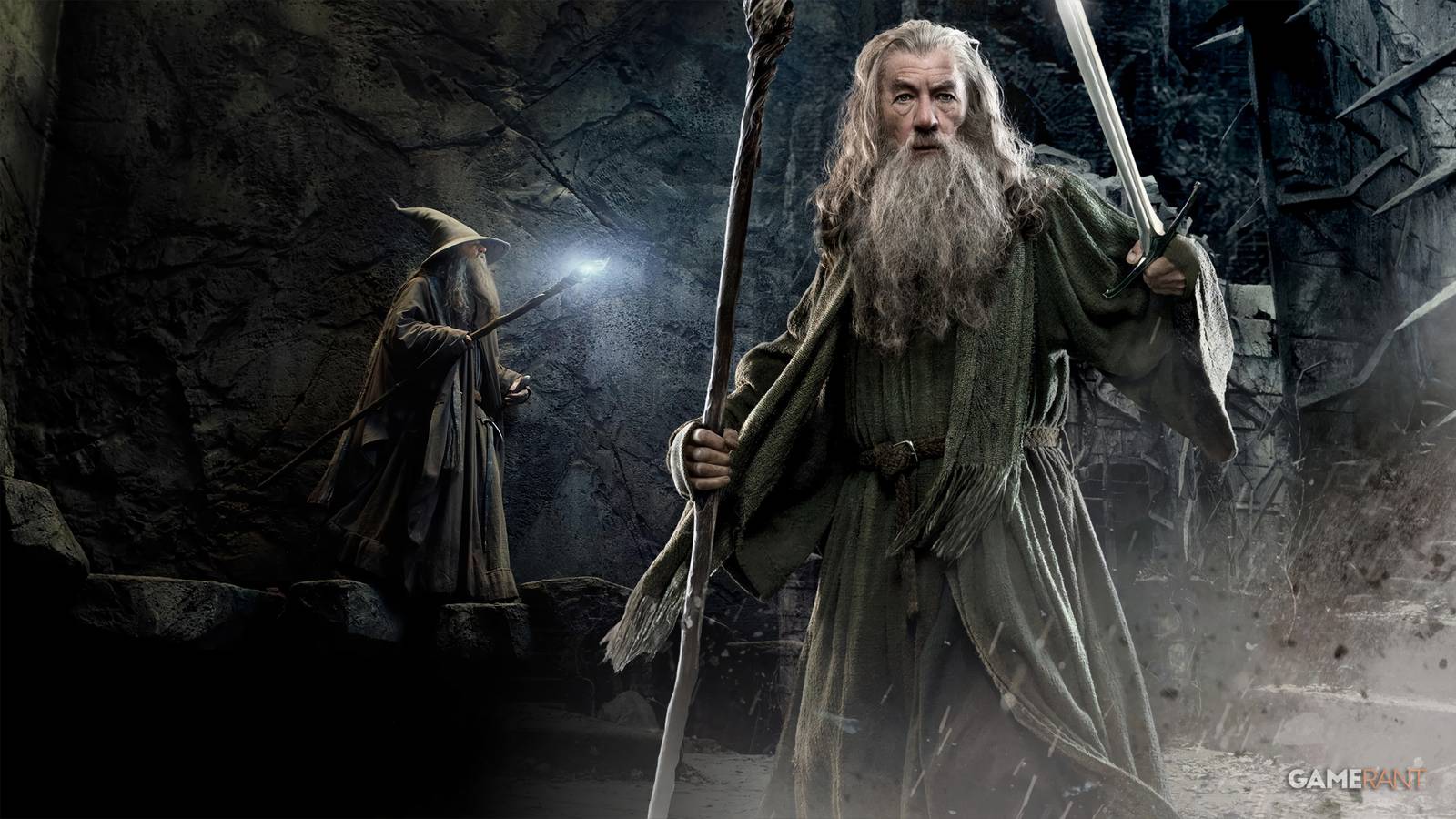
After learning that one of my favorite game developers, Warhorse Studios, is working on an open world RPG set in JRR Tolkien's Middle-earth, I was immediately convinced that it would be amazing. I really enjoyed everything about the developer Kingdom Come: Deliverance series and whether it is ongoing The Lord of the Rings the game is something similar, it should be an automatic pre-order for me. But for myself right now the question is not whether it will be a worthwhile investment, or even when and where it will take place in Middle-earth. Instead, I'm more curious how a fantasy game made by a developer known for grounding their worlds in real-life history will translate unrealistic things like magic, orcs, talking trees, and made-up languages.
From what I understand, this is brand new territory for Warhorse Studios – sort of. The development team is apparently filled with The Lord of the Rings fans who probably know a thing or two about Tolkien's world, but it also made historical authenticity its bread and butter Kingdom Come: Deliverance and the subsequent success of KCD2. I know it's not impossible for Warhorse to create a fantasy universe like Tolkien's. I'm actually going to go out on a limb and say that I think it's the best studio for the job. More than anything else, let's just say my curiosity is piqued about the how, not the if.
Hogwarts Legacy is the definitive blueprint for an open world RPG
Hogwarts Legacy showed how beloved fantasy worlds can become RPG homes, and Middle-earth might be the best possible test of that idea.
Warhorse already has half the formula down
In both Kingdom Come: Deliverance game, Warhorse proved it has what it takes to create an immersive world that feels tangible because it intentionally limits itself. By grounding each game's design in historical authenticity, intense physicality, and raw human conflict, it gave players access to a virtual world that sometimes felt as confined and as stressful as the real world. For some players, that's proven to be a drawback, but for many others, it's the hallmark of a Warhorse Studios game, and each one is all the better for it.
What kind of weapon is that?

Identify the silhouettes before time runs out.
Start
Identify the silhouettes before time runs out.
Easy (7.5s) Medium (5.0s) Hard (2.5s) Permadeath (2.5s)
In that sense, the developer already has half the formula down for one The Lord of the Rings games, especially since the grounded side of Middle-earth is arguably more important than people may realize. The feeling of living in a believable world with long journeys, dangerous roads, tavern conversations, muddy battlefields, political instability and cultural identity between regions. Warhorse already excels in all of this. The challenge now is to somehow layer Tolkien's mythological side on top without losing the immersion that makes one of the developer's RPGs special.
Warhorse feels equipped for Middle-earth's Fantasy
The reality is that Warhorse has never had to answer questions about what magical magic should feel like or how rare supernatural encounters should be. Everything it has done in the past has always used history as a system of checks and balances, although it has never been afraid to stretch the truth when it fits the bill. But now that it's burrowing into a world that considers things like magic very real, Warhorse's approach will have to adapt to its new surroundings.
Fortunately, unlike many fantasy worlds, Middle-earth takes a sort of middle ground in that it has never leaned too heavily on traditional fantasy excess. In other words, Tolkien's world is magical, but it is not magically saturated in the same way as something like The Elder Scrolls 5: Skyrim or other fantasy games such as Dragon Age.
Now that it's burrowing into a world that considers things like magic very real, Warhorse's approach will have to adapt to its new surroundings.
A key reason why moments involving Ringwraiths, Balrogs or Gandalf are so believable in Tolkien's stories is that the world around them often feels grounded first. Villages, kingdoms, politics, travel, warfare, and ordinary life matter just as much, if not more. That's what makes the supernatural feel important, because it interrupts that reality rather than constantly overwhelming it. It actually works surprisingly well with Warhorse's strengths.
Based on Warhorse's story, this game may end up feeling less like a traditional fantasy RPG and more like actually living in Middle-earth. Most The Lord of the Rings Games emphasize either action spectacle or cinematic heroism, but Warhorse can and probably will instead focus on the mundane side of Middle-earth before slowly exposing players to its ancient horrors and wonders. Ultimately, it can make encounters with creatures like trolls, Nazgul or Balrogs feel genuinely overwhelming in a way that most fantasy RPGs struggle to achieve.
The magic of Middle-earth still cannot be pushed aside
At the same time, this is probably where Warhorse has to be most careful. If Middle-earth's fantasy elements are too sparse, the game risks feeling like Kingdom Come with one The Lord of the Rings skin. If they are too common, it can lose the restraint that might make Warhorse's take on Tolkien so compelling in the first place. The sweet spot is probably somewhere in between, where the world feels grounded enough to live in but ancient enough to fear.
That's especially true if Warhorse wants its Middle-earth RPG to differ from the franchise's previous games. The Shadow of Mordor games already covered the power fantasy side of The Lord of the Rings better than almost anything else could have. These games made players feel like a supernatural force murdering their way through Mordor, and they were good at what they set out to do. Warhorse's games probably shouldn't try to compete with it directly. Its best path forward may be to make players feel small at first, then let the larger mythology of Middle-earth push in over time.
Based on Warhorse's story, this game may end up feeling less like a traditional fantasy RPG and more like actually living in Middle-earth.
This can mean that an encounter with orcs feels dangerous because the player is still just a person with a sword. It can mean that magic feels more like something ancient, mysterious, and half-understood than something players casually insert into a build. It can mean that a place like Fangorn Forest feels alive before the trees even speak, or that a Nazgul feels terrifying long before it ever appears on screen. In a warhorse-developed The Lord of the Rings RPG, imagination perhaps works best when treated more as a force the player must survive than something they are already built to overcome.

Ultimately, that's why the biggest question facing Warhorse's Middle-earth RPG may have nothing to do with its timeline or setting. These things matter, of course, but the real test is whether the studio can take Tolkien's mythology into its established RPG formula without flattening either side. If it can, this may be rare The Lord of the Rings games that make Middle-earth feel believable at first, then magical because of it.
- Created by
-
JRR Tolkien
- Where to look
-
HBO Max
- movie(s)
-
The Lord of the Rings: Fellowship of the Ring, The Lord of the Rings: The Two Towers, The Lord of the Rings: The Return of the King
