Binary endings are nothing new in gaming. Reaching the final boss and being presented with a choice to either follow the “good” path, or to turn evil and take a much darker route, is pretty standard, especially in RPGs. However, when it comes time for a sequel, the “good” ending is almost always the one that is enshrined as being canon, while the other is simply a flight of fancy.
Not so for these next games. In some cases, you might not even realize that a “bad” ending is possible in these games, while others make it glaringly obvious. In either case, though, once the sequel launched, fans were shocked to discover that the “bad” ending is the one that became canon, flipping the script and making for a surprising twist before the narrative of the next game even gets started.
It’s hard to talk about video game endings without spoilers, so in case you were wondering, Spoilers Ahead
Building Off A Game Over Screen

XCOM 2

9/10
- Released
-
February 5, 2016
Perhaps the weirdest entry on this list, XCOM 2 builds less off of an “ending” for XCOM: Enemy Unknown, and more of a fail state, or a Game Over screen. Both XCOM games are set to a timer of sorts. Fail to progress quickly enough to hold off the alien invasion, and you’ll get a cutscene where the aliens take over the Earth, mind-controlling everyone and decimating XCOM’s resistance efforts.
The thing is, there is no respawning from this state. Outcomes in XCOM are permanent, from soldier deaths to the outright failure of your mission. As such, reaching this cutscene will force you to restart your playthrough (or load a save from hours ago). In that sense, it kind of is an ending, and a pretty bad one. Imagine the surprise when XCOM 2 starts up, and you realize you’re living in a world that is the direct progression of that cutscene.
Legacy Of Kain: Soul Reaver
The Making Of An Evil Vampire Lord
Most people today won’t have played Legacy of Kain: Blood Omen, and fair enough. It doesn’t have any modern remaster, and frankly, it hasn’t aged well at all aside from its writing. However, it bears the distinction of being one of the first games to offer you an end-of-game choice for either a good ending or a bad ending, rather than building up to your ending with choices made throughout the campaign.
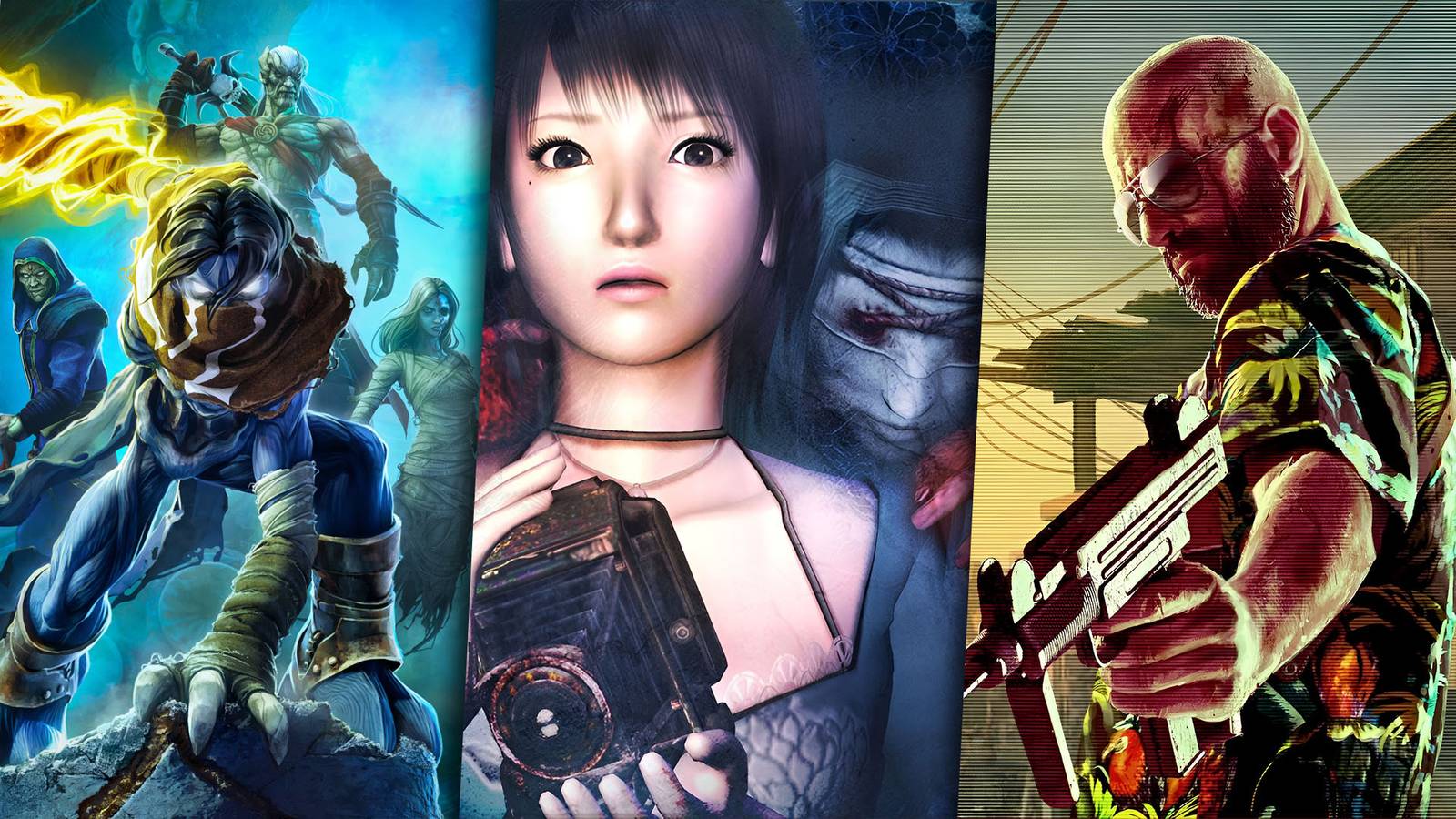
The good choice, where Kain sacrifices himself to save the world, is pretty lame, but the evil choice, where Kain chooses to create a vampire hellscape and sit on a throne of bones, is badass. The real twist comes when you start Legacy of Kain: Soul Reaver and discover that 1,500 years have passed, and you aren’t playing as Kain anymore, you’re playing as his lieutenant, Raziel. Shortly after you start, Kain betrays Raziel and kills him. Raziel is (obviously) resurrected, and then the rest of the game is spent on a quest for revenge on the first game’s protagonist. How cool is that?
Metro Last Light
No Enlightenment For Artyom

Metro: Last Light
8/10
- Released
-
May 14, 2013
- ESRB
-
Mature 17+ // Blood, Intense Violence, Nudity, Sexual Content, Strong Language, Use of Drugs and Alcohol
The Metro series has never been one for positive outcomes, which is why the “Enlightenment” ending in Metro 2033 is such a surprise. Granted, it’s not easy to get, but that extra effort makes it feel like the true ending. Not so fast. As hopeful as it is for Artyom to spare the Dark Ones from a missile strike, thereby preserving an opportunity to communicate with the helpful creatures, does that really seem like what would happen in this world?
Complete Recap of the Metro Games Ahead of Metro 2039’s Release
Metro veterans and newcomers alike may want to refresh and familarize themselves with the series’ biggest story events ahead of Metro 2039.
The novel on which the game is based certainly didn’t think so, and neither did Metro: Last Light, the sequel. This game assumes that the bad ending took place and Artyom launched the missiles, wiping out the Dark One nest. This sets up the narrative of Last Light, where the only surviving Dark One is a child that Artyom must rescue from Nazis, a circus, and a power-hungry general. Strangely enough, the good ending of Metro: Last Light is the canonical ending, flipping the series on its head in that regard.
Warcraft 2: Tides Of Darkness
The Orcs Take This One
There aren’t just two endings in Warcraft: Orcs & Humans, but two whole campaigns: one where you command the humans, and the other where you command the orcs. The human campaign ends in typical fantasy fashion, with the Horde defeated and the human kingdoms progressing into a hopeful future under Stormwind’s new king.
The orc campaign, on the other hand, ends bloody, more like a Joe Abercrombie novel. The orcs sack the city of Stormwind, slaughter its king, and Orgim Doomhammer becomes the new Warchief. While it may be the more brutal ending, it makes sense why Warcraft 2: Tides of Darkness would follow this ending, as it allows for a lot more conflict than the former option. There is a caveat here, as a few details from the human campaign, such as the death of Medivh, were made canon as well.
Far Cry New Dawn
Joseph Seed Was Right All Along
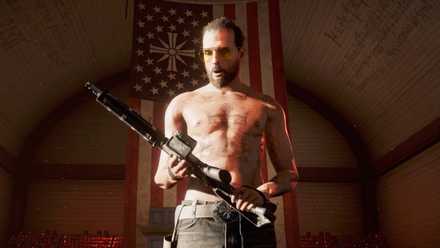
The cult from Far Cry 5, which acts as the game’s main adversary and whose leaders serve as its antagonists, is founded upon a basic belief: that they are preventing a cataclysm known as “the Collapse” that will see the end of human society following a global apocalypse. The cult’s leader, Joseph Seed, believes God chose him to protect Hope County from this event, and he has built an entire congregation around this idea.
5 Ways Joseph Seed Is The Best Far Cry Villain (& 5 Ways He’s The Worst)
Prophet figure Joseph Seed is the big bad of Far Cry 5 – but is he a great villain, or a let-down?
The crazy part? He was right. In Far Cry New Dawn, the world is rebuilding following a nuclear disaster called “the Collapse.” You can actually trigger that disaster in Far Cry 5, although the degree of your involvement is unclear. If you try to arrest Seed at the end of the game after killing the rest of his congregation, a series of nukes will hit Montana, and presumably the rest of the U.S. The other option is to let Seed go, although that ending comes with its own negative implications. They just aren’t quite as devastating.
Dark Souls 3
The Cycle Repeats Until It All Falls Apart
It’s pretty easy to play through all three Dark Souls games without really interacting with the narrative, as it’s mostly delivered through item descriptions and vague NPC dialog. However, you do have to make a choice at the end of the first game, either linking the flame once again or walking away and damning the world to darkness. The latter option seems like the “bad” choice at first blush, but there’s some subversion here. Linking the flame is exactly what Gwyn did, and it’s why the world of Lordran is overrun with the undead when you arrive, and all of its rulers are either insane or have fled.
As you’re exploring Dark Souls 3, you’ll encounter some familiar locations. You’ll come across a desolate city called Anor Londo, which was also the name of the city in Dark Souls. Shortly after that, you’ll enter the Grand Archives, which bear a resemblance in name and design to the Duke’s Archives. When you reach the Ringed City DLC, these connections are even more blatant, including a visit to Ruined Earthen Peak and some allusions to King Vendrick, both drawn from Dark Souls 2. The implications here are that both your original character in Dark Souls and Dark Souls 2, as well as countless others, have continually linked the flame, restarting this cycle of hollowing over and over and eventually sending the world crumbling to its demise.
Pikmin 4
Olimar Rises Again… Or Not
It’s easy to overlook that there are multiple endings to the first Pikmin. It all depends on how many ship parts you collect within the 30-day timeframe. There are 30 parts to collect in total, but if you come up with fewer than 25 of them, you’ll get an ending where, when Olimar tries to leave the planet, his ship explodes. The Pikmin then gather up Olimar’s corpse, put him in an onion, and out pops an Olimar-Pikmin hybrid dubbed “Pikmar”.
At the start of Pikmin 4, a rescue team led by Captain Sheperd picks up a distress signal from PNF-404, the same planet where Olimar crashed in the first game. As you explore, one of your crew members will be kidnapped by local fauna, put in an onion, and turned into a Leafling. These creatures are an evolution of the Pikmar from the first game, thereby confirming that game’s bad ending as canon. However, Pikmin 2 & 3 follow the first game’s “good” ending, so it’s only Pikmin 4 where that ending is canonized.
Fatal Frame 3: The Tormented
Sibling-Centric Trauma
The first and second Fatal Frame games end on similar “bad ending” story beats, but in very different ways. The first game’s standard ending, which most players will see, involves the protagonist Miku’s brother, Mafuyu, sacrificing himself to help seal away the darkness threatening to destroy the world. Fatal Frame 2: Crimson Butterfly‘s bad ending, known as the “Crimson Butterfly” ending, involves the protagonist, Mio, strangling her sister to death while under an evil trance.
The Best Horror Games That Take Place In Small Towns
There are tons of backdrops for spooky games, but some of the classics still reign supreme. These are the best horror games set in small towns.
Both Miku and Mio make appearances in Fatal Frame 3: The Tormented, so it’s easy to see which ending actually took place for them. In both cases, the ending where their sibling died is canon. Miku, once again a playable character, is still grieving her brother’s death, while Mio is deeply traumatized by being forced to murder her sister. In typical Fatal Frame fashion, good things rarely happen to these characters, but it makes for great storytelling.
Max Payne 3
It’s His Last Name Because That’s What He Feels
This canonization is the least surprising on this list because Max Payne’s life sucks. That’s a feature, not a bug, and it’s what makes him such an iconic protagonist, but you can’t deny that this dude suffers a lot. Take the ending of Max Payne 2: The Fall of Max Payne, for example. He’s rescued by the woman he loves, Mona Sax, only for her to betray him. Then, when her feelings for Max prevent Mona from killing him, she’s killed by a Russian gangster instead and dies in Max’s arms.
There is, however, a good ending. Completing Max Payne 2 on Hard mode will unlock an alternate ending where Mona lives. While this is clearly a happier ending, it really doesn’t fit the game’s themes or the series’ overall tone. Max Payne 3 seems to feel the same way, because the game starts with Max as a broken, hopeless man, which is why he’s willing to take on a veritable suicide mission. While there is no mention of Mona at all in Max Payne 3, Max’s willingness (and almost eagerness) to stare death in the face suggests that no loved ones are waiting for him back home.
Nier
When The Gag Ending Becomes Canon
We’re going to be talking about some Yoko Taro lore here, which is to say that there won’t be enough room to get into the nitty-gritty of things. Suffice it to say that the Nier franchise and Drakengard franchise are connected by more than just their creator. The fifth ending to the first Drakengard game, also known as “Ending E” and considered by many at the time to be a gag ending (while also being objectively the worst outcome), actually leads directly to the events of the first Nier, albeit with a bit of a time jump.
In short, the Queen-beast, Drakengard’s final boss, is going to destroy the world by warping space and time. Caim can use Seere’s powers to seal the Queen-beast in crystal, which leads to the “true” ending, or he and Angelus can battle the Queen-beast head-on. Taking the latter approach causes the Queen-beast to release all of that pent-up time energy, transporting the trio to Tokyo in 2003. There, you take on the Queen-beast in a rhythm-based battle, and defeating her turns her into a salt statue. Then the Japanese Air Force blows you up. As insane as it sounds, these events lead to the propagation of White Chlorination Syndrome, the disease that slowly destroys the world, leading to the events of Nier 1,000 years later.
7 Saddest Endings In Open-World Games, Ranked
Open-world games are masterfully crafted with beautiful stories, but sometimes end tragically.
