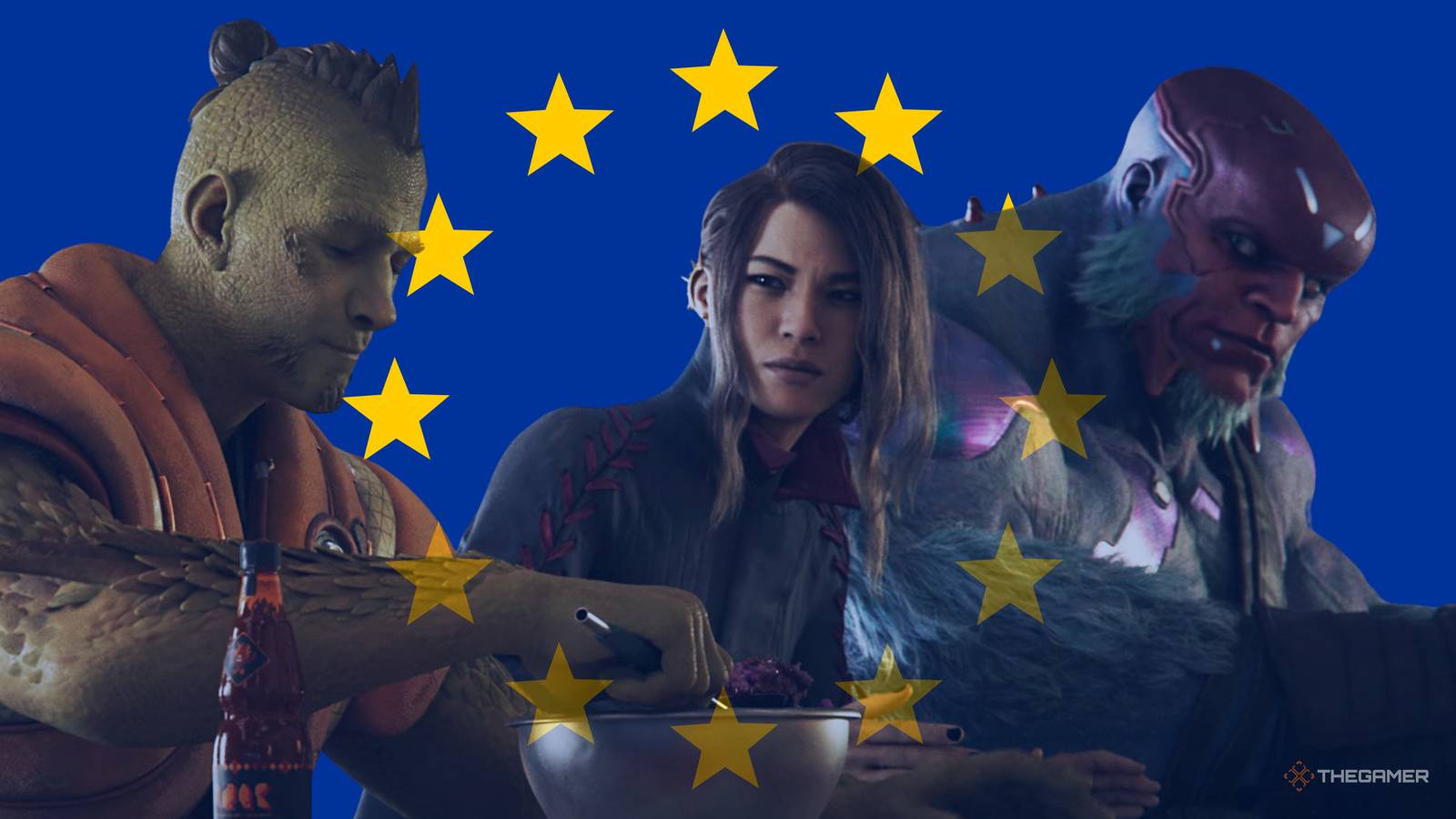
Concord is a cautionary tale of how quickly a live service game with a huge budget can falter and then disappear entirely. The Sony-funded hero shooter was released on August 23, 2024, and was canceled just two weeks later on September 6 due to commercial underperformance.
It's one of the costliest failures in gaming history and became a poster child for studios quickly shutting down dying live service games, rather than the previous standard, which meant keeping servers online for years after release.
Although everyone who bought Concord was refunded, the game has become a talking point in game preservation circles, as this huge project suddenly disappeared and became unplayable overnight, even for players who bought a physical copy.
Concord will be recorded in the minutes of the European Parliament
Recently, Ross Scott, founder of the popular Stop Killing Games movement, appeared in the European Parliament in Brussels to speak about the importance of introducing legislation to prevent developers from making games unplayable with impunity.
Scott drew an analogy to someone buying a book – a publisher can't come into your home and take the book away from you after you've bought it; or an insurance policy, which has clear terms for when the insurance becomes void, unlike video games, which can legally be taken offline whenever the publisher wants.
Scott cites the dubious laws surrounding video game licensing, which are inconsistent and legally dubious. The industry is largely unregulated in this area, something Stop Killing Games wants lawmakers to address.
The only The goal of Stop Killing Games is to prevent publishers from permanently disabling games. There is no expectation that companies will continue to support games or host servers indefinitely, despite constant misinformation on this topic from opponents of the initiative.
As for Concord, Scott addressed the game in comments following his presentation: “Earlier the game Concord was mentioned, it's actually a prime example because it's been publicly stated that at least €370,000 was spent developing that game, and it didn't include an end-of-life plan that we're looking for,” he began.
“Most of the cost of developing games tends to come from other areas, like art assets or marketing. This is just one part of the hundreds that already go into making a game,” explains Scott.
“Sometimes industry costs or estimates…how much this could cost…are wrong, because they expect the game to have every single feature it had when it was supported, and many of these can be retired and don't even make sense for a game that's no longer supported, like administration, or anti-cheat measures, or account management…things like that. There could be hundreds of these micros and services that customers still don't have. So that should be taken into account when calculating the potential cost.”
This is a direct response to lobbyists who want to make the process of not disabling a game seem like an incredibly expensive and time-consuming operation. As Scott explained, they make extreme arguments about costs that every service a game currently has will be required in the game's post-support state.
“As far as we are concerned, they can end the support [the day after release]but as long as the game is not destroyed, we would find it acceptable,” Scott concluded, emphasizing the movement's sole mission.

Harmony



3.0/5
- Released
-
23 August 2024
- ESRB
-
t
- Developer
-
Firewalk Studios
- Publisher
-
Sony Interactive Entertainment