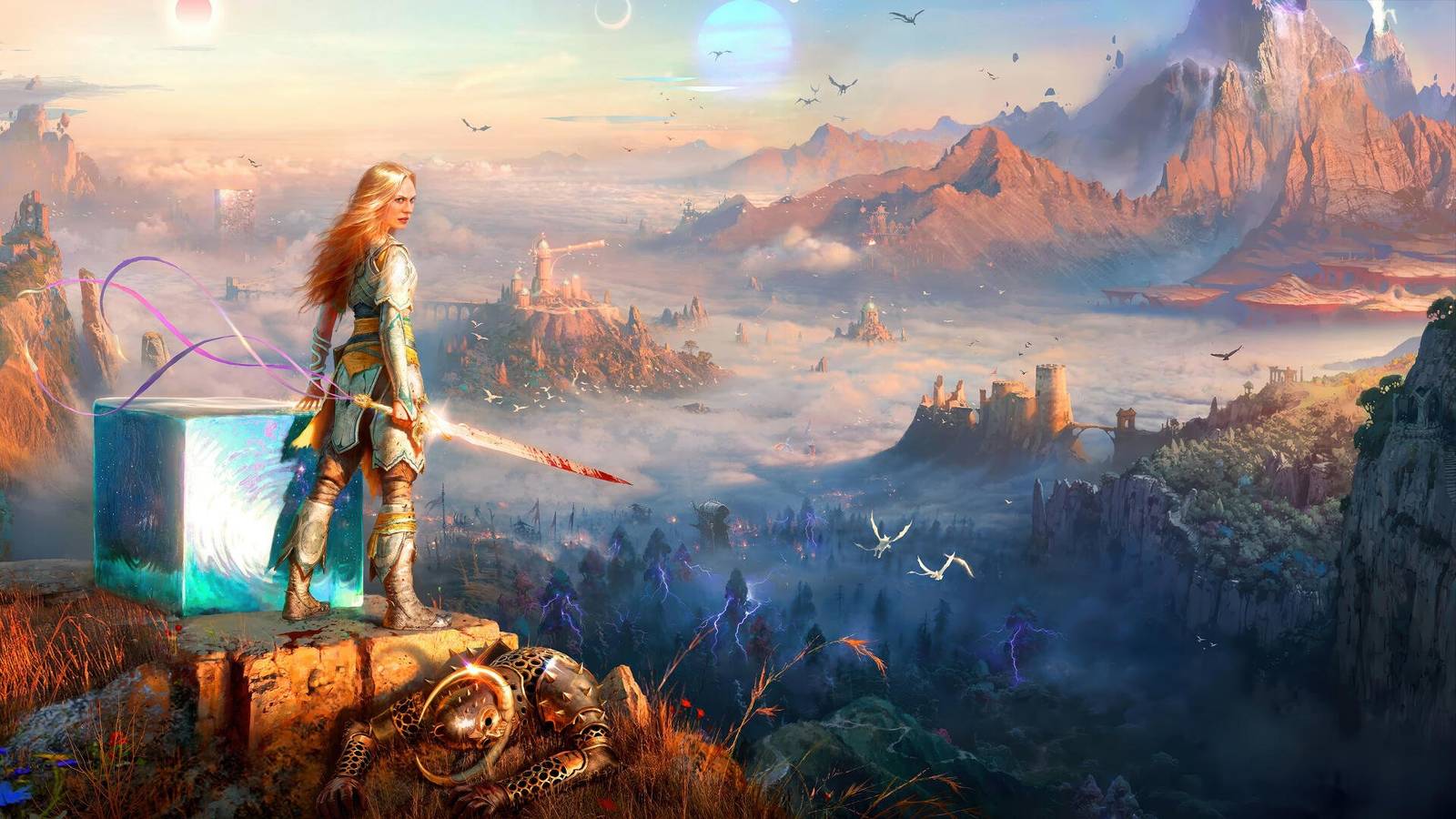
The more I think about God of War Laufeythe more excited I get about it. I might even be a bit more hyped for it than I was for God of War Ragnarokas I imagine that Laufey will reveal many of the machinations unfolding behind the scenes in the previous two entries. Plus, God of War Laufey affords us the opportunity to see a new corner of the God of War universe, from a unique perspective.
Major spoilers ahead for God of War Ragnarok.
Important to note is that God of War Laufeydespite being broadly considered part of the Norse saga, may not actually take place in one of the Norse realms. The game is set in a place called Everywhen, a sort of interstitial pocket dimension housing the souls of creatures from various mythologies and religions. This much is indicated by the introduction of Egyptian goddess Sekhmet and Mongolian god Begtse. Whenever breaks an important rule that has been established since the Greek God of War games: when someone dies, they travel to the afterlife associated with their homeland or religion. This is why Kratos goes to Hades when he dies in the Greek games, even though other afterlives clearly exist in the game world. It's through this subversive approach that God of War Laufey might bring back one of the series' best characters.
God of War Laufey's True Big Bad is Hiding in Plain Sight
God of War Laufey has already shown off a few of the threats Faye will be facing off against, but the biggest could be lurking just around the corner.
There's a Chance God of War Laufey Will Bring Back Odin as an Opponent
In the final showdown with Odin at the end of God of War: RagnarokAtreus traps the All-Father's soul in a magical marble-shaped device. It's not totally clear what Odin's experience in the marble is like, but the game makes it clear that he's not, strictly speaking, dead. That is, until a vengeful Sindri snatches the marble away from Atreus, smashing it with a hammer and, presumably, destroying Odin's soul. But there's more than enough ambiguity introduced by Everywhen to bring Odin back into the fray.

Rearrange the covers into the correct US release order.
Start
Rearrange the covers into the correct US release order.
Easy (5) Medium (7) Hard (10)
There are so many questions that God of War Laufey needs to answer, but one that's often overlooked is: how did Laufey die? It's strongly implied that she passed from some sort of natural cause, but what if her fate was somehow similar to Odin's? What if the fates of Begtse and Sekhmet were also similar, and that's why they are in Everywhen? Perhaps Everywhen is somehow connected to this sort of unusual death.
A more straightforward interpretation derives from the official description of Everywhen as the “afterlife of the gods.” It's not clear what would have happened to Odin had he suffered a marble-less death, but he is a god, so perhaps Everywhen would have been his final destination regardless. There are some issues with this theory, though, namely that the “afterlife of the gods” description is likely not comprehensive: Laufey herself is not a god, and it's unlikely that all of Begtse and Sekhmet's minions are gods, so the realm may not be so exclusive. Additionally, it would be tricky for Santa Monica to write around the fact that each good pious each mythology is present in Everywhen, but anything's possible.
God of War Laufey CAN Bring Back Odin, but Should It?
It's always risky when a franchise brings a character back from the dead. There are definitely ways to make it interesting—the God of War franchise itself has done it—but it's more likely to feel underwhelming. After all, if a character's death was at all impactful, then reviving them, even through a technicality (eg a ghost, spirit, persistent hallucination), can cheapen or even negate that original impact.
Having said that, Odin and Laufey have history. As a Jotunn, Laufey had to experience the genocide of her people at the hands of the All-Father, who believed in Aesir superiority. Laufey herself was renowned for her staunch opposition to the Aesir gods, even dueling with Thor at one point and emerging in one piece.
It's actually been theorized that Laufey died from injuries she sustained during her battle with Thor, making for a potentially charged reunion were she to meet the now-reformed god in Everywhen.
Laufey and Odin are connected on another level as well, although it is possible that neither of them are aware of this. Odin is obsessed with knowledge, and the Jotnar have powers of precognition and special insight, which is likely part of why Odin sought to exterminate them. It's also why Odin was obsessed with the Mask of Creation, which he was looking to reconstruct in God of War Ragnarok. A mask is referenced in the God of War Laufey trailer (a splinter of “another mask” is embedded in Laufey's palm), and unless the franchise plans to introduce another, unrelated magical mask, it's probable that this is the very same Mask of Creation, or at least strongly connected to it.
What's That Weapon?

Identify the silhouettes before time runs out.
Start
Identify the silhouettes before time runs out.
Easy (7.5s) Medium (5.0s) Hard (2.5s) Permadeath (2.5s)
It follows, then, that Laufey is somehow linked to the mask. This would explain why she led Kratos and Atreus to Jotunheim in the first place, as she wanted them to find out about Ragnarok and, by extension, Odin's plans regarding the Mask of Creation. If she were ultimately responsible for thwarting Odin's plans with the enigmatic device, then it would make sense for him to seek revenge against her in Everywhen. And if she learns about what she put her friends and family through in the previous two games, she may want some revenge of her own.


- Publisher(s)
-
Sony Interactive Entertainment
- Number of Players
-
Single player