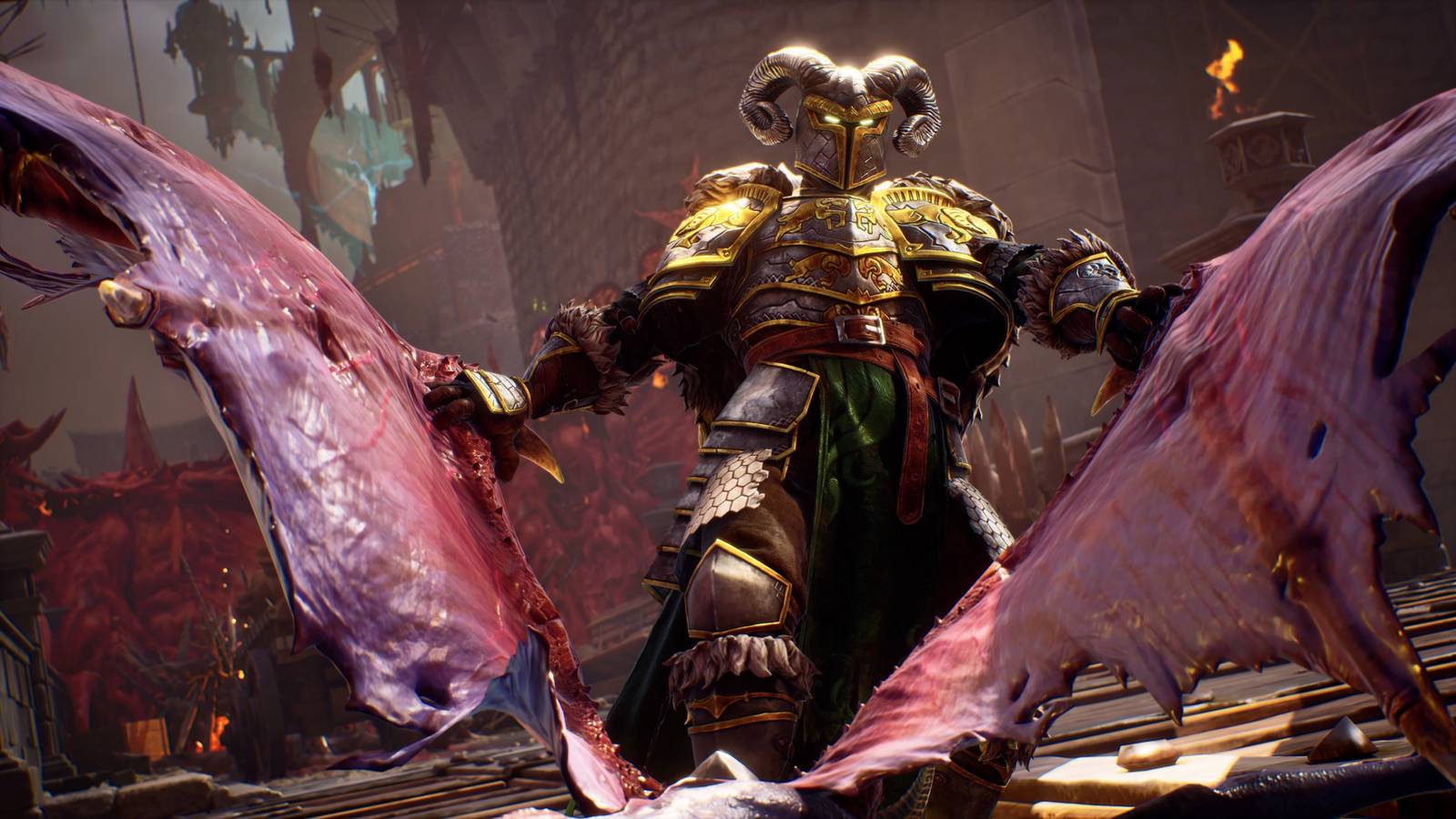
The modern video game industry is currently undergoing a massive structural change as the unsustainable gold rush for endless monetization of live services officially comes to an end. One of the best examples of this recently is Bungie's decision to effectively end all planned live service support for Destiny 2 with one last major update, marking the death of one of the genre's greatest pioneers and casting a shadow of doom and gloom over the genre itself. In the wake of this industry-wide decline, more traditional standalone titles like ProbablyMonsters' Crimson Moon is emerging to claim a jaded player base that prefers complete experiences to those that promise to evolve.
In response to this widespread consumer fatigue, many forward-thinking developers like ProbablyMonsters are completely abandoning multi-year seasonal roadmaps in favor of projects that offer players the full experience from the ground up. I recently spoke with ProbablyMonster's Product Manager Mark Subotnick and Game Director David Lesperance about Crimson Moon to discuss the team's own creative pivot towards this impending reality, after choosing to leave their live service roots behind and instead turn to creating something with a clear beginning and end. Their upcoming Gothic High Renaissance action-adventure RPG, in short, represents a major studio course correction that prioritizes complete player satisfaction over daily sustenance.
The Crimson Moon shifts away from seasonal bloat

Despite being founded in 2016, ProbablyMonsters has only been in the public eye for about 7 years now, so I was curious about the studio's internal journey and how it ended up here. When Subotnick responded and began diving into the long-term development of ProbablyMonsters, he was quite blunt about the financial pressures game studios are facing right now. As he explained it, ProbablyMonsters was formed at a time when a lot of money was flowing into video games, especially from investors who believed that live service games were the future.
ProbablyMonsters originally built several internal teams around that idea, with studios working on online games meant to keep players coming back for years. Over time, however, the market changed, and the company had to examine whether a future rooted in that sector of the industry still made sense. According to Subotnick, studio management eventually decided that chasing the live-service audience was too risky, so it moved toward projects with clearer goals, stronger creative identities, and a more definitive end point:
We kind of achieved success, but we don't want to repeat that. We also look at what's on our list. It's a bunch of live service games. Well, probably have to think again. So we do. And a lot of changes were made—and it's all documented in other people's articles and history—but Dave and his team were pretty much what we looked at and said, “Yeah, it's staying. It's, A, not a live service game, and B, beautiful, believe in Dave's mission.

That shift away from live service play also influenced the approach of ProbablyMonsters Crimson Moon. Instead of building the game around daily tasks, drawn-out progression, or game systems meant to keep players logged in forever, the team focused on making something much tighter and more restrained. Lesperance described that philosophy as a “single malt whiskey approach”, meaning the aim was to deliver a more refined experience without watering it down:
The philosophy we have is that it is a single malt whiskey strategy. We wanted a very distilled experience. We didn't do a live service game. We wanted to do something that really got back to what made gaming fun and exciting, especially when I was growing up.
Lesperance went on to emphasize how Crimson Moon is built around action-RPG mechanics that are meant to feel good right away, while giving players a clear sense of progression. The result is a more traditional game with a defined beginning, middle and end, rather than one designed around endless engagement. By cutting out artificial filler, ProbablyMonsters tries to make every part of Crimson Moon feel like it's there for a reason – narratively, mechanically, or otherwise.
How Crimson Moon stands out in a saturated market
Moving away from the live-service model also provides Crimson Moon a much more prominent place in a crowded market. Many multiplayer games compete for everyone's time, though Crimson Moon is built as a complete game with a clear price and end point. Subotnick said that positioning it as a premium double-A game with triple-A polish gives ProbablyMonsters a chance to reach players who want something polished without being asked to treat a game like a second job:
It's also nice to see a game in this genre with a rich color palette, and it's nice to see the mix of hot metal music mixed with this genre as well. We think these things, like all the answers Dave just gave you, give us some distinctness in a tight spot. We can stand out and provide a really clear value proposition to the consumer, high quality AA game that has some AAA sensibility and polish, and some unique aspects that give a reason for people to jump in and experience it.
For players tired of battle passes, daily checklists, and games built around constant engagement, that approach has obvious appeal. Crimson Moon presented as a fully-fledged action RPG first, helping the studio build trust with an audience that has seen too many live-service games overpromise and fizzle out. In a market where so many online games are struggling to survive, a focused, traditional release can feel surprisingly fresh.

Ultimately, the team's refusal to build an infinite live services ecosystem shifts the primary focus of development back towards pure fun. In a traditional live service game, difficulty curves and progression systems are often manipulated to force players towards microtransactions or artificial time-limiting loops. Crimson Moonon the other hand, uses traditional mechanical mastery while allowing the audience to dictate their own pace and overall challenge levels.
Lesperance pointed out that the introduction of optional cooperative scaling and variable difficulty balances allows the game to be more welcoming to varying skill levels without compromising its core vision. That kind of player-first philosophy respects individual agency, ensuring that those looking for a real challenge are rewarded alongside casual gamers who just want a great story. If nothing else, it serves as a reminder that games succeed when they value the player's time and intelligence—a sentiment that Lesperance echoed in a final statement about his hopes for the game's reception:
Number one, I hope they talk about how fun the game is. For me, that's part of it. That's why we do this. It should be fun. Difficulty is a very important aspect of the game, and we want players to understand the joy of going through difficult experiences. But we also let players choose how much weight they put on the bar.
Crimson Moon is something of a blueprint for the post-service era

The battle in the live services market has made games like Crimson Moon feel more valuable than they might have a few years ago. ProbablyMonsters saw the risks of building around infinite engagement and instead chose a more focused path, which paid off Crimson Moon a stronger identity at a time when players are becoming more selective with their time. A dark fantasy action RPG with a clear scope, a premium structure and a defined end point now feels like a smart response to a market full of games that beg for constant attention.
Crimson Moon also reflects a growing desire for games that feel complete from the start. Players still want a satisfying game and plenty of reasons to keep playing, but they also want to feel that their time is respected. By building around fun, player agency and a more traditional action-RPG structure, ProbablyMonsters makes a clear case that focused, polished games still have an important place in the industry's future.



- Released
-
2026
- ESRB
-
Mature 17+ / Intense blood, violence
- Developer
-
Probably Monster
- Publisher
-
Probably Monster
- Multiplayer
-
Online Co-Op
