Game industry players were among the first to start ringing the alarm bells about generative AI. As other professions and media now fear they will be replaced by the technology, many actors and writers have already gone on strike over the lack of protection afforded them.
Even among these early critics of gen AI, Erica Lindbeck stands out. When AI voice cloning was little more than a party trick on TikTok, she objected to it being used on her voice for memes and other gimmicks in 2023. Some of her colleagues agreed, like Roger Clark and Yuri Lowenthal, and urged their fans to stop messing around with apps that cloned their performances, even if it was just for gags.
Now, a few years later, Lindbeck fights back against this by appreciating humanity more than ever.
“When I go to a restaurant, and I have a wonderful server who talks to me and looks me in the eye… I have a new appreciation for human interaction,” she tells me during a Zoom interview. “I don't want to order from my car. I want to tip my barista.”
Lindbeck believes this extends into the gaming world as well. Her latest gig, extraction shooter Marathon, launched last month, where she plays Vandal. In a sea of negativity, Bungie won back a lot of goodwill with its cast reveal, which showed it was absolutely packed with talent – human talent.
“I actually didn't think about it that way until I read a Reddit comment that said I think they did it really purposefully,” Lindbeck says, thinking back to the cast. “[Bungie] wanted everyone to know that there were people behind all those voices.
“I totally agree with them. I think they said 'hey, there's a human behind every voice in this game.'
It wasn't just the gesture of showing them all off to the world, but seeing who her co-stars were as well. From Jennifer English to Ben Starr, there were big names across the board. “VO is so incredible, like everyone sounds so wonderful, and that cast is just… I'm standing on the shoulders of giants.
“I really love that, because with these live service games or multiplayer games, VO isn't necessary as much as with a narrative game, like a longer form game,” she continues. “So I think the game holistically is just really, really, ace.”
Why Erica Lindbeck loves VO, no matter what character she plays
Lindbeck is not best known for playing any particular role. Depending on your favorite game or show, she can be any series of characters to you, whether it's icons like Barbie or Futaba Sakura in Persona 5. You can also describe her as a character actor, throwing herself into a variety of supporting roles over the years, some of which we'll touch on as we chat.
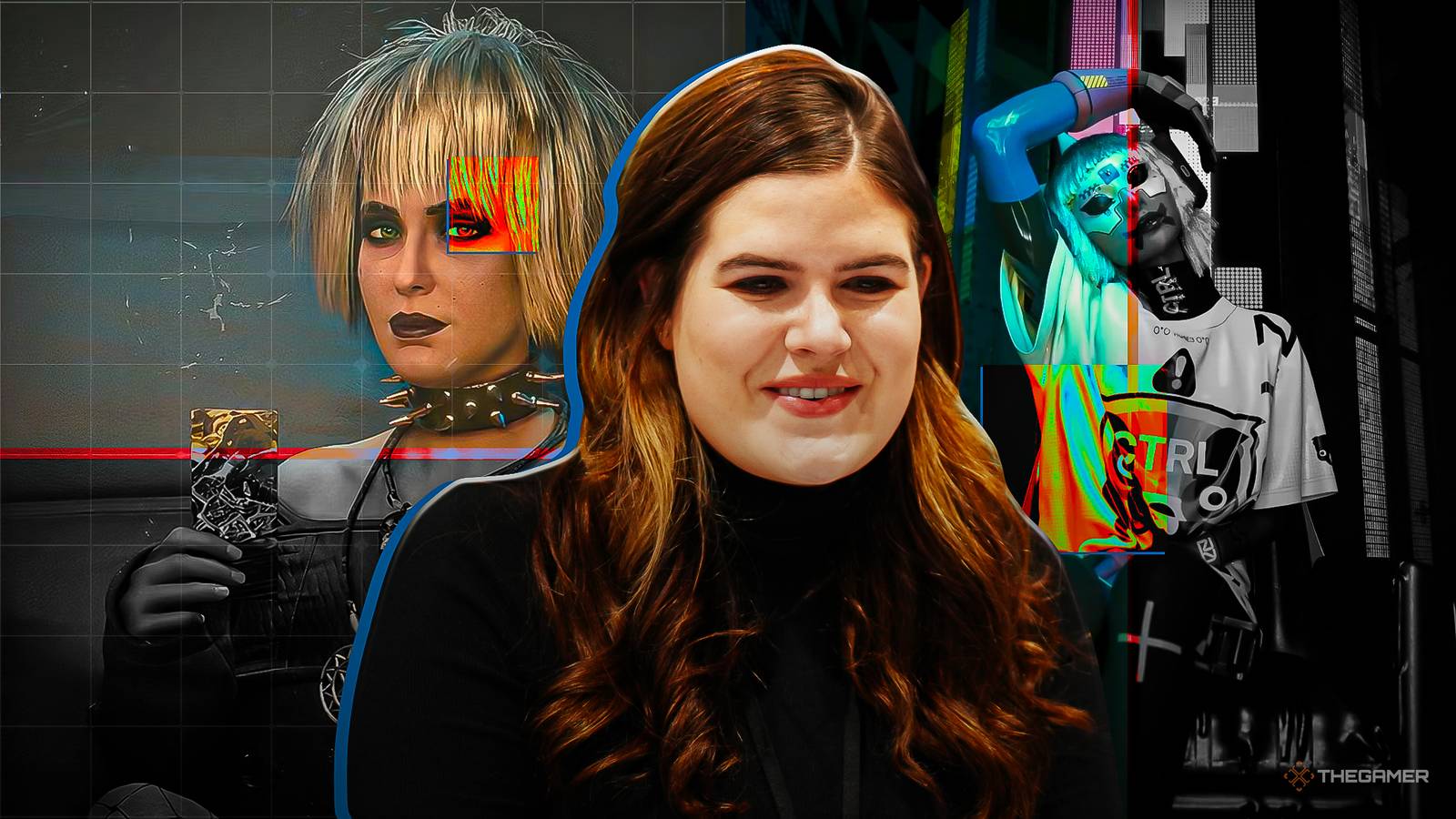
One of those supporting characters happens to be one of her favorite roles to date: Misty from Cyberpunk 2077. She also plays Meredith Stout and Spider Murphy in CDPR's dystopian RPG, which were originally meant to be her bigger roles.
“The character that I booked in Cyberpunk was Meredith, and then Misty was a random side character that they threw at me,” she tells me. “We shot her several times because we didn't know what to do with her.”
Describing this original version of Misty as “vapid” and “a bit goofy”, they eventually hit the right tone. Both she and the writers loved Misty so much that her role kept expanding.
“We ended up with this soft New Jersey Harley Quinn thing. And now she's one of my favorite characters I've ever voiced. I love her so much,” she says. “They kept writing more for her, making Misty a much bigger character than Meredith.”
“I get bored very easily. So this is kind of the perfect job for me.”
It strikes me that this is an aspect of VO that many would overlook. The AI wouldn't tell you if the words you tell it to say just don't sound right, or might be able to reflect or change course. It does what you ask with little or no nuance. But here, Lindbeck and CDPR collaborated – although she gives CDPR most of the credit for how it turned out.
“The writing does a lot of heavy lifting,” she explains, but adds, “There was a lot of freedom and a lot of trust there.”
This love of the game is not only reserved for these larger projects. As we chat, I make an offhand comment about hearing her voice in Smiling Friends right before the interview, and she fondly remembers all the characters she played there. Then we go on a tangent about Sonic, where she plays both Blaze and Omochao in all their appearances since 2019.
In other words, you can't really say she has a type. “I get bored very easily, so this is the perfect job for me.
“I both love and hate how fast VO moves,” she explains. “With the camera, you can dive into a project for six months, move somewhere and film. [But] for me, there are so many auditions all the time, and I can work on two different, three different, four different projects in one day. I could do a McDonalds commercial, I could work with Sonic, I could work with Smiling Friends. It's like code-switching, which I love, because my brain is trying to be entertained all the time, and really loves that change.”
Walks away from the microphone
VO not only allows Lindbeck to jump between different roles – it also allows her to be less forward when she wants to be.
However, she says this is becoming more difficult in recent years, and for good reason – game actors get their flowers. With more awareness of the actors behind the characters in the games we play, it means there's a greater interest in chatting with them about their craft.
“It's been really interesting as someone who likes to hide behind the microphone a little bit. It's forced me out of my comfort zone,” she tells me. “I literally went to school for theater. I've been acting my whole life, but I've kind of been comfortable in my little ivory tower with my microphone for years.
“There are so many different mediums for performance. I love them all. I love VO – that's what I've gotten some traction with in the industry, it allows me to do so many different roles that I wouldn't necessarily be able to do on camera.”
Sticking to VO doesn't mean keeping your face out of the limelight. Fandom has only become more mainstream, so even if you don't star, your character will have fans, and they'll want to see who plays them and interact with them outside of the games, shows, or whatever they call home.
“I love to walk [to conventions] and get some face time with these people and hear them tell their stories.”
“I judge it by convention, don't I?” she explains. “I go to cons and see who comes up. I was bullied into doing a Misty print. I had so many people come up to me and ask me, 'Where's Misty?' I saw Misty cosplayers. So damn cool.”
Lindbeck admits she tried to avoid being “chronically online” for the sake of her own mental health, so meeting fans at conventions sounds like the perfect amount of exposure.
“I love going and meeting these people and hearing them tell their stories and feeling so… I don't know if the word is validated, but just so excited to be sitting there,” Lindbeck tells me. “It is a great privilege to be a small part of some of these people's mental health journeys.
“I don't save lives, but if I can be a part of something that brings someone comfort during a tough time… I hear a lot of pandemic stories about Persona 5 and Cyberpunk.”
Still, while we're all becoming a little more aware of who's voicing our favorite characters, Lindbeck doesn't want to take all the credit. When looking at her work on the Spider-Man games, for example, she's quick to give credit to everyone involved.
“Three women made Black Cat,” she says. “I did the voice, the facial and some of the mocap. And then there was the stunt woman, Amy Johnston, who is incredible. And then there was Jayme Lynn Evans, who is the face model. Three women came together to create the mega babe that is Black Cat.”
Since our chat, it has been revealed that Lindbeck is reprising his role as Black Cat in Marvel Rivals.
The actors who can lose the most to AI
Insomniac was obviously happy to have three different women bring Black Cat to life, but increasingly the gaming community is concerned that actors will be phased out entirely.
Early adopters of AI acting have still hired actors, as we saw with Arc Raiders. However, they used voice cloning to create additional lines, which made recording sessions shorter and did away with the need to bring the actor back for updates (it has since gone back due to quality issues). While the actor in this case gave consent to cloning, it still feels like Pandora's box is opening and will be impossible to close once we cross such a line.
It doesn't sound like Bungie will be doing this with Marathon anytime soon, as Lindbeck mentions that he's recently coming back to record more lines for Vandal. In fact, it's not necessarily her work she's worried about, but the next generation of actors.
“I feel pretty lucky right now that I got into the industry years ago, because I think the things that are going to be eliminated are the entry-level roles,” she tells me. “These are the roles that can pave the way for your entry into the industry.”
We've seen this recently with Jennifer English, who went from playing a bunch of different NPCs in Divinity: Original Sin 2 to an award-winning lead performance as Maelle in Clair Obscur: Expedition 33.
Lindbeck is no stranger to this. “I remember the first triple-A games I ever booked,” she continues. “I think it was like Civilian A, Salesman B. I'm sure those roles are still ostensibly voiced by people, but I would think those would be the first to go.”
That said, it goes back to Lindbeck's love of messy human performance, something she believes will prevail in the end.
“On a broad level, yes, it feels very cloudy and scary,” she explains. “But I think the core of really good performances is the specificity of our choices, of our very human choices that we make to create these characters.
“Call me blindly optimistic, but I just don't see how AI can replicate that. I just don't.”

Jennifer Hale says “being decent to each other” is how the gaming industry can heal
Jennifer Hale discusses what she's learned throughout her career and how she's dealing with the current political climate.
