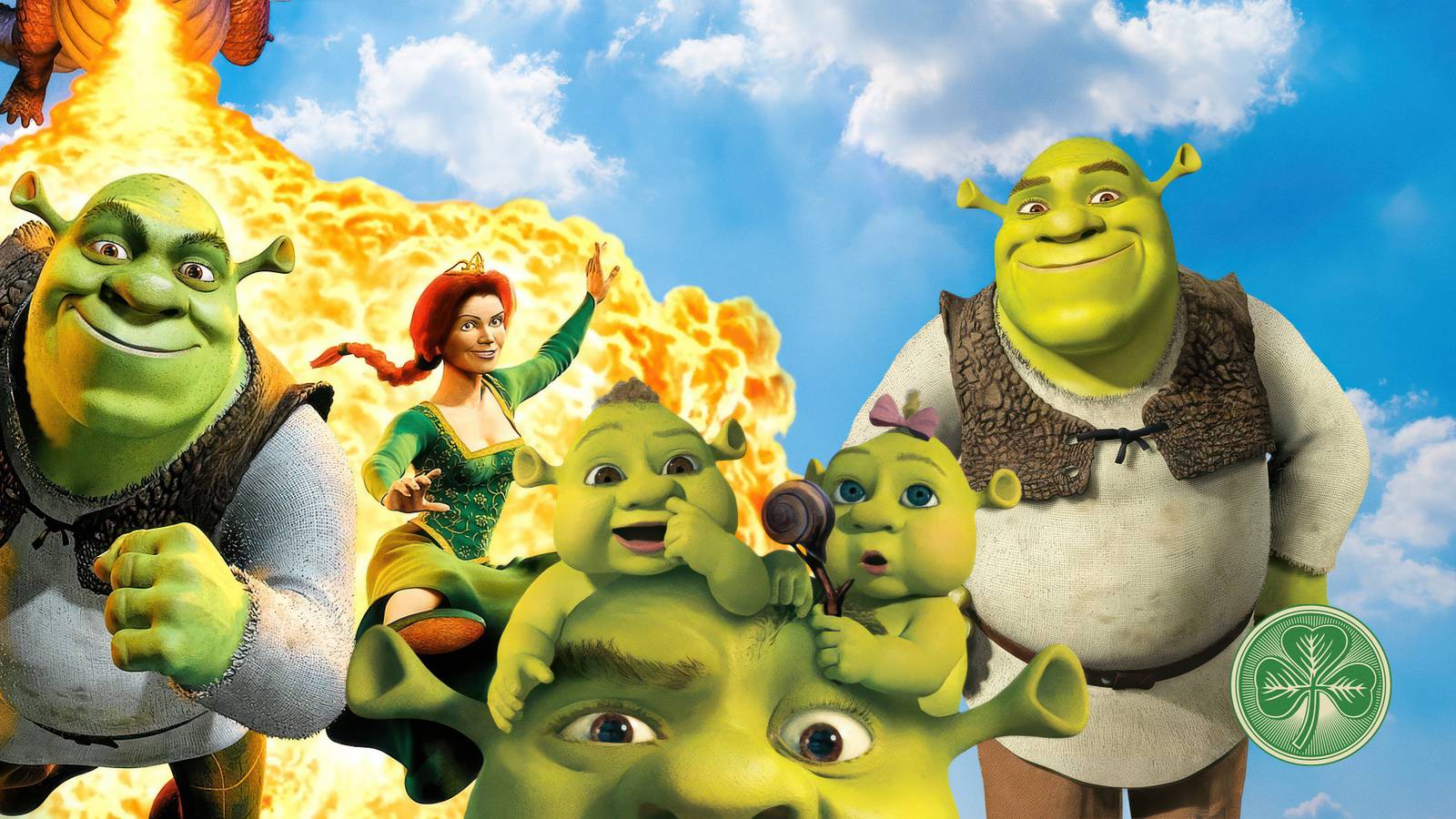
In 2001, DreamWorks animation released Shrek, a film that quickly caught on with audiences due to its memorable cast of characters, irreverent sense of humor, and unique take on the fairy tale genre. Since then, there have been three more main Shrek films — with a fifth coming in 2027 — multiple shorts and specials, a Broadway musical, theme park rides, and, of course, lots and lots of video games. Shrek has become one of DreamWorks’ most expansive and beloved franchises. While it’s not surprising for an animated film to get a tie-in video game or two, Shrek has gone above and beyond with dozens of game appearances across platforms and genres.
The Official Shrek Tie-In Video Games
Each of the four main Shrek films received a tie-in game. The first was published by TDK Mediactive, with all the following published by Activision in partnership with DreamWorks Animation. Each was a fairly standard platformer, receiving mixed to positive reviews. Notably, each game featured mini-games and transportation segments (usually involving Shrek and Fiona’s famous onion carriage), that would later inspire DreamWorks to take Shrek into the party and racing genres. The games were:
- Shrek — released for Xbox in 2001 and GameCube in 2002 (as Shrek: Extra Large). Takes place after the events of the film, with Shrek rescuing Princess Fiona from the wizard Merlin. Notable for Shrek’s ability to defeat enemies by burping and farting.
- Shrek 2 — released for GameCube, Game Boy Advance, PlayStation 2, Xbox, and PC in 2004. Follows the plot of the movie. This game received the highest ratings of any Shrek title – fitting, given the second Shrek film is one of the most highly regarded. It received praise for its humorous writing and inclusion of genuinely tricky environmental puzzles.
- Shrek the Third — released for Game Boy Advance, PC, PlayStation 2, PlayStation Portable, Xbox 360, Nintendo DS, and Nintendo Wii in 2007. Follows the plot of the movie. Its high point was the variety of playable characters, each with a unique play style, such as Shrek’s brawling and Puss in Boots’ swordplay.
- Shrek Forever After — released for Nintendo DS, Nintendo Wii, Xbox 360, PlayStation 3, PC, and mobile in 2010. Follows the plot of the movie. Fans enjoyed the “multiple timeline” mechanic, with Shrek able to switch between the “real” world and the one created by his deal with Rumpelstiltskin.
Shrek Gets Into Partying And Racing
From the beginning, it seems that DreamWorks Animation knew what it wanted to do more with the Shrek franchise then to just have the ogre recap his adventures in standard platform style. And what they wanted to do was race. Apparently, in addition to their onion-like layers, ogres also have a need for speed.
Shrek On The Course

There have been a total of five kart racing games featuring Shrek and his friends: three specifically Shrek-related outings, and the larger DreamWorks Super Star Kartz in 2011 and DreamWorks All-Star Kart Racing in 2023. The Shrek racing games all received generally negative reviews, being derided as Mario Kart clones that did not innovate on the formula in any way. Shrek Smash n’ Crash Racing developed a cult following, however, and the mobile game Shrek Kart, launched in 2009, did operate for eight years before shutting down in 2017. The character Donkey using his wife, Dragon, as his “kart” in these games has also become somewhat of a meme among Shrek fans.
DreamWorks All-Star Kart Racing has fared somewhat better, receiving some praise for its visuals and voice acting. Interestingly, its Shrek representation is one area where the game saw criticism. Only Shrek, Fiona, Donkey, Lord Farquaad, and Puss in Boots appear, with two other slots taken up by Puss in Boots: The Last Wish characters Kitty Softpaws and Wolf. Some reviewers and fans criticized the lack of fan favorite characters such as the Fairy Godmother, Prince Charming, Pinocchio, and Dragon, who notably doesn’t appear as Donkey’s mount (although his kart resembles her.)
Party In The Swamp

The Shrek kart-racing games may not have managed to successfully compete with the Mario Kart series, but did Shrek and his friends’ parties match up to Mario Party? Between 2002 and 2008, the lovable ogre starred in four party games, each utilizing the mini-game-based gameplay style popularized by the Mario Party subseries. These games were:
- Shrek: Treasure Hunt – released in 2002 for PlayStation
- Shrek Super Party — released in 2002 for Xbox, GameCube, and PlayStation 2
- Shrek’s Carnival Craze — released in 2008 for PlayStation 2, Nintendo DS, Nintendo Wii, and PC
- Shrek Party — released in 2008 for Java ME. One of the only Shrek games to be published by Gameloft, rather than Activision or TDK Mediactive.
Unfortunately, none of the four games reviewed well, with criticism of the titles generally highlighting the same points: clunky controls and repetitive, uninspired mini-games. Shrek Super Party in particular received scores of 2/10 and 3/10 from multiple reviewers. Several stated that it felt like a rushed Mario Party clone with only a few mini-games to choose from, none of which were particularly fun or memorable. Carnival Craze is generally considered one of the worst Shrek games of all time. Notably, no party game was released alongside Shrek Forever After in 2010, and its official tie-in game significantly toned down the presence of mini-games.
The Ugly Stepsister Of The Shrek Franchise: Fairy Tale Freakdown
Kart racing, party games, platformers – what other popular genre could be missing from this particular tale? Oh, that’s right: fighting games. Shortly after the release of the first Shrek film, it was clear that DreamWorks Animation would be trying to market its loveable ogre in any way possible. And Shrek had the pretty fun “fight” scenes of Shrek taking down would-be questors in Duloc (memorably set to the song “Bad Reputation”) and facing off against Dragon, so a Shrek fighting game would be a pretty logical choice, right?
Unfortunately, the game in question, Shrek: Fairy Tale Freakdown, was more than just garden-variety bad. Released in mid-2001 for the Game Boy Color, the game quickly gained notoriety as one of the lowest-rated titles of all time, although certain low-rated Steam games have surpassed it. In particular, Fairy Tale Freakdown is infamous for receiving a score of 0.5 from the site Game Informer. The highly quotable review described the gameplay as “repugnant” and “detestable” and the entire experience as “handheld misery.”
What was so bad about Fairy Tale Freakdown? For one, despite being a 1v1 fighting game, it features only a single-player mode; players are unable to challenge their friends and must be content with AI opponents. Secondly, the game boasts an unimpressive roster of only nine fighters, notably lacking Donkey despite featuring the likes of Robin Hood and Lord Farquaad’s assistant Thelonius. Finally, it offers repetitive gameplay with little strategy, a limited selection of moves to choose from, and a ‘soundtrack’ seemingly consisting of only a single song.
Shrek SuperSlam: A Story of Redemption

Fortunately, DreamWorks — now teamed with Activision — did take another shot at a Shrek fighting game with Shrek Super Slam, released in 2005 for a variety of platforms. This game allowed up to four players to battle it out, and featured a larger roster that even included original characters designed for the game, such as Quasimodo and, perhaps most bizarrely, a female unicorn named Anthrax. (Notably, Humpty Dumpty, a character initially created for this game, would later appear in the spin-off film Puss in Boots, using a surprisingly similar design to his SuperSlam appearance.)
SuperSlam received mixed to average reviews, but quickly developed a cult following. A number of memes have been created analyzing SuperSlam from a competitive standpoint, such as creating tier lists or holding discussions about why powerful characters such as Red Riding Hood or the Gingerbread Man have been banned. As of 2026, genuine SuperSlam tournaments have been held at several conventions.
Learning Lessons, Washing Swamps, and More
The above is only a small taste of the many Shrek games produced over the years. Others include a duo of beat ’em up titles, Hassle in the Castle and Reekin’ Havoc, both released for the Game Boy Advance, the cooperative puzzle game Shrek ‘n Roll, and even a pet simulator, Ogres and Dronkeys, where players raise and train Shrek’s ogre offspring and Donkey and Dragon’s hybrid children. Hassle in the Castle stood out among fans for its genuinely fun and addictive gameplay and its unique art style, which gave the characters enormous heads. There have also been multiple games based on the Puss in Boots spinoff series, including a themed version of the popular Fruit Ninja game released in 2011.
Shrek-ducation

The Shrek franchise has even taken a turn for the educational. Between 2006 and 2007, DreamWorks partnered with developer V. Smile to make a series of games aimed at toddlers and young children, primarily centered around Shrek the Third protagonist Arthur. The Swamp Fun games, released for PC in 2002, used Shrek characters and concepts to teach math and phonics to players.
Shrek and his friends also made frequent appearances on Sky Gamestar, a service that produced dozens of games aimed at children. When the service shut down in 2015, it featured eight Shrek games, including five games telling a new story about the Fairy Godmother and her son Prince Charming attempting to poison Shrek and turn the King and Queen into slugs.
Time To Shrek The App Store

Over the past decade, DreamWorks has primarily pivoted to trying to produce a successful Shrek mobile game, with limited success. In addition to the aforementioned Shrek Kart, mobile offerings have included the city builder Shrek’s Fairytale Kingdom, the casual puzzler Shrek Super Fever, and Pocket Shrek, a game where players could “feed” and “tend to” a pet version of the famous ogre (his favorite foods, naturally, included onions and “gross” swamp-based dishes). iOS users could even start their day with Shrek via Shrek Alarm, an alarm clock app that played multiple voice lines from the character. Unfortunately, as of 2026, the majority of these apps have been shut down and are no longer available for purchase.
Get Outta My Swamp (Unless You Plan To Wash It)

Shrek made an unexpected return to the video gaming world in 2024 with the release of PowerWash Simulator’s “Shrek Special Pack” DLC. The pack includes a knight character, a sword-themed power washer, and five maps representing locations from throughout the Shrek franchise, including Duloc, Dragon’s Lair, and, of course, Shrek’s iconic swamp dwelling. The DLC was received positively. Fans praised the bright colors of the DLC’s maps, the size of the levels, and the inclusion of humorous moments such as the cheery puppets in the Duloc stage. Shrek’s power-washing outing represents perhaps the franchise’s most successful appearance in the video game world.
Who’s That Character?
Identify the silhouettes before time runs out.
Identify the silhouettes before time runs out.
Easy (7.5s)Medium (5.0s)Hard (2.5s)Permadeath (2.5s)
With a fifth Shrek movie confirmed to be releasing in 2027, it seems likely that at least one tie-in video game will come with it. It will be interesting to see a Shrek game for modern consoles, such as the PlayStation 5 or Nintendo Switch 2. However, the developers of this inevitable game or games should learn from the past failures of the Shrek games — don’t forget the humor, stay away from the mini-games, and, perhaps most importantly, if it’s going to be a fighting game, include a multiplayer mode and more than a handful of characters.

- Release Date
-
May 18, 2001
- Runtime
-
90 minutes
- Director
-
Andrew Adamson, Vicky Jenson
-

Mike Myers
Shrek / Blind Mouse (voice)
-

Eddie Murphy
Donkey (voice)
-

Cameron Diaz
Princess Fiona (voice)
-

John Lithgow
Lord Farquaad (voice)
