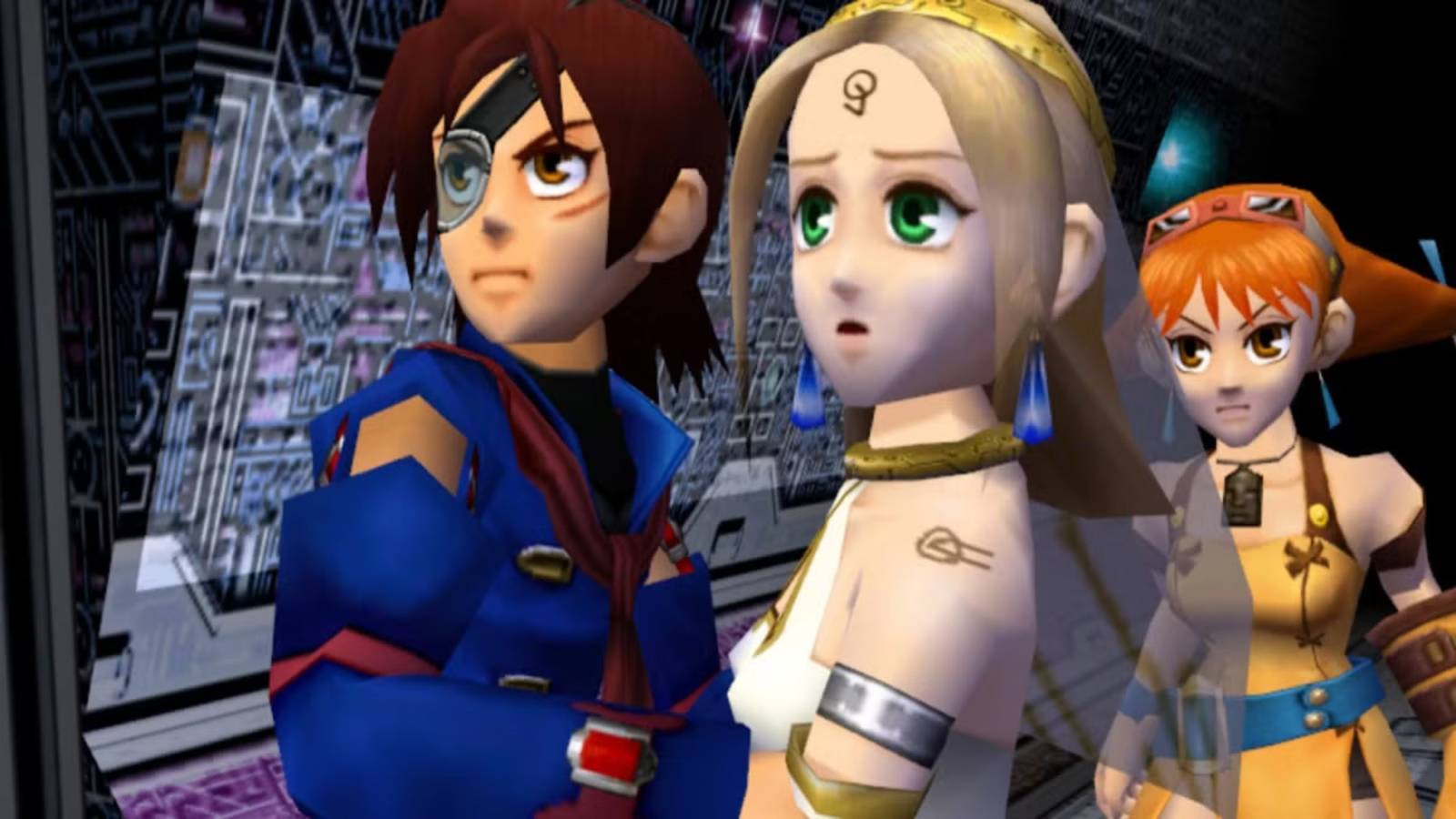
The 2000s was a critical time for the gaming industry. The monstrously successful PlayStation 2 arrived in 2000, with Microsoft’s first Xbox system and Nintendo’s iconic GameCube launching in North America the following year. This set the stage for a console generation marked by a fascinating three-way competition, and of course, some brilliant games. In particular, RPG fans had an embarrassment of riches to enjoy during the 2000s.
Then as now, though, it’s just impossible to play all the games we’d like to. Even if you’ve been an RPG enthusiast for decades, there are some great games from this era that may have passed you by. These five titles, for instance, are still more than worth a playthrough today. With unique gameplay mechanics, engaging stories and varied takes on combat, they’re required reading (or rather, playing) for genre fans.
The PlayStation family of systems were especially rich with great RPGs during this time, so there’s quite a heavy focus on Sony systems on this list. Note, too, that these “perfect” titles aren’t strictly free of cons and downsides, but rather superb titles that were about as good as they could reasonably be at the time.
Scratch & Peek

Identify the cover art while scratching off as little foil as
possible.
5
Vagrant Story
Explore The Dark and Fascinating City of Leá Monde

Vagrant Story

- Released
-
May 15, 2000
- ESRB
-
T For Teen due to Animated Violence
- Developer(s)
-
Square
- Publisher(s)
-
Square


Square Enix seems to love experimenting with the role-playing concept, both mechanically and visually. This has led to intriguing recent releases like Dungeon Encounters in 2021 and the Voice of Cards trilogy. Long before these games, when the company was still simply known as Square, it released Vagrant Story in 2000. Riskbreaker Ashley Riot’s quest to pursue a cult leader in the afflicted city of Leá Monde is one of the most complex and fascinating RPGs in the company’s wide library.
What fascinates me the most about Vagrant Story is the way it combines elements from so many different genres. With its dark, supernatural vibe and sprawling tombs to explore, it always felt to me more of a dungeon crawler. To reach the next area, or a distant door at the end of a chamber, you’ll often need to do a little platforming. Ashley is quite stiff to control, which can make segments like these a bit awkward, but this owes more to the sheer ambition of the title.
If there’s one thing I can never resist in an RPG, it’s a deep, customizable battle system, and this is where Vagrant Story excels. Ashley can freely move around the environment, but attacking brings up a menu in which the player has to choose specific body parts of foes to target. This is how you hit weaknesses, prevent the use of specific abilities, negate movement, and so on. Weapon varieties, from swords to polearms, each have their own strengths and weaknesses, so it’s important to have a varied arsenal that you can switch up as needed. This is where the workshop comes in, a deep and engrossing mechanic in its own right. I spent a lot of time in my own playthrough tweaking each weapon and adjusting its characteristics, and the constantly changing enemies
4
Wizardry 8
An Epic Quest in a Fantastical World

Wizardry 8

- Released
-
November 15, 2001
- ESRB
-
T // Blood and Gore, Violence
- Developer(s)
-
Sir-tech Software, Inc.

There are some classic titles that, upon a revisit, really show you how much they influenced the games that came after them. For me, Wizardry 8 is a great example. While the CRPG faithful may fondly remember this one, the broader world of gaming probably won’t. It’s a shame, because this 2001 release from Sir-Tech Canada was a marvel.
As the title makes clear, there were many Wizardry sequels before it, but this was the eighth and final mainline installment from the western team (though not the end of the series itself). It begins in grand fashion, with an enigmatic narrator announcing, “before the beginning, the Cosmic Lords crafted three artifacts,” detailing how this trio of items was the key to the creation of worlds. Though hidden away by the Lords across galaxies, they were separately stolen. The player’s objective, then, is to journey between worlds and assemble them all. At which point they can, as promised in the intro, “become Cosmic Lords themselves.”
The party explores from a first-person perspective, through classic locales such as monasteries, temples, taverns, and an eerie graveyard. Battles against foes are a little fiddly to organize, with party members having their own menus and inventories, but there’s a satisfying weight to the whole adventure that’s part dungeon crawler and part point and click. The skill development, which sees party members advance in various skills like Sword, Close Combat, Mythology, and Communication, will be extremely familiar to fans of the likes of Skyrim, and though it certainly feels its age today, this is a classic quest that tells a gripping, magical tale.
3
Skies of Arcadia Legends
The Definitive Skies of Arcadia Experience

Skies of Arcadia: Legends
- Released
-
January 29, 2003
During this era, as noted, the JRPG genre found something of a natural home on PlayStation systems. The GameCube and Xbox still saw some excellent entries of their own, though, and Skies of Arcadia Legends was a bit of a coup for Nintendo’s system. An upgraded port, it brought a new character and extended story, additional mechanics, and used the benefit of hindsight to address some bugbears with the original Skies of Arcadia (most prominently the rate of those pesky random battles).
This is the story of Vyse and the Blue Rogues, a well-meaning band of air pirates who are thrust into conflict with the mighty Valuan Empire. The empire believes it can bring the whole realm under its control by harnessing the power of the Moon Crystals, and so the pirates mobilize to defeat its forces and prevent it from capturing these artifacts. For me, the twists and turns, the narrow escapes and last-minute rescues, all leading to a climactic battle and ultimate success, are all the best JRPG tropes firing in style. This extends to the battles, which revolve around adjusting to the attributes of enemies and ensuring that you have a varied range of your own so you can always hit a weakness.
There’s a bright, colorful vibe about Legends from the very beginning, a whimsical quality that some genre entries can really lack. It doesn’t take itself too seriously, but nor is it afraid to hit some heart-wrenching story beats. Some prominent characters die in ways I didn’t foresee at all, and it was quite shocking. All in all, this is a JRPG with super solid mechanics and an awful lot of heart and charm, and because it’s a 2002 GameCube-only port of a Dreamcast title from 2000, many genre fans never got a chance to experience it.
2
Shadow Hearts: Covenant
A Supernatural World War One Thriller

Shadow Hearts: Covenant
- Released
-
September 27, 2004
- ESRB
-
T For Teen Due To Language, Partial Nudity, Suggestive Themes, Violence
- Developer(s)
-
Nautilus
- Publisher(s)
-
Aruze, Midway Games
- Franchise
-
Shadow Hearts
Nautilus’ 2004 RPG Shadow Hearts: Covenant follows on from the first title. It presents a take on the horrors of World War One, set in a world of time travel and demonic forces. These are concepts that I’ve only really seen combined elsewhere in Eternal Darkness: Sanity’s Requiem, during Peter Jacobs’ chapter of the game, and it had me intrigued from the beginning. There’s much more to the Shadow Hearts games than just a novel setting, though.
With some RPGs, I find that the story pacing really doesn’t match my tastes, and there are certain sections that I’ll choose to rush through without paying much attention on a replay. Covenant, however, kept me gripped throughout. Rasputin’s plans with the otherworldly force of Asmodeus and cosmic forces’ efforts to manipulate the course of the human war give the conflict a grander scale, but the stakes are so very human too. This is evidenced by its ending, which potentially allows one of our heroes a second chance to save their partner Alice Elliot, a victim of the Four Masks’ Curse (if the player received the bad ending) in Shadow Hearts.
In the party’s quest to end the machinations of Rasputin and his allies, the party will face many turn-based battles. These, for me, are some of the most unique of the era. In another similarity to Eternal Darkness, a Sanity Meter is at play, this time during combat. If it’s not carefully managed alongside the usual hit points and magic reserves, party members can become uncontrollable. If this happens during a crucial encounter, it could spell your doom. An additional mechanic called the Judgment Ring asks the player to carefully ‘aim’ their sklills and attacks as they activate them, for added potency. As such, it’s vital to carefully manage the ebb and flow of combat from the first battle to the last. A lot of PS2 titles are genuine 10/10s, and I might just add this one to the list too.
1
Jeanne d’Arc
An Underappreciated TRPG Classic

Jeanne d’Arc
- Released
-
November 22, 2006
- ESRB
-
T Due To Alcohol Reference, Fantasy Violence, Mild Language
- Publisher(s)
-
Sony Computer Entertainment

Another title for a PlayStation system, this time the PSP. Much like PS Vita after it, this handheld would see a wealth of excellent RPGs and strategy games, and Jeanne d’Arc is one that just doesn’t get the attention it deserves. A turn-based strategy game from Level-5 (of Professor Layton fame), it’s super loosely based on the Hundred Years War between the French and the English, and the titular character’s enormous importance in the former’s cause.
As Jeanne and her French allies, the player will campaign across the map gathering their forces and bringing the fight to the English, who have allied themselves with the same demonic forces that humanity once banded together to banish. The game has a look and feel that’s very Final Fantasy Tactics-esque, but it also implemented some unique mechanics to ensure that it isn’t just a retread of the genre mechanics that came before.
Right from the start, I delighted in the way that the burning aura mechanic encouraged me to focus the attacks of my unit. I struggle with balancing the right turn order in these kinds of games, and this idea works brilliantly to make subsequent attacks and skills more powerful against targets. Defending in groups is also rewarded, in a manner similar to the spirit wall mechanic used in Skulls of the Shogun. Though the polished turn-based action is the primary focus of Jeanne d’Arc, there’s a huge emotional weight to its campaign as well, with the devastation of the surrounding regions and the impact of the conflict away from the battlefield itself showcased too. Just one more lesser-known classic for the PSP.
