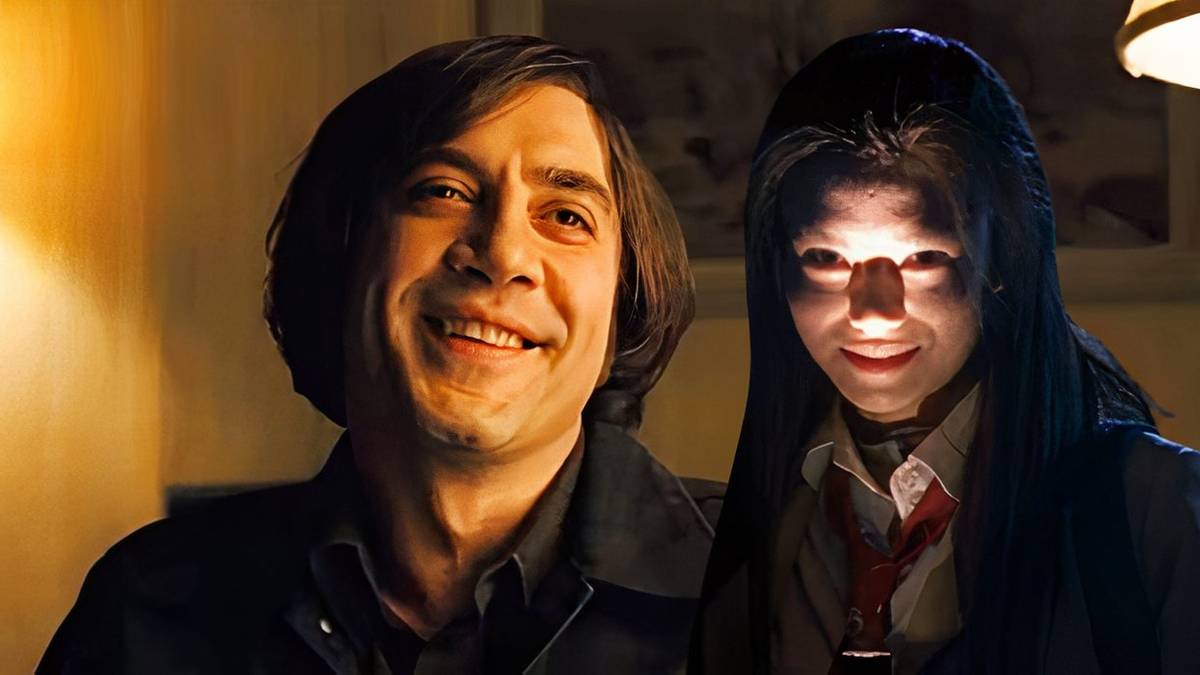
Some of the most memorable films are built around a conflict between a compelling protagonist and an unforgettable villain. But while the main characters may be the focus of the story and drive much of the action forward, some extraordinary villains greatly outshine their film's protagonist. From neo-western thrillers to epic war films, some of the best antagonists can be more impactful, memorable and essential to the film's identity than their main characters.
Of course, this doesn't make the main characters unimportant, but it does mean that some movie enemies are so compelling that they often feel like the true center of the story. Whether they provide a commanding presence or are responsible for film's most iconic scenes, some brilliant movie villains leave a much longer impression on audiences than the main characters.
3
Antone Chigurh steals the spotlight in no land for old men

The Coen brothers No country for old men follows Llewelyn Moss, a hunter who finds a briefcase containing millions in cash after stumbling upon the aftermath of a drug deal gone wrong. His decision to take the money puts him on a collision course with Anton Chigurh, a relentless killer. Parallel to the hunt for Moss, Sheriff Ed Tom Bell investigates the crime while struggling to understand the changing world in which he finds himself.
Javier Bardem's Oscar-winning performance transformed the character far beyond a typical assassin. Moss drives much of the action and Bell provides much of it No Country for Old Men's emotional core, but Chigurh dominates every scene he enters, successfully turning even simple conversations into moments of excruciating tension with his chilling presence. If other villains manage to outshine the main characters because of their charm, Chigurh steals the spotlight because of his lack of it. The audience knows very little about him except that he is a relentless killer. This hollowness is perfectly in line with the film's exploration of evil.
Chigurh's strange personal code, emotionless attitude to violence and belief in fate make him the perfect symbol of the chance Bell spends No country for old men trying to understand. Between his addiction to coin flips and his refusal to show fear, Chigurh is responsible for the film's most iconic scenes. Without a dramatic score to alert viewers to his approach, his violence comes with the sudden, jarring silence of a natural disaster, and he quickly outshines both Moss and Bell.
2
Kitano perfectly embodies Battle Royale

Kinji Fukasaku Battle royale takes place in a dystopian Japan where a government program known as the Battle Royale Act forces school children into a brutal death game. Sent to a deserted island with weapons, supplies and explosive collars around their necks, the students are forced into a dire situation that turns existing friendships into potential threats. Shuya Nanahara and Noriko Nakagawa become the heart of Battle Royale's ensemble cast as they try to survive without losing their humanity, but their former teacher, Kitano-sensei, perfectly represents the horrible world that created the game in the first place.
Played by Takeshi Kitano, Kitano is a particularly unusual villain as he never really acts as an antagonist. He is not driven by revenge, power or a desire to destroy his victims. Instead, he calmly explains the rules of the game, casually interacts with his students, and watches as everything descends into chaos. The bizarre and disturbing contrast between his ordinary appearance and the extreme world he finds himself in makes him impossible to ignore. He perfectly embodies the institutions that failed the children, and his odd moments of sadness and vulnerability only make him more disturbing.
Takeshi Kitano expertly uses awkward mannerisms and a cold demeanor before erupting into sudden violence, all of which accentuates the character's genuinely nervous nature. Although audiences root for Shuya and Noriko, Kitano leaves a lasting impression as he forces viewers to confront the deeply uncomfortable questions at the heart of Battle royale. With him as the villain, he transforms Battle royale from a gripping survival thriller to a sharp critique of authority and violence.
1
Inglourious Basterd's Hans Landa is easily one of the most iconic villains of all time
Quentin Tarantino's Nasty Basterdpp depicts the history of World War II through a group of Jewish-American soldiers, led by Lt. Aldo Raine, who are sent behind enemy lines to kill Nazi soldiers. Meanwhile, Shosanna Dreyfus, a young theater owner seeking revenge after escaping a massacre, develops a plan that could change the course of the war. Opposing both groups is Hans Landa, an ambitious Nazi officer who is extremely skilled at tracking down those trying to hide from the regime.
Christopher Waltz's Hans Landa is the definitive example of a movie villain who outshines his main character. Nasty Basterds has a huge ensemble of fascinating characters, but Landa immediately commands attention when he appears. The opening farmhouse sequence remains one of the best, expertly constructed scenes of suspense in modern filmmaking, with Landa's creepy, unsettling nature driving much of the tension.
Constantly alternating between menace and politeness, the SS officer uses his manner, charm and sophistication to lull his victims and the audience into a false sense of security. Raine and Shosanna are the heart of much of Inglorious Basterd's revenge story, but Landa's fascinating mix of control, psychological terrorism and ruthlessness completely overshadows the other characters. His lack of devotion or loyalty to the Nazi ideology, or anything for that matter, makes him infinitely more terrifying than a true believer, making him one of the most iconic villains of all time.
