Sometimes a game will introduce a mechanic that is so good that others will take it and use it for their own titles. For example, after the first Gears of War, third-person cover shooting became very popular for a while, and so many games started using open cities after Grand Theft Auto 3.
But not every great video game feature or mechanic starts a trend. Some games have introduced some very clever ideas that other developers haven't tried to copy for whatever reason. Here's a list of some that we thought would become industry standard.
Middle-Earth: Shadow Of Mordor – The Nemesis System

The Nemesis System is one of the most original features seen in a game in years. How it works is that all the enemies you fight in Shadow of Murder are part of a hierarchy. So, regular grunts are on the bottom level, while the most significant enemies are on the top. Still, it doesn't stay this way. For example, if a low-level grunt can defeat you, it levels up. So the hierarchy is constantly changing.
10 games that felt huge before Open Worlds took over
They are small by today's standards.
This adds an extra dimension to each battle, especially as the villains you've faced remember you, adding some personality to otherwise ordinary enemies. This system seemed likely to become much more common once Shadow of Mordor was released, until Warner Bros. patented the mechanic, meaning no one else could use it.
Red Faction – Destructible environments

Technically, destructible environments were a trend at one point, due in part to the Red Faction series. As a result, you started seeing it in games like Battlefield: Bad Company and various other entries in that series. However, it was only a short trend. This is surprising because it really felt like destructible environments would have become commonplace by now.
After all, being able to create holes in walls, like you can in the original Red Faction, is delightful. But it never came together as it should. Technical restrictions probably played a role in this.
Left 4 Dead – The AI Director

When you play a campaign in Left 4 Dead, you are monitored by the game's AI. If you do really well and get through things fairly easily, the game will start sending more zombies your way, including more special infected. This is to keep things challenging and rewarding.
Still, it doesn't just kick in when you're having a good time. If you take too long or mess around too much and don't move forward, the game will send hordes your way to make you move. This is a unique type of dynamic difficulty that could work well in similar types of games.
Dragon Ball Z: Kakarot – Beat low level enemies without fighting

One of the most annoying things in an RPG is when you're super boosted, and you still have to fight low-level bubbles. Yes, you win the matches easily, but these encounters seem like a waste of time. Some games have thought of ways to speed up the process by giving you the ability to win instantly.
The best version of this is in Dragon Ball Z: Kakarot, where you can just charge through low level enemies and immediately get your rewards for beating them. You don't even have to stop. The game just slows down a bit to show that you knocked someone out. It really should be a standard feature in RPGs.

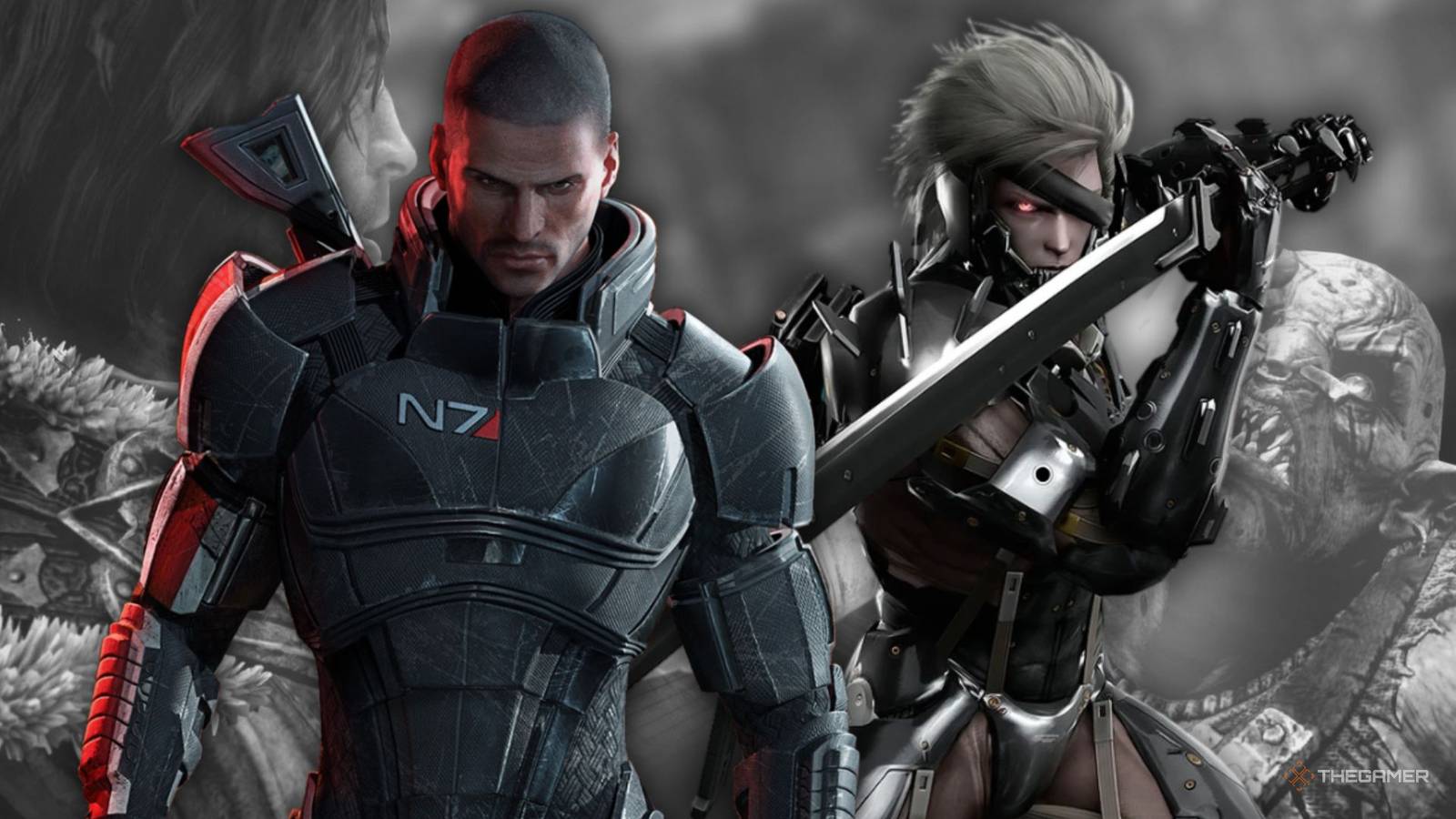
Metal Gear Rising is one of the most action-packed games of its generation. This is because the game lets you control Raiden, a cyborg ninja with exceptional sword skills. These skills are best displayed when using blade mode. This mode allows you to slow down time and gives you the chance to manually slice through the enemy in any direction you want.
This means you can land some really accurate punches and easily cut off limbs. Afro Samurai had a similar mechanic years before, but it was a lesser known game, so it wasn't a surprise that it didn't start a trend. You would have thought that people would have copied the idea from Metal Gear Rising.
Mass Effect – Your choices have consequences in the sequels

The consequences of the decisions you make are usually felt within the same game. In Mass Effect, however, your save data would be transferred between all three numbered entries. So when you play the third game you can lose characters because of choices you made two games ago.
While not always perfectly implemented in Mass Effect, it's a cool mechanic because it gives your decisions even more weight. Some titles allow you to set up your universe by choosing the choices you made in previous games, but they rarely come into play that much. Effective choices that carry over between games have rarely been seen since Mass Effect.
Dead Space – Diegetic Health Bar

Video game HUDs can be hit-or-miss. Some look great and give you all the information you need, while others clutter the screen and prevent you from appreciating your surroundings. The developers of Dead Space found a way to reduce the clutter by making your health bar part of your character's costume.
So, at any time, you can see what your health looks like by looking at your character's back. More importantly, it fits seamlessly and feels like a natural inclusion in the costume. While not the only example of a diegetic health bar or HUD in gaming, the concept is still rare.
Resident Evil 2 – Zapping System

The original Resident Evil 2 features four separate stories, spread between two characters. There is Leon A, Leon B, Claire A, and Claire B. To experience the full story, you must play one character's A story and another's B story. In the process, you will notice that they connect through what is called a Zapping System.
This means that even though they are separate playthroughs, actions you take in the A story will affect the B story. For example, there is a moment where you can hit some gas in the A story to weaken certain enemies, but if you do, then in the B run, a certain boss will be more deadly. So you can make things harder or easier for yourself. It's a neat gimmick to incentivize multiple playthroughs, so it's a shame other games don't do it.
LA Noire – The use of facial technology

One of LA Noire's main selling points was the realism of the faces in the game. At the time they were so far beyond what other games were doing. But it wasn't just about how real they looked; it was about how it was used from a gaming perspective.
Since this is a detective game, you spend a lot of time talking to suspects and witnesses. And sometimes you have to find out if they are lying to you. The only way to do this is by studying their facial expressions, which is where facial technology really comes into play. This was an innovative concept that you would have thought few other games would have tried to do since then.
Grand Theft Auto: San Andreas – Dynamic Weight and Muscles

Grand Theft Auto: San Andreas was released way back in 2004. Yet it has a mechanic that hasn't been seen in many games. It is dynamic weight and muscle gain. In this game, you can make the main character, CJ, visibly gain muscle by exercising a lot and gain weight by eating too much without burning it off.
This means you can physically change your character's appearance in a natural and dynamic way. Since San Andreas was such a popular game, you would have thought that many other developers would have added this mechanic to their games.

10 great games that felt futuristic at launch
These games were innovative.
