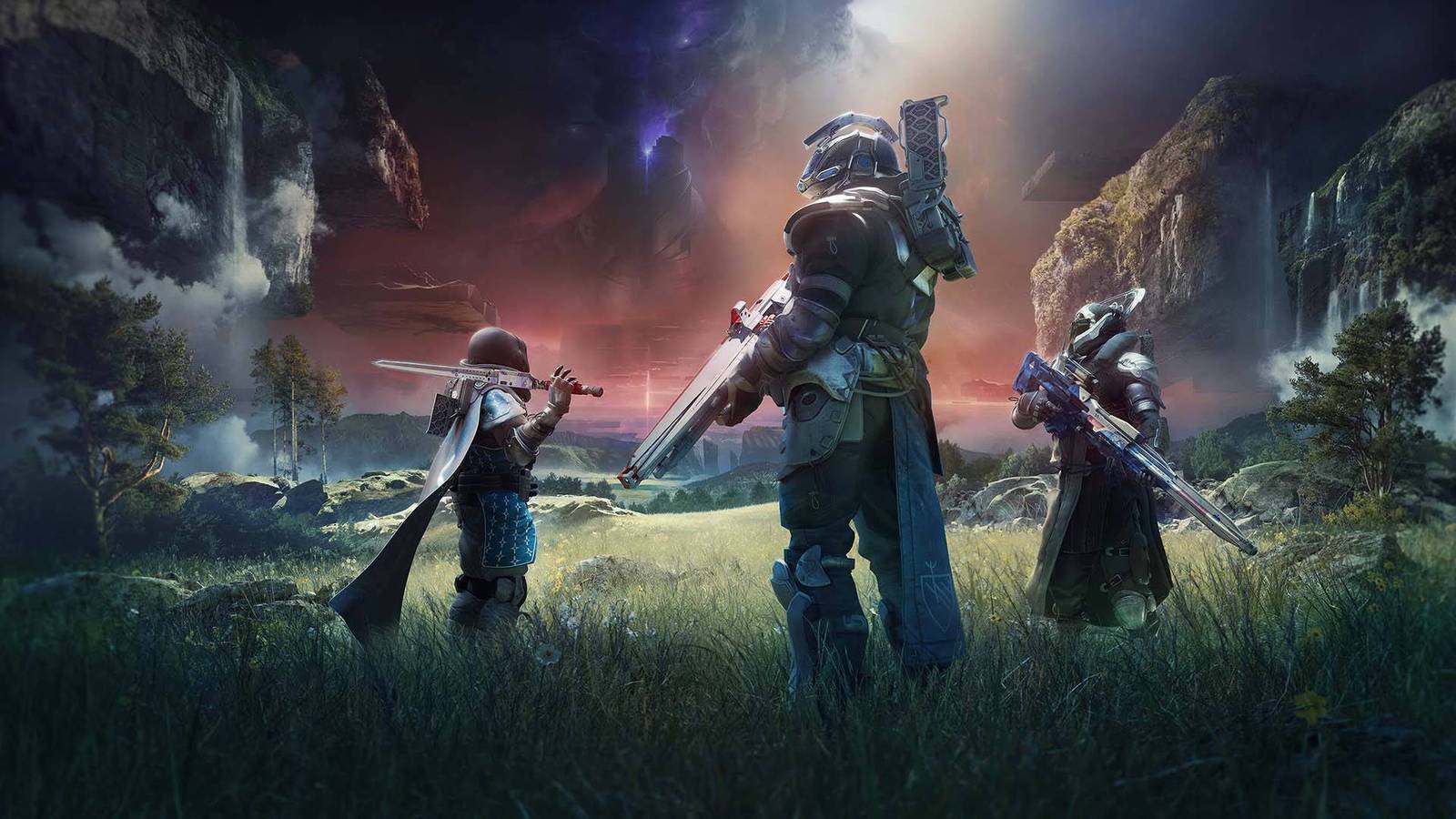
I'll never forget the hype and anticipation surrounding Bungie after the developer walked away from Halo. After ending its time with Master Chief in Halo 3 and keeping the ball rolling with ODST and Reach, the studio was desperately hoping to strike out on its own and do something new. Its purpose was to redefine the first-person shooter genre again, even if that meant leaving everything it had ever built behind. Was that risk worth it? Well, it's complicated…
To begin this mission, the studio signed a comprehensive agreement with publisher Activision when it began development on Destiny. It was envisioned as a living, breathing MMO shooter that was initially intended to have a ten-year lifespan supported by updates, expansions, and perhaps most importantly, no sequels. Looking back, we can safely say that this plan didn't quite work or get off the ground, but that doesn't mean Destiny wasn't a success. It just took a while to get there.
Despite serving as a shot for major E3 press conferences and having several pre-launch alpha and beta periods, Destiny wasn't exactly well-received when it first arrived. It was an incredibly short experience, with the beta covering about a third of the total content, and many of the missions involved following a Peter Dinklage-voiced ghost as you tried to defend him from endless waves of repetitive enemies. The photography, visuals and overall world building was incredible; but everything else needed a lot of work.
Jason Schreier wrote an extensive report during his time at Kotaku on exactly what happened to Destiny during development, and how many of its guts were either pulled out or hastily rearranged right up to the last minute.
The wizard came from the moon

But there were enough brilliant things going on throughout the base game that a community of hardcore gamers – myself included – latched onto. We hung on hard during the first duo of expansions, which underwhelmed with a lack of content and quality of life additions, only for opinion to finally change when The Taken King arrived. This expansion essentially felt like Bungie hitting the reset button and offering what many hoped the base game would deliver. A substantial campaign, a compelling villain and reasons to keep playing either solo or with friends to take on raids or hunt down legendary gear.
Destiny slowly but surely established itself as one of the best shooters on the market, giving the likes of Halo and Call of Duty a run for their money when newcomers to the genre like the excellent PUBG and Fortnite were still finding their footing. Taken King set the MMO shooter on a positive trajectory that would remain supported by valuable updates and another fantastic expansion with Rise of Iron in 2016. Over the course of two years, Destiny redeemed itself and laid the groundwork for a sequel. This came as its own shock though, as Bungie left behind everything it built again just as things were starting to solidify.

Putting aside many of its mistakes, vanilla Destiny was still filled with highlights. I'll never forget teaming up with friends to spam the loot cave for rare weapons or finishing our first raid together. Triumphant moments like this override the game's flaws.
This time, however, we knew Bungie could deliver on its potential. That a sequel with a new hub world, a more confident single-player campaign and concrete plans for several years into the future could be something really special. And for a while it was. I stuck around for the first few years blasting through The Red War campaign, Curse of Osiris and Warmind. It was fascinating to see how quickly Bungie was willing to respond to our feedback and transform Destiny into a worthwhile experience in an evolving genre.
Forsaken was incredible – especially as it was willing to kill off a fan favorite like Cayde-6 and expand on characters and places we'd come to care about – while other expansions like Shadowkeep and Beyond Light were decent outings that made way for the excellent Witch Queen. Bungie found a consistent flow and realized it needed to build towards a satisfying conclusion to its Light and Darkness saga that actually imbued things with tangible stakes. But then Lightfall appeared and turned the loot shooter into our worst enemy again. Well, at least for a little while.
The beginning of the end

Just as Destiny 2 approached the finish line, that car flipped over, ran over several random bystanders, and set the wreckage on fire for good. How would Bungie get it back on track and ensure that The Final Shape was not only a rewarding conclusion to a decade-long story, but also a sure sign of things to come? A tall order I don't think anyone really expected it to fulfill, but somehow Bungie went and did just that.
It was a confident final chapter for Destiny that delivered a different, somehow more menacing villain, believable stakes and missions that felt truly massive and consequential in scale. Told in a number of different acts, even lapsed players who hadn't played previous expansions could still jump in and get swept up in its drama.
Bungie would make efforts to catch up with lapsed players with free-to-play initiatives like First Light until the entire game eventually came to embrace this business model.

But it never really felt like The Final Shape was the start of a new chapter even though it had so much potential. Sony's acquisition of Bungie likely had something to do with it as its priorities shifted to new releases like Marathon when Destiny started receiving smaller, more incremental updates. The Edge of Fate underwhelmed while the Star Wars-themed Renegades felt like just a glorified crossover rather than a worthy expansion in its own right. Destiny isn't dead, but I don't think it's a stretch to describe it as being on hiatus.
Sony isn't willing to give Bungie the faith and resources it needs to restore Destiny to the tumult it once was, especially when it's still trying to keep Marathon afloat and pour money into a number of other single-player and live service projects across its portfolio. Its acquisition of Bungie was a poorly judged mistake that I think both companies are publicly kicking themselves for, and right now I hope it doesn't lead to a complete shutdown of Bungie in the next few years.
This brings us to the Destiny announcement made earlier this week that confirmed the loot shooter is finally coming to an end. And no, it's not being replaced by Destiny 3.
Farewell to my guardians

In a heartfelt blog post this week, Bungie talked about the 12-year journey Destiny has been on and how it will soon come to an end as internal focus shifts to other projects. As I've long suspected, it became clear after The Final Shape that the lane simply wasn't there in terms of time or development resources to create the beginnings of a story of equal magnitude. It didn't have the active community it had when both vanilla games launched, not to mention the wider landscape has changed so much over the last decade in favor of several immobile giants. Bungie needs to adapt and survive, not revert to old habits.
Whatever the reasoning, though, it's a fate that I don't think any of us expected to end in such transparent terms. It has become such an ingrained part of the video game ecosystem that I foolishly thought it would be around forever and continue to receive updates as long as a hardcore community remained to consume them. But in a business where the big players like Sony and Microsoft are all about going big or going home, that wasn't going to cut it anymore.

Destiny will receive a handful of big additions over the coming weeks and months as full-time development winds down, but these feel like rewards for those who have stuck around all this time rather than the start of something new. Instead, it's the beginning of a farewell even though the servers will be online for the foreseeable future. I will soon jump back to bask in the nostalgia of a game that defined a large part of my early adulthood. A deluge of evenings at university were spent running raids and strikes with friends when I should have been finishing missions or chatting with former colleagues about what I was missing in the story after returning for a couple of missed expansions.
What worries me about Bungie's future is whether it will really be able to pursue the new ambitions it has in the future. As the last line on the blog reads: “Destiny 2 has been our home for many, many years. The unknown can sometimes feel wild, sometimes a little scary, but these opportunities to explore the future are refreshing. As we look ahead, our commitment remains the same: to make games we, and you, are excited to play.'
The reason I bring this up is that Bloomberg reported shortly after the news of Destiny's sunset that Bungie is planning massive layoffs after Destiny's development ends. I have to imagine that only so much of that talent will transfer over to Marathon, while it remains to be seen if any of its incubation projects will make it into full production.
It leaves a pit in my stomach that the end of Destiny's journey won't be one last big expansion or a celebration of everything it did so well, but people losing their jobs and a series of projects being canceled in the name of capitalism. By the same token, though, I don't think this destiny should take away from the value Destiny has as both a work of art and a personal relic of your own existence.
The adventures you went on alone in space, the raids you managed to conquer with friends after hours of toil, and even the frustration you felt at Bungie for failing to deliver time and time again. All of these feelings and experiences are real, and all of this will be true when Destiny's servers are shut down a decade from now. But I think there are a lot of important lessons to be learned from Destiny's many successes and failures and how that has come to inform the current live service landscape.
How so many different games wouldn't exist without all the steps it took, and how its own space in the medium is coming to an end because it either failed to adapt, lacked all the resources necessary to push forward with a full-fledged sequel, or simply fell victim to an increasingly tumultuous industry that doesn't care how big you are. Fate may be coming to an end, but when you really stop to think about things, it's going nowhere.

Fate


- Released
-
September 9, 2014
- ESRB
-
T for Teens -Animated Blood -Violence
- Engine
-
Tiger engine
- Multiplayer
-
Online Multiplayer
