Summary
-
Uma Musume transforms racehorses into anime girls, mixing pageant and idol performances.
-
The franchise includes anime, games, manga, concerts and merchandise, based on the characteristics of legendary racehorses.
-
Uma Musume's popularity in Japan stems from idol culture integration and gacha game format.
We've seen anime with real-life references anthropomorphized into a human (or human-like) form before. Hetalia may be the most notorious for this, but we have also seen Twentieth Century Boys and Cells at work does this with varying degrees of success. There is even an anime called Arikan! about soft drinks called that come to life as cute anime girls fighting each other, if you're into that. But what if we could apply this concept to a unique interest, like horse racing, as a gateway to becoming fans in that world? Now imagine if there was a world where legendary racehorses were reborn as energetic anime girls, each chasing dreams of victory on the racetrack and stardom on the stage.
Uma Musume takes this unique premise and turned it into a cultural phenomenon in Japan, blending high-stakes competition, idol performances, and heartfelt storytelling. It might sound like an unusual mix, being a mix that spans anime, games, live concerts and more. But how did this franchise become one of Japan's most beloved multimedia sensations? Let's explore what does Uma Musume franchise that stands out and why it continues to dominate Japan's entertainment landscape.

Family
8 Great Idol Anime For Newcomers To The Genre
The idol anime genre is perfect for fans of dancing, singing and theatrical performances. Also, these idol anime are among the best shows of the genre.
What is Uma Masume in the first place?
An expansive franchise with tons of content to binge

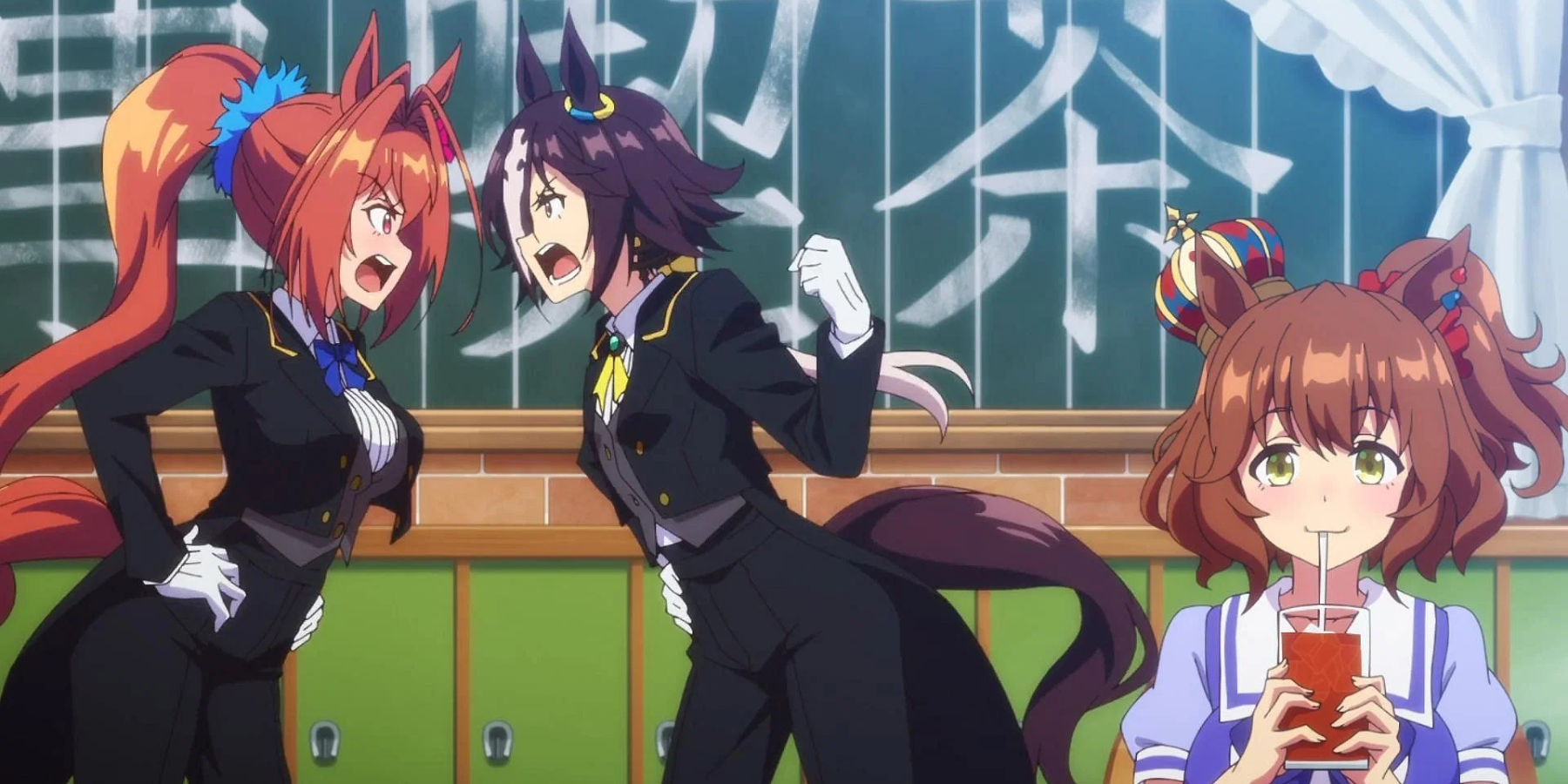
At its heart, Uma Musume is a multimedia franchise that anthropomorphizes real-life racehorses as anime-style “horse girls”. These characters, known as “Uma Musume”, are human girls with horse features, such as tails, ears and increased speed, who compete in races and perform as idols. Each character is based on an actual legendary racehorse from Japanese horse racing history, with their personality, background and even racing style reflecting the characteristics of their equine counterparts.
The franchise debuted with its first anime series in 2018, introducing viewers to a vivid world where horsegirls like Special Week and Silence Suzuka, both named and inspired by real professional racehorses, train to become the best riders in Japan. It quickly expanded to include a mobile game released in 2021, where players train and manage their favorite horse girls, several manga series that delve deeper into side and character stories, live concerts with voice actresses performing in character, and an insane amount of merchandise, from figurines to music CDs records, catering to its ever-growing fan base.
How the franchise began
One Simple Anime launched a multimedia phenomenon in Japan

The Uma Musume Pretty Derby anime is where many fans first encountered the franchise, and it remains a cornerstone of its popularity. The story follows Special Week, based on a real racehorse of the same name from the late 1990s, who is portrayed as a novice horse girl with dreams of becoming the best in the world despite her rural and somewhat sheltered origins. She joins the prestigious Tracen Academy, where horse girls train to compete in high-profile races while navigating friendships, rivalries, and personal challenges.
Characters like Silence Suzuka, whose story mirrors the tragic history of her real-life counterpart, bring a level of depth rarely seen in sports anime. The real racehorse of the same name has broken his left front leg. He evacuated to the outside as if protecting his jockey, then was carried off and diagnosed with a poor prognosis. He was eventually euthanized to limit his suffering. This story is represented in the anime by the character named Silence Suzuka who broke her leg.
However, the anime took a lighter approach to the actual story and allowed her to heal enough to compete again much later as the anime progressed. The anime uses moments like these with the girls to share a more light-hearted approach to the actual Japanese racehorse story, and remains a cornerstone of how plot lines and story arcs are built in the anime.
“Running is challenging. If you want to escape from the demon's hand, don't think about the future, just run“
The races themselves are depicted with dynamic, high-energy sequences that capture the excitement of the competition, while idol performances are vividly animated and mimic the spectacle of live concerts. The show emphasizes perseverance, teamwork and personal growth – universal themes that resonate with viewers of all ages. The anime has two main seasons, each focusing on different aspects of the horse girls' journeys, and continues to expand with additional OVAs, spin-offs, and even a feature film in 2024.
So why is it popular in Japan?
And why doesn't it have the same appeal in America?

A defining feature of Uma Musume is its seamless integration of idol culture, a cornerstone of Japanese entertainment that hasn't taken off in the West yet. In the world of Uma Musumehorse girls are not just racers; they are also idols who do live concerts after their victories. This element adds an extra layer of spectacle to the races, making every win feel like a celebration. Live concert events similar to recent Hololive and the ever-popular Hatsune Miku, with the cast performing in character, bring the world of Uma Musume to life and deepen the fans' emotional investment. However, live concerts with virtual artists is yet another thing that keeps the franchise apart from its western fanbase, as this seems to only be popular among English-speaking V-tubers at the moment.
Besides its ties to idol culture and horse racing, Uma Musume thrives as a fairly popular gacha game, a popular format in Japanese mobile gaming. In the game, players train horse girls to compete in races, using a gacha system to unlock new characters and support cards. This combination of strategy and chance keeps the game exciting and rewarding. Regular updates, limited time events and new character releases ensure that there is always something new for players to look forward to. This model not only keeps the player base engaged but also generates significant revenue for the franchise. However, this has not reached the same progress in the West either.
The effect of Uma Musume goes beyond entertainment. The franchise has sparked renewed interest in horse racing among younger audiences, with some fans visiting racetracks or learning about the sport for the first time. Its success as a mobile game has also set new benchmarks, earning billions of yen and consistently ranking among the top-grossing apps in Japan. For many fans, Uma Musume is more than just a game or anime; it's a celebration of perseverance, friendship and chasing dreams. Here's to hoping one day, the Western market feels the same way, so we can get subtitled and dubbed versions of the franchise's products sooner rather than later.

Uma Musume Pretty Derby
- Seasons
-
3
- Character(s)
-
Toukai Teiou , Kitasan Black , Mejiro McQueen , Special Week , Gold Ship , Daiwa Scarlet , Silence Suzuka , Satono Diamond , Satono Crown , Ikuno Dictus , Vodka , El Condor Pasa , Matikane Tannhauser , Haru Urara , Gras Rudolf Nature , Symbol
