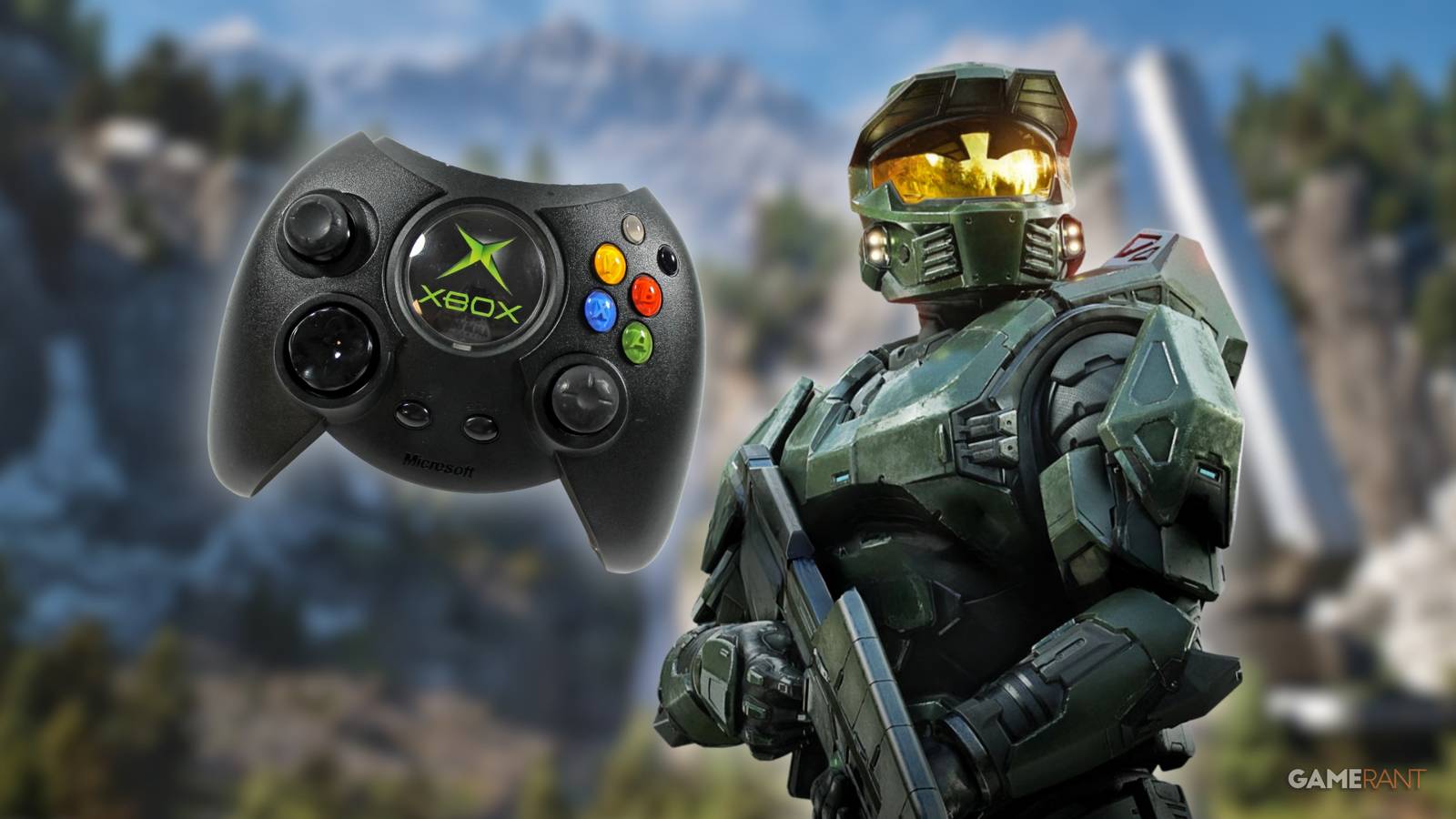
The controversy surrounding Halo: Campaign Evolved and its switchable sprint carries a particular irony, as no console FPS reshaped the genre more dramatically than Halo: Combat Evolved back in 2001. A for jump and B for melee, left stick for move, right stick for look, RT for shoot, LT for flash grenades. All of this seems so obvious (perhaps even outdated) now, but it's hard to overstate how revolutionary the original game's controls truly were. So much of today's shooting landscape, not only Halo: Campaign Evolvedstill rests on that foundation.
In 2001, console shooters were defined by technical compromises and awkward controls. PlayStation titles like Tunnel B1 and Crazy Ivan experimented with dual analog layouts, but players still relied on shoulder buttons for vertical aiming. GoldenEye 007 proved that the FPS genre works on consoles, but the N64 controller's single stick largely required several inconsistent control schemes. Also Unreal tournament on PS2 lacked the intuitive target input that would provide Halo feel immediately playable. Then Bungie changed everything.
How Halo redefined console FPS controls
Well, technically, Argonaut Games' Alien resurrection beat Bungie to map movement and aim on two dual analog sticks, but Halo popularized the dual-stick idea. The key difference (beyond unit sales) was the invisible layer of input interpretation, or “sticky aim,” that Bungie designer Jaime Griesemer engineered behind the scenes. Instead of directly mapping thumb stick movement to on-screen movement, Halo analyzed subtle player inputs and adjusted them dynamically.
If the player was centered on an enemy, the game provided mild magnetic assistance to help them land on the target. This system is why Halo felt so intuitive, even for players who had already experienced a PC shooter with the already standardized mouse and keyboard layout.
When Halo Griesemer, famously transitioning from 3rd person to 1st person mid-production, obsessively dissected what was possible with a mouse and keyboard setup and aimed to ensure the Xbox gamepad could emulate it. As Microsoft's Stuart Moulder later explained, Halo “buffered” the input and delivered the exact movement the players intended, not necessarily what they physically performed. Modern console shooters still follow this philosophy, but now it's more commonly known as aim assist.
Halo's Aim Assist became an industry standard
While target assist existed before Halomainly in the form of lock-on and bullet snap, it had never been implemented on a twin-stick setup with such sophistication. The game's combination of target friction and magnetism was subtle enough to remain invisible but powerful enough to recreate the precision enjoyed by PC gamers. This system almost immediately became the gold standard; TimeSplitters, Medal of Honor, Call of Dutyand countless others would adopt comparable target-assist methods over the next two decades.
Contemporary shooters have dramatically evolved these systems, adding rotation assist, nuanced magnetic cones, initial ADS snap, and per-weapon friction adjustment. Yet almost everything originates from Halos early logic.
Halo's other design principles still shape shooters today

Halo also overhauled how players interact with weapons and gear. Its two-weapon loading, born from original Xbox hardware limitations, simplified input complexity while encouraging frantic decision-making on the fly. PC shooters of the era stored entire arsenals on number keys or in time-stopping weapon wheels, but Halo reduced everything and found striking success in doing so.
More importantly, Bungie merged combat actions into one unified, fluid movement. Throwing a grenade while holding a weapon up was a radical design choice in 2001. Players didn't need to holster their weapons to hit an enemy or throw explosives; these tools were seamlessly woven into moment-to-moment combat, and now nearly all major shooters treat grenades and melee as integral tools, just as Halo did.
Halo's Legacy and its latest sprint controversy

Two decades later, modern shooters have added layers upon layers of complexity to console controls: haptic feedback, adaptive triggers, and increasingly granular aiming. Still, the basics Bungie established themselves with Halo: Combat Evolved remain the standard language of the genre. In that light, the conversation about a switchable sprint comes into play Halo: Campaign Evolved feels less like a genuine controversy and more like a symptom of some larger industry disease.
It feels comfortable and strangely fitting for a new one Halo to create a conversation about the basics of modern shooter design — it's pretty much exactly on brand. That said, the sprint debate only matters because it reveals how firmly the FPS genre remains rooted in design principles from 2001. When a remaster of a 24-year-old game stirs this much discourse about “real” mechanics and “genuine” feel, it becomes very hard to ignore how much creative territory no player has ventured into.
Halo's Return as the Industry's Mirror

Halo: Combat Evolved is not uniquely worth waking up to. It's already been remastered, making its latest return feel like little more than a look at how limited the FPS genre has become despite its serious technological advances. Halo: Campaign Evolved comes to a market oversaturated with remakes, remasters, gold editions, definitive editions and anniversary editions. So players recreate design arguments from titles that were relevant two decades ago.
The sprint gear is a smoke screen. The real issue is that the medium continues to orbit the same designed gravity wells, afraid to deviate too far from the orbit of what has worked in the past. Halos controls were revolutionary because Bungie took risks and solved problems that no one else had cracked. The series and the genre at large desperately need that energy again.
Halo: Campaign Evolved is likely to deliver exactly what fans expect, like Halos foundation is too strong for it not to. However, the discourse surrounding it is just more proof that the FPS genre is trapped by its past. If this remaster sparks anything beyond arguments about sprint speeds, it should be a conversation about why the industry's most popular genre stopped taking the kinds of chances that did Halo: Combat Evolved so especially in the first place.

- Released
-
2026
- Developer
-
Halo Studios
- Publisher
-
Microsoft Studios
- Multiplayer
-
Online Co-Op, Local Co-Op
- Cross-platform play
-
Yes – all platforms
