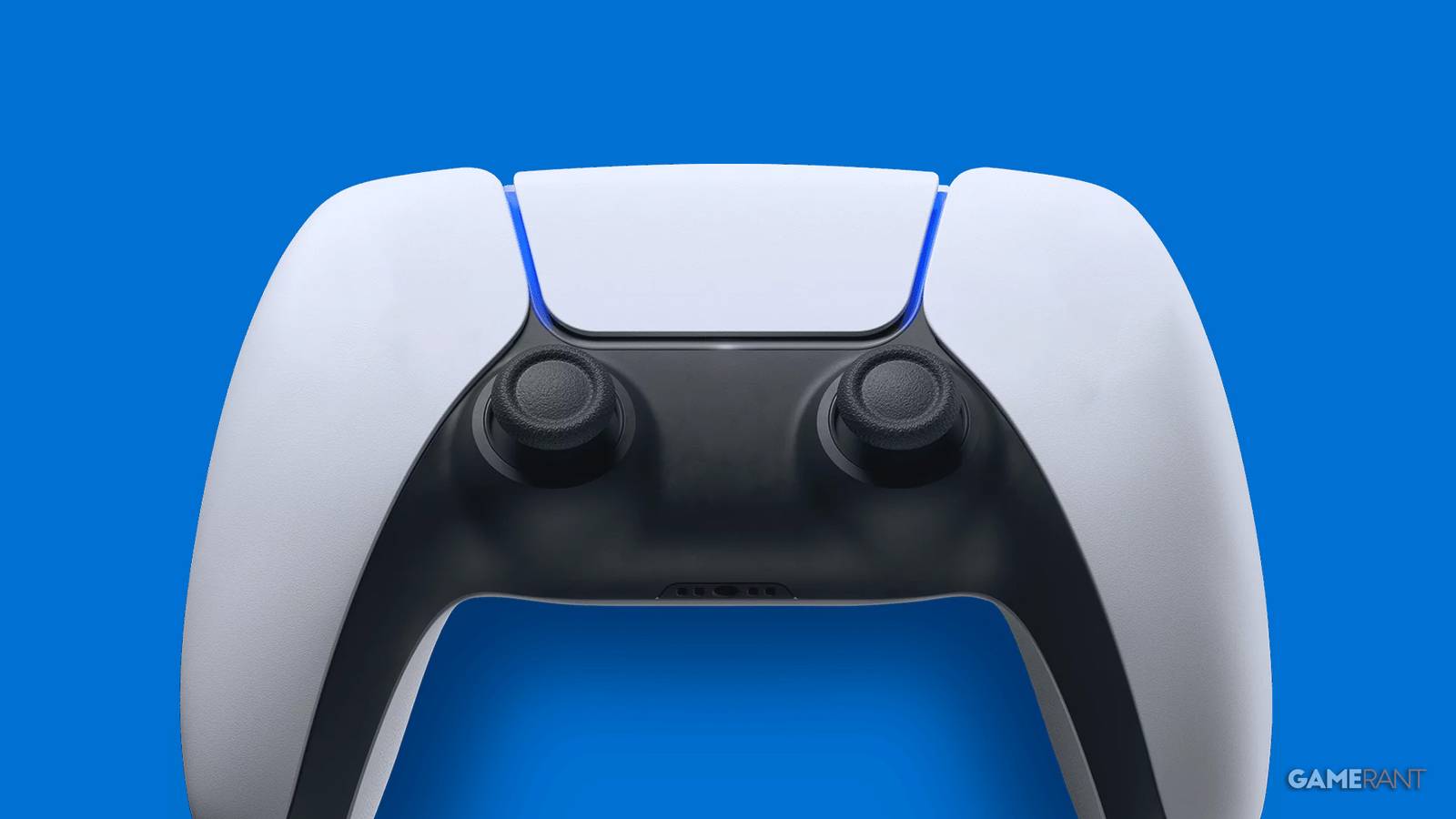
PlayStation Manufacturer Sony Interactive Entertainment has been granted a patent for a controller that does not have a single physical button, as revealed by some recently published regulatory filings. While the concept lacks many of the traditional inputs typically associated with gamepads, it represents only one possible implementation, as the patent focuses primarily on input technology rather than hinting at future PlayStation controller designs.
At least a handful of new controller-related Sony patents are granted and published each year. Although these applications vary widely in terms of design and functionality, most include some form of physical buttons. Breaking from that pattern is a recently published USPTO patent dated January 27, 2026.

The new PS5 console exclusive is the highest rated game of 2026 so far
The latest PlayStation 5 console exclusive is here, having been released to huge critical acclaim that overshadows every other 2026 game so far.
Sony's latest control concept has multiple screens, no buttons

Identified by grant number 12533573, the newly secured patent (first discovered by VGC) describes a gamepad that completely dispenses with traditional physical inputs. In their place are touchscreens paired with a few extra sensors that can detect finger position, as well as taps, long presses and swipes. These input readings are used to dynamically illuminate and adjust virtual controls on the device's screens, allowing the interface to change based on how the user holds and interacts with the unconventional PlayStation controller depicted in the illustrations accompanying the patent.
Figure drawings from Sony's new control patent
What Sony says about the purpose of this unusual invention
The patent's original application, filed in February 2023, describes the screen and sensor method of reading player inputs as offering more flexibility compared to physical stick-and-button layouts, allowing gaming accessory manufacturers to accommodate different hand sizes, play styles or accessibility needs with a single device rather than developing and mass-producing multiple specialized controllers. For now, Sony continues to address various accessibility needs with dedicated hardware, such as the PlayStation 5 Access Controller, which launched in December 2023.
New PlayStation Controller patent doesn't actually call for a complete lack of buttons

Although some implementations described in the new Sony patent refer to the use of touchscreens and illuminated display elements to present virtual controls, the core claims do not require the presence of multiple screens or even a dedicated display. Instead, the patent broadly covers adaptive input surfaces that interpret input without physical buttons, with visual output only as an optional feature. In other words, the technology described in the patent could theoretically be implemented in a more traditional controller that also offers some form of physical input.
Estimation of the chances of Sony's patent 12533573 being used in a real product

According to a recent study by Parola Analytics, the USPTO granted 2,256 Sony Group patents over the course of 2025. This makes the tech giant the 14th most prolific patent applicant of the year, ranking just below Dell and above Intel. For further context, a snapshot of the USPTO database reviewed by GameRant reveals that Sony Group and its many subsidiaries hold 133,506 US patents as of January 31, 2026. The vast majority of these protected inventions have never been commercialized. Given that context, the statistical probability of this particular controller ever turning into a commercial product seems relatively low.
All that said, accessibility has become an increasingly important focus for gamepad manufacturers. This includes greater efforts to accommodate players with physical disabilities, as well as those who rely on unconventional lineups for comfort or practical reasons. For example, another recent Sony patent suggested that future PlayStation controllers could detect when users play in a reclined or lying position and automatically adjust their functionality to match. Under these circumstances, an accessibility-focused application like patent 12533573 may have a greater chance of eventually being translated into a commercial product than the average Sony patent appearing in the USPTO database.
Source: VGC
