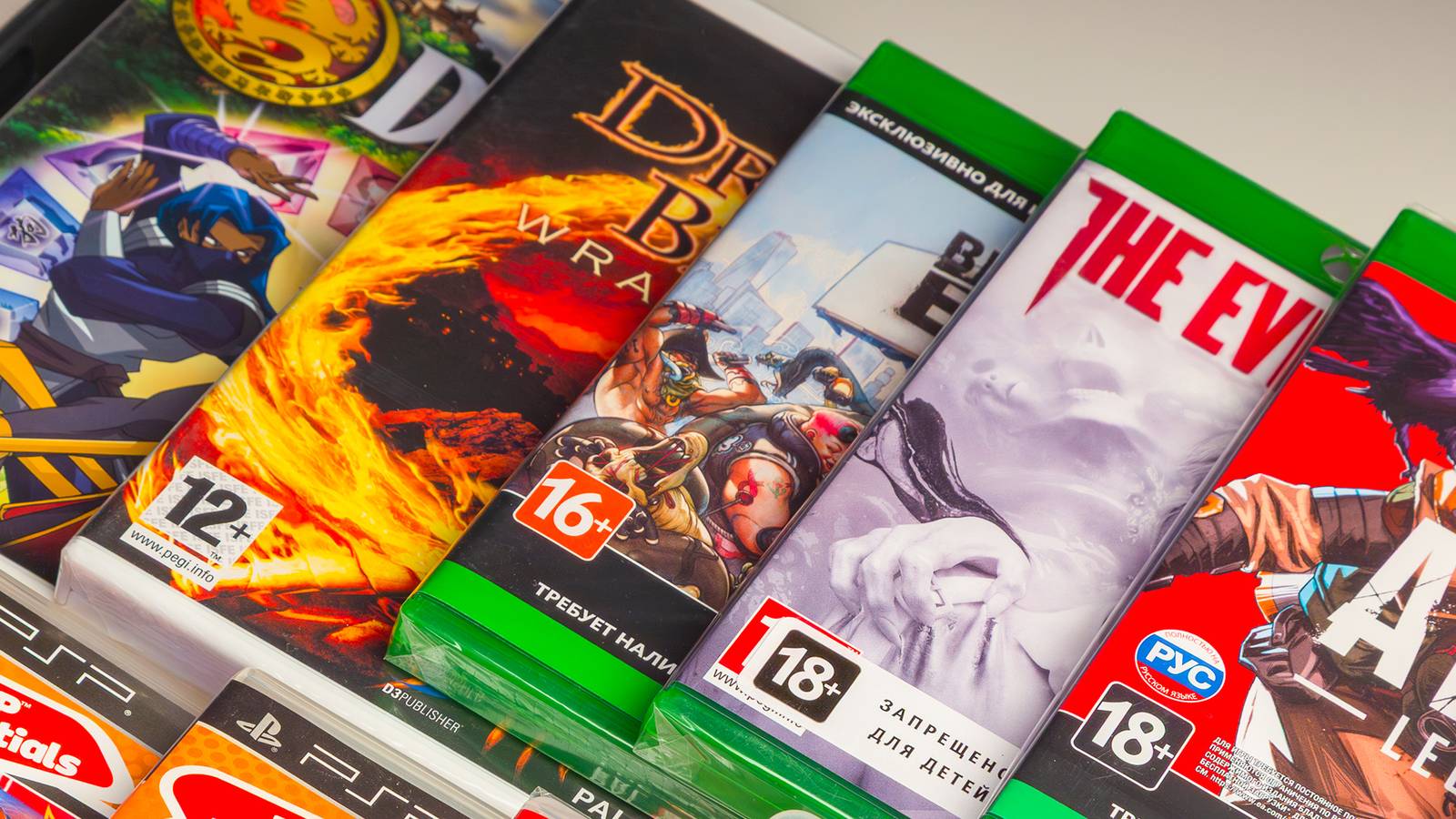
Game preservation is a hot topic right now amid the closure of digital storefronts, increasingly intrusive DRM, digital exclusives, server shutdowns making games like Anthem completely inaccessible, and the advent of game key cards that only serve as an authorization for downloads.
Physical media have long been seen as the solution. If a game is removed, at least you can buy used copies, and if servers go offline, you can still insert the disc and press play – although it's not guaranteed anymore. However, the interest just isn't there, as Circana analyst Mat Piscatella reports that sales of physical games are at an all-time low.
Spending on physical games only fell 11 percent in the U.S. last year, but total spending only reached $1.5 billion, an all-time low. “Yes, the rate of decline slowed,” explains Piscatella. “But that's mostly because we're nearing the bottom.” The future of gaming is looking more and more digital with each passing year, and while that may sound worrisome at first, especially when preservation is pushed aside, it's not a black and white issue.
Don't rule out digital preservation
So in 2025 spending on new physical video games in the US fell 11% compared to 2024. This is the slowest rate of decline since 2021 (-8%), and much better than the -28% recorded in 2024. But spending on new physical video games also only reached $1.5 billion in 2025, a low of 199 (5). — Mat Piscatella (@matpiscatella.bsky.social) 2026-03-02T23:39:52.024Z
It's easy to say physical good, digital bad and call it quits, but studies show that physical games are 100 times worse for the planet, and that CDs, DVDs and even Blu-ray discs are at risk of rotting. Buying digital games, especially with the advent of DRM, is similar to buying an extended license, but physical copies will only last between 30-100 years, which means they obviously can't be the future. Of course there is historical value in a collection, even if the games don't work, and 100 years is a lifetime, but the durability of physical libraries throws a wrench into the preservation debate.
So digital may well be the key, as we've already seen with emulation. Physical copies often become highly sought after collectibles, making authentic retro gaming impenetrable to the average gamer. It's murky waters that can wade into piracy and illegal distribution, and companies like Nintendo are notorious for cracking down on emulators for just that reason, but when the only option to play Rule of Rose legally is by getting a £200 copy, digital emulation comes out on top of physical.
GOG has also shown how digital gaming isn't the opposite of preservation, with its DRM-free program allowing buyers to truly own their games, as they can copy and store them completely separate from the launcher. So while physical sales may be at an all-time low, as gamers embrace a digital future, there is still hope for preservation. Maybe it wasn't what we expected; DRM-free digital libraries and backups, not a tactile library of plastic boxes.
The real concern is how declining physical sales and the advent of digital exclusives and consoles will hurt the secondary market, another hot topic of discussion and will only exacerbate how expensive gaming is becoming as a hobby.

Flocks of gamers are backing up one of the biggest video game reservations after the announced shutdown
The site will officially close on March 31st.
