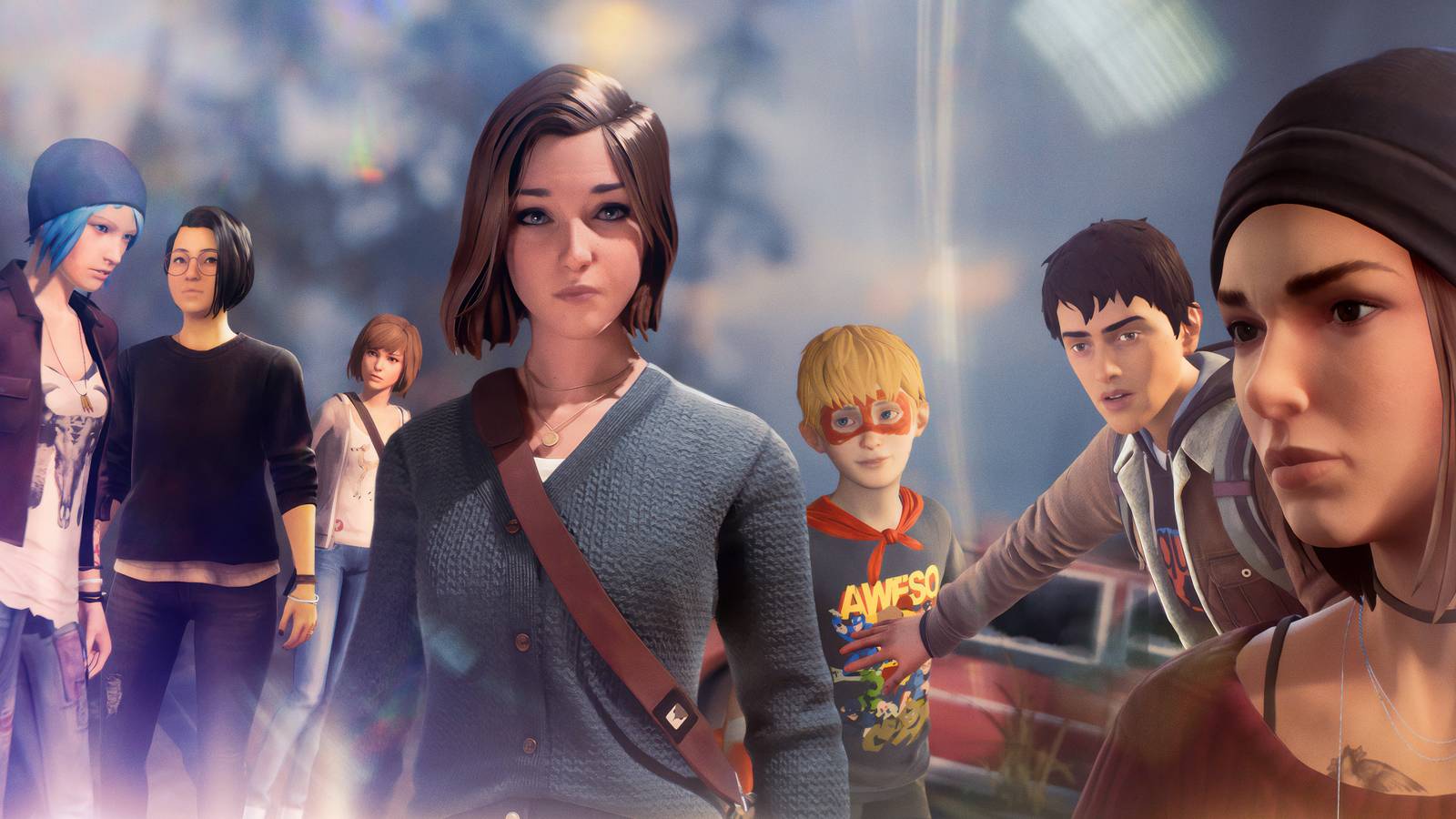
For me, Life is Strange is a franchise of peaks and valleys. There’s not really a Life is Strange game that I do not feel strongly about, one way or another, because the writing is so often strong enough to make me feel for the characters. Not to mention, I’ve always thoroughly enjoyed anthological approaches to video games because they can paint such a strong, cohesive world. Case in point: Life is Strange is a world where coming of age—especially when coupled with emotionally charged topics like systemic injustice, identity, and trauma—is transformative in supernatural ways.
In simpler terms, Life is Strange is a franchise where its supernatural powers are symbolic of coming of age for small, marginalized perspectives in a wider world. It’s this thesis, this combination of internal and external coming of age chaos through supernatural powers, that has always defined the franchise for me. Unfortunately, such messaging is not easily or always effectively delivered, and sometimes it even feels abandoned by stories designed to communicate it. That’s why I either love or hate the Life is Strange games. But looking at them collectively, peaks and valleys definitely feel like how this should be understood.

Life is Strange Reunion Trophy Guide: How to Get Every Achievement
There are 29 Trophies/Achievements to unlock in LIS: Reunion — here’s how to get them all.
SPOILER WARNING: Life is Strange games are often defined by their narrative, and ranking them properly means they must be discussed openly. This includes Life is Strange: Reunion.
1
Life is Strange
I’m a firm believer in paying respect to originals and classics that spawn franchises, and the original Life is Strange did just that. It remains, to this day, the best Life is Strange game. Part of it is how well-written and well-performed Max Caulfield and Chloe Price were, part of it is how frightening the disappearance and murder of Rachel Amber is, part of it is how sick and twisted (and unfortunately representative of sick and twisted IRL individuals) Mark Jefferson is, and part of it is the time rewind gameplay.
More than anything, Life is Strange‘s gameplay works not because it is revolutionary—it is not—but because it is in perfect harmony with the narrative. Making choices, dealing with the consequences, and/or not wanting to deal with the consequences is part of that coming of age story, and it works perfectly with Max’s time rewind gameplay, as well as the choice-driven storytelling here. Max’s ability to take photos not only reflects her future, but it also ties her directly to the darkest parts of this story, showing how something good can bring so much harm. And the exploration is small, but it builds a world thematically tied to the essential exploration in growing up and young love.
All of this culminates in the most heated moment in the entire franchise, of course: the final decision to save Chloe or Arcadia Bay. It represents the impossible choices we all make, the sacrifices we are forced to accept, and the things we must resign ourselves to lose, all at way too young of an age.
The OG stands alone in what I would consider to be S-tier.
2
Life is Strange: Reunion
You might argue that Life is Strange: Reunion being so highly rated is recency bias, and perhaps it is. It’ll be interesting to see how I feel about the game a few months from now, but it feels special to me for a few reasons. First, I used to work at a university that I graduated from, further immersing me in Max’s shoes. Shortly before I graduated with my master’s, my university was torn up by an EF-3 tornado that damaged two-thirds of the buildings on campus. I have a personal stake in the story, in stopping the fire at Caledon University. But more than my personal connection to the game, more than it even bringing back Chloe Price, is the storytelling I was not prepared for.
At the heart of the fire, the messiness of Chloe Price, and the events surrounding Max and Chloe in Life is Strange: Reunion is a reminder that you live with trauma. Trauma is not the end of the story, not the way the original Life is Strange delivered it. You don’t make an impossible decision and leave trauma in that moment; it lingers, makes things worse, and slows down any process of moving on. Even as Max seems to be in a position where she could do that, she later admits she was lying to herself. She can’t let go, but she can live with it day in and day out. And on top of that, you deal with more and more trauma the longer you live: the ending choice of Life is Strange 1, Safi’s “death” in Double Exposure, the Caledon University fire of Life is Strange: Reunion.
Healing from trauma is complicated, if it’s even possible, and not something that Life is Strange: Reunion fixes for Max or Chloe, but there’s closure no matter what choice you make. And that’s why Life is Strange: Reunion still works as a, say, post-coming of age story. It deals with how traumatic experiences of the past influence traumatic experiences of the present and anxiety of the future, how it molds you even as you attempt to move on to the next stage of life. Trauma from the past influences how you deal with trauma in the present.
Gameplay-wise, Life is Strange: Reunion is muted (for lack of a better term) in comparison to other games in the franchise. Intentionally or not, it’s kind of like how Max blocks out everything to cope with just so much going on at once.
3
Life is Strange: True Colors
I feel like Life is Strange: True Colors is sometimes underrated for what it brings to the table. Introducing empathy as a supernatural power, working that into both its personal narrative and its gameplay, and delivering on that unique premise with a strong cast of new characters is no easy feat. Developer Deck Nine proved it was ready for the franchise with True Colors, in my opinion, because Alex Chen is also probably my favorite protagonist. Her brother’s death reflects both her internal fears and her external avoidance of others, and throughout the story, she’s able to move from emotional survival to emotional connection, dealing with both internal and external forces despite her own issues.
Romance options Ryan Lucan and Steph Gringrich are also solid additions to the game. Alex and her partner aren’t iconic like Max and Chloe, not that anyone could be, but each character can stand on their own two feet. Combining great character work with solid gameplay systems built around understanding Alex Chen, developing and understanding empathy, and immersing yourself into the world makes it a damn good game.

Life is Strange Reunion Chapter List
Every scene in LIS: Reunion listed, and how long it takes to beat.
4
Life is Strange 2
Life is Strange: True Colors is sometimes underrated, and Life is Strange 2 is sometimes overhated. Max and Chloe are obviously the most iconic duo of the franchise, but Sean and Daniel should be second. Not only is there the wider, implied narrative about how one mistake in your youth can potentially ruin your entire life, not to mention everything it has to say about systemic injustice, but there’s the coming of age element where it is forced upon them way too soon. Growing up quickly is often romanticized, but truth be told, it is incredibly painful and confusing. Sean and Daniel work through that very openly, while also trying to survive.
Life is Strange 2 reflects this in both the narrative and gameplay. It is a lesser spectacle than Life is Strange 1 and deals with more emotional pressure that feels harsher, grounded. Players scavenge for supplies, perform small jobs, and commune around the campfire, all reflecting the story of their survival. More than that, the fact that Daniel’s telekinesis power is not directly controlled by the player is a fantastic mechanic for a narrative, choice-based game. Players are forced to work with and influence Daniel and his growing understanding of his own power.
This brings players to the ending of Life is Strange 2. Based on various factors, players not only make their own choices as Sean, but influence Daniel’s life in positive or negative ways. Daniel’s future is in your hands the entire time, a mechanic that really makes Life is Strange 2 stand out. Daniel can be as morally flexible, ruthless, or ambiguous as you raise him to be; Daniel’s life can be as normal, as stable, or as increasingly traumatic as you give him the opportunity for it to be; and Sean and Daniel’s connection can be as happy, bittersweet, heartbreaking, or outright broken as it becomes. Those kinds of choices weigh heavier, in my opinion, because it’s not about the role you play, but the roles you play around with.
I would consider the above games as A-Tier. There is no B tier because it feels like there’s a significant divide between these games and what comes next. We’ve crossed from the peaks to the valleys where the games feel like they mean less to me or had less to share with me.
5
Life is Strange: Before the Storm
Life is Strange: Before the Storm is a prequel to the original game where players control Chloe Price, engage with her Backtalk gameplay, and see what her relationship with Rachel Amber was like. It’s a great peek into Chloe’s past and see her coming of age story in many ways, but its trappings as a prequel make it less impactful. The ending of games where every choice should matter becomes increasingly important, perhaps more so than any other genre, because it must branch and reflect everything that came before. This game can’t do that. There are many great video game prequels, but not so many great narrative, choice-based prequels. There’s little to no stakes in Life is Strange: Before the Storm, so while the story is important, it feels like it pulls its punches compared to other games.
Who’s That Character?
Identify the silhouettes before time runs out.
Identify the silhouettes before time runs out.
Easy (7.5s)Medium (5.0s)Hard (2.5s)Permadeath (2.5s)
6
The Awesome Adventures of Captain Spirit
You’ll notice the phrase “life is strange” is missing from The Awesome Adventures of Captain Spirit‘s title, and that’s because it’s a short spin-off demo/teaser/prequel. It could considerably not even be here, which kind of reflects the issues I have with it. Whereas Life is Strange: Before the Storm is a prequel that treads nowhere new, Captain Spirit is essentially a prologue and transition game where both the prologue and transition are more unconnected than “prologue and transition” outright imply.
At its heart, it’s a game about childhood imagination as emotional survival in the face of neglect. That’s a great premise for a Life is Strange game, but that’s not what this is. Protagonist Chris Eriksen deals with two realities (which manifest in gameplay) between reality and his superhero Captain Spirit alter ego, but the big twist here is that it’s all in his imagination. Which. Based on the title of the game is not a twist. It’s just a sad, unresolved ending with no branching and only slight variation. Nothing is resolved, and when he does very briefly appear in Life is Strange 2, he gets one good day because of Daniel. That’s it. One good day cannot fix the neglect he suffered and will suffer.
I would consider these games as C-tier. I feel strongly about them, but unfortunately, it’s more about what they refuse or can’t do. Neither of these games tell compelling stories about the chaos of life through powers, internal or external factors, or key components of the franchise.
7
Life is Strange: Double Exposure
Up front, Life is Strange: Double Exposure probably has some of the most creative gameplay in the franchise—not radically, mind you, but its timeline hopping is fun. Its setting, Caledon University, and the core/side characters it introduces lay some excellent groundwork. But Life is Strange: Double Exposure walked, stumbled, faceplanted—just for Life is Strange: Reunion to run. Life is Strange: Reunion is so good that I like Double Exposure a little more than I did before, if simply because Reunion’s narrative required Max to be established to tell the story it did. Otherwise, Double Exposure is not a great Life is Strange game, and it almost took the franchise in a completely different direction.
While each game treats the core tenets of the franchise differently, at least in my opinion, Double Exposure outright drops them. The first half of the story seems to go in the right direction, but the final half of it is basically a Marvel movie. The ending, complete with a Marvel-style “Max will return” screen, seemingly sets up Life is Strange: Civil War. A Marvel-like power conflict steps so far away from the chaotic internal vs. external coming of age stories that define the franchise that I still get red hot about that ending. Life is Strange: Reunion pivots away from this, and it benefits the entire narrative but also explains Safi’s involvement in the story. Who knows, maybe Civil War was not the plan, but it certainly felt like it.
Life is Strange: Double Exposure is D-Tier, last place. It was the first time I ever felt fear for the franchise’s direction.

- Released
-
March 26, 2026
- ESRB
-
Mature 17+ / Mild Violence, Strong Language, Suggestive Themes, Use of Drugs
