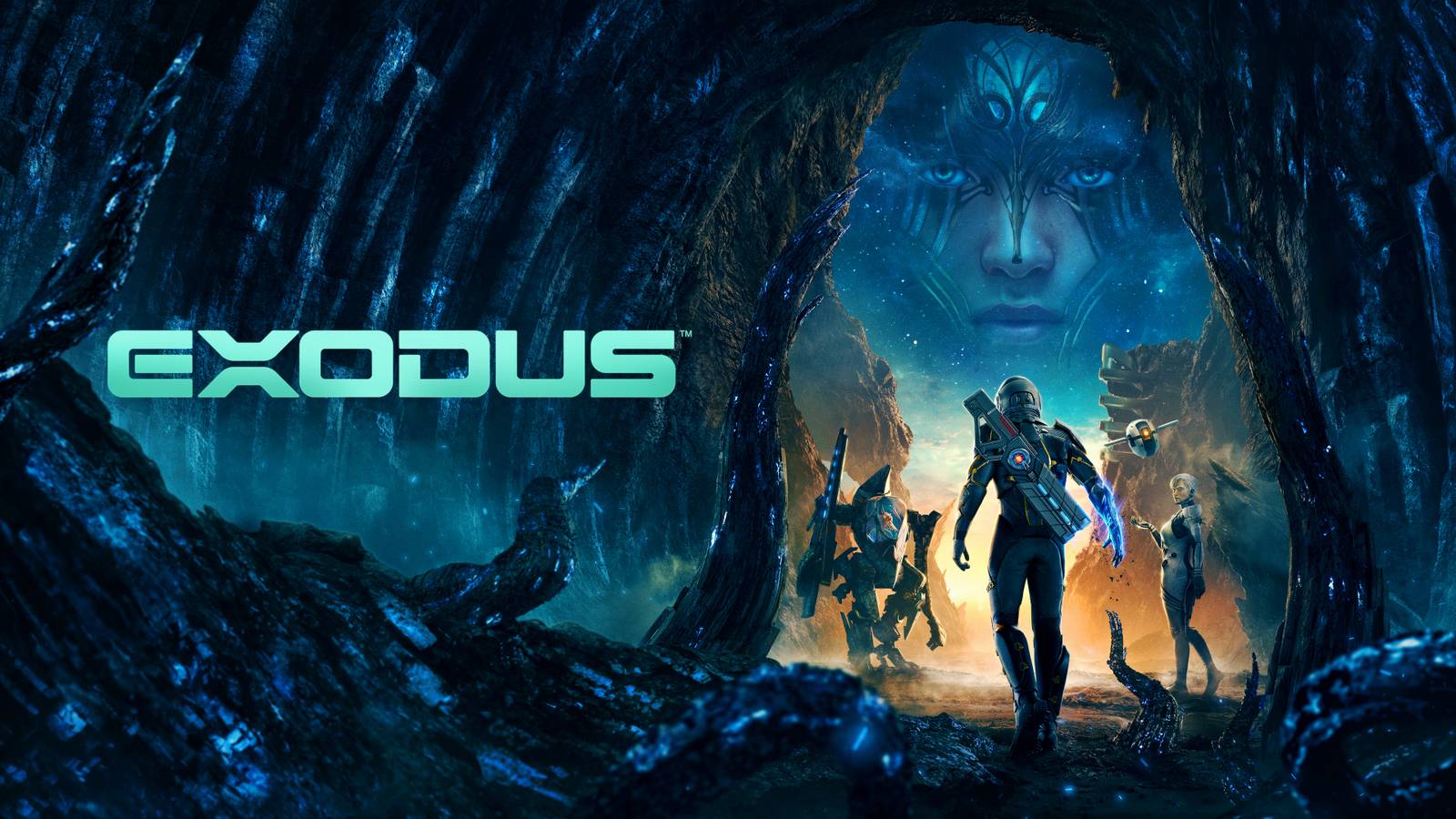
Archetype Entertainment's Exodus is a game that will require players to make some difficult choices. As a “traveler”, players will search for artifacts known as Remnants to protect and improve their homeworld while battling various human and alien factions, each with their own goals and motives. The time dilation associated with interstellar transport also means that Exodus players will see the far-reaching effects of their decisions for hundreds and even thousands of years.
In a conversation with Game Rant, members of the Exodus development team—Vice President and Studio Head Chad Robertson, Narrative Director Drew Karpyshyn, and Game Director Chris King—emphasized the important role choice will play in their upcoming game. They revealed that many of the game's choices will revolve around “moral ambiguity” and the need to consider short-term versus long-term consequences given the reality of time dilation. Ultimately, the Archetype team is excited about the conversations they hope players will have about various choices they make, as well as the significant replayability offered by the many critical, far-reaching choices included in the game.
Exodus developers believe in the player as “co-author of the experience”

The idea that the player would be heavily involved in shaping Jun's story was an important part of Exodus the team's philosophy from the beginning of development. They wanted to ensure, when creating the game's science fiction story, that there would be a number of key moments where the outcome would be drastically different, encouraging players to discuss their experiences with each other. King described the team's philosophy:
“We strongly believe that good RPGs are about agency. We call them water cooler moments where, if we're all playing, we come to work the next day and talk about where we ended up in Exodus. They're drastically different experiences depending on the choices. One of the internal mantras we have is that we want to think of the player as the co-author of the experience.”

The player agency starts from the very first moment exodus, where they can take advantage of the game's character customization system to play as male or female Jun. From there, they will regularly encounter choices that will set them on unique paths through the game's story. Some choices are big, some are small, but each will shape the player's Exodus journey and encourage them to play through the game multiple times to experience different outcomes.
Exodus' Choices center around the theme of moral ambiguity and long-term effects

Moral ambiguity is a major theme that players will encounter as they progress through the game. Often, Exodus' choices will not be simply black or white, with clearly defined “good” or “bad” options. Instead, as King explained, players must weigh the “short-term versus long-term” effects of their decisions, “because of the time dilation and how these things are going to play out.” When Jun goes on a mission, ten years or more can pass on their home world. When they return, they will see the effects of a choice they made long ago and how it still affects the inhabitants of the world. King elaborated on what it will look like:
“Because of the time dilation, the manifestation of change can be really dramatic for us. The time span that happens on some of these trips Jun takes is really huge. You can imagine the development of a home world through technology and potentially some other things related to how you make choices with harvesting the pieces of Celestial technology called Remnants.”

A lot of Exodus' the plot will revolve around Jun harvest arresters, highly advanced relics developed and used by the Celestials, a group that were once human before undergoing significant genetic enhancement. Robertson revealed that players, even Jun, will have a choice in how the remnants are used, and that they can be applied to both good and evil. “All of this affects your homeworld,” he said, “both in the physical structure and the way things look, but also in terms of how your companions interact with you… The extent of the change [you] can affect it is really huge.”
Karpyshyn agreed with Robertson and said he's happy for players to share the different results they discover due to the time dilation phenomenon that occurs heavily in Exodus. “The journey does not seem so long to you,” Karpyshyn explained, “but you will return 10 years [later, things] has changed. Everyone left behind has had things evolve, and there are new challenges depending on the choices you make – different challenges than other players may have experienced.” He encouraged players to replay. Exodus multiple times and try different decisions to see the small and large scale changes their homeworld and companions may experience.
Player choices can affect quests, companions, and more

Not all choices included Exodus is a large-scale decision that will have significant effects on Jun's home world. King revealed that player choice will also play a key role in how missions are handled, with players able to choose to approach combat from a stealth and infiltration direction, attack aggressively from the start, or even mix up multiple strategies. “We kind of embrace a playstyle your way,” he said, “when you go into battle, there's no right or wrong way to play it.” He went on to elaborate that combat and mission decisions will often focus on dealing with situations where the player's party is outnumbered by the enemy:
“We're kind of leaning into what I call the sci-fi infiltration trope… you're going into enemy territory, you're outnumbered, you're outnumbered. So, how do you take on these guys?”

In the end, the essence of the game Exodus is so focused on player decisions that the team calls it the “choice and consequence loop.” In addition to the “macro loop” described earlier, where Jun collects scraps and uses them to develop his homeworld, players can make choices regarding Jun's build and which companions they prioritize. Of course, companions also react to Jun's choices and may even oppose them—possibly to the point of affecting Jun's potential romances with the various companions—which Karpyshyn discussed in more detail:
“Companions don't always agree with what you're doing, and they don't always agree with each other. You kind of have to balance this…this makes for real role-playing. There are certain decisions where you might be able to upgrade or improve one companion at the expense of not helping another. So we really want to put you in this constant [state] where you make decisions and adapt – and suffer.”

Ultimately, Exodus will be filled with choices both small and large, which will have a big effect on how each player experiences Jun's story and the development of their world. Karpyshyn and the team promise that “You can't have everything, so you have to choose what you want, and there are some hard decisions.” Of course, Exodus players who want to see anything and everything this expansive science fiction universe has to offer can start a new playthrough to experience what they may have missed the first time around.

- Released
-
2027
- Developer
-
Archetype Entertainment
- Publisher
-
Wizards of the Coast