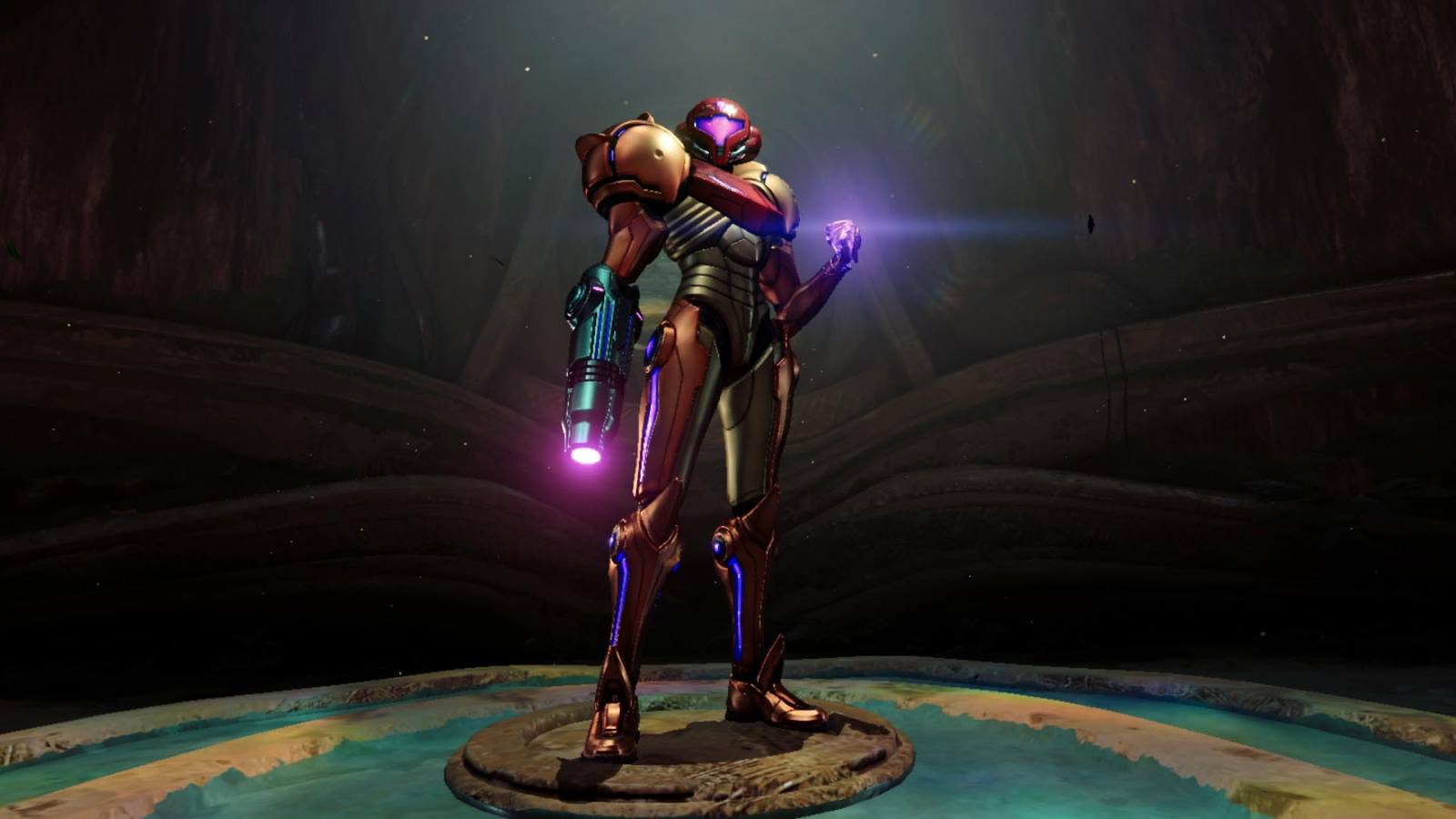
Now that the dust has settled on Metroid Prime 4: Beyond, it's clear that it wasn't what the die-hard fans wanted it to be. While it was still a great game, it failed to capture the epic melancholy of the GameCube original or its sequel as you teamed up with extremely talkative characters before embarking on a formal quest to acquire colored keys and get back home.
It was shorter, more predictable, and less experimental than any game that had come before, regardless of its quality. While I'm excited to see where this new trilogy goes with its story and mechanics, after nearly two decades of waiting, many were hoping for something more. But after hearing more details about the project's development, it's fortunate that the game saw the light of day at all.
Metroid Prime 4: Beyond Was Never Rebooted By Retro Studios
Nintendo first announced Metroid Prime 4 back in June 2017 with nothing more than a logo and a platform. That was still years away, with insider reports confirming Bandai Namco as the developer. The fact that this project was outsourced was a surprise, especially as Retro Studios was so beloved for bringing the original trilogy to life all those years ago. We didn't hear anything about the game for almost two whole years, until Nintendo announced that they weren't satisfied with the quality of the game and would completely restart the project and put Retro back.
At this point, I think many – including myself – assumed that everything created by Bandai Namco was scrapped and that Retro Studios was free to execute their own vision for Metroid Prime 4. Even more so, and it would be another six years until it was released. But a new interview by Famitsu (translated by Nintendo Everything) shines a more definitive light on things, and how rebooting the project was never an option.
First, Nintendo had long decided to explore Samus gaining psychic abilities on a new planet throughout the story, as well as being able to control the charge beam and explore an overworld with some sort of vehicle. Throughout its development, we also saw games like Breath of the Wild redefine the open world genre and show what Nintendo properties were capable of through reinvention.

Retro Studios feared that gamers would expect Metroid Prime to take similar steps, but after two years of tumultuous production and so much ground still to cover, that wasn't an option.
“Ultimately, the game took much longer than expected to complete, and we realized that players' impressions of open-world games had changed,” a member of the development team explained to Famitsu. “That said, development had already been reset once before (when we started over with Retro Studios), so backtracking development again was out of the question, and we decided to move forward with our original vision.
“During this time, shooters and action games went through developments, with an increased game speed in particular, but incorporating these changes would have made it difficult to construct the pace of an adventure game, so we actively chose not to take them into account. Therefore, I think this game is quite separate from the changing times.”
Metroid Prime 4: Beyond is not an open world, but it does have a hub area with collectibles and optional locations that give the illusion of exploring one. The interview is also right, as you'd struggle to benefit from the satisfying progression of revisiting past locations and engaging in excellent puzzles and combat encounters if you could go anywhere and do pretty much anything whenever you wanted. Things open up gradually, making the game feel archaic in ways that prove to be both a blessing and a curse.
Retro Studios fought an uphill battle with Metroid Prime 4

It's fascinating to learn from this interview that the development team was aware that Metroid Prime 4 would likely receive a divisive reception from fans for sticking to a classic formula and being very careful with the aspects of modern game design it chose to embrace. It notably lacks the triple-A open world trimmings we've come to expect from most blockbusters, but still loves to unnecessarily hold our hands with the distinct fear that we'll miss something or forget where we're going.
Metroid Prime has always been about the joy of discovery, and many players felt betrayed that this was missing from the fourth entry. But could Retro have incorporated such things without restarting development again? There is no way to really know.
Retro Studios wasn't in a position to create the Metroid Prime 4: Beyond it had envisioned for years, applying its expertise to a framework already laid out before them. You can only do so much in this situation, and I doubt we'll see the true modern interpretation of this series by the creators who first brought it to life until the next game rolls around. But since it already commits to certain mechanics and characters, there's no telling what form it will take. Here's hoping the team gets all the resources and freedom it needs to shine.

Metroid Prime 4: Beyond


4.0/5
- Released
-
December 4, 2025
- ESRB
-
Teen/animated gore, violence
- Developer
-
Retro Studios
- Publisher
-
Nintendo