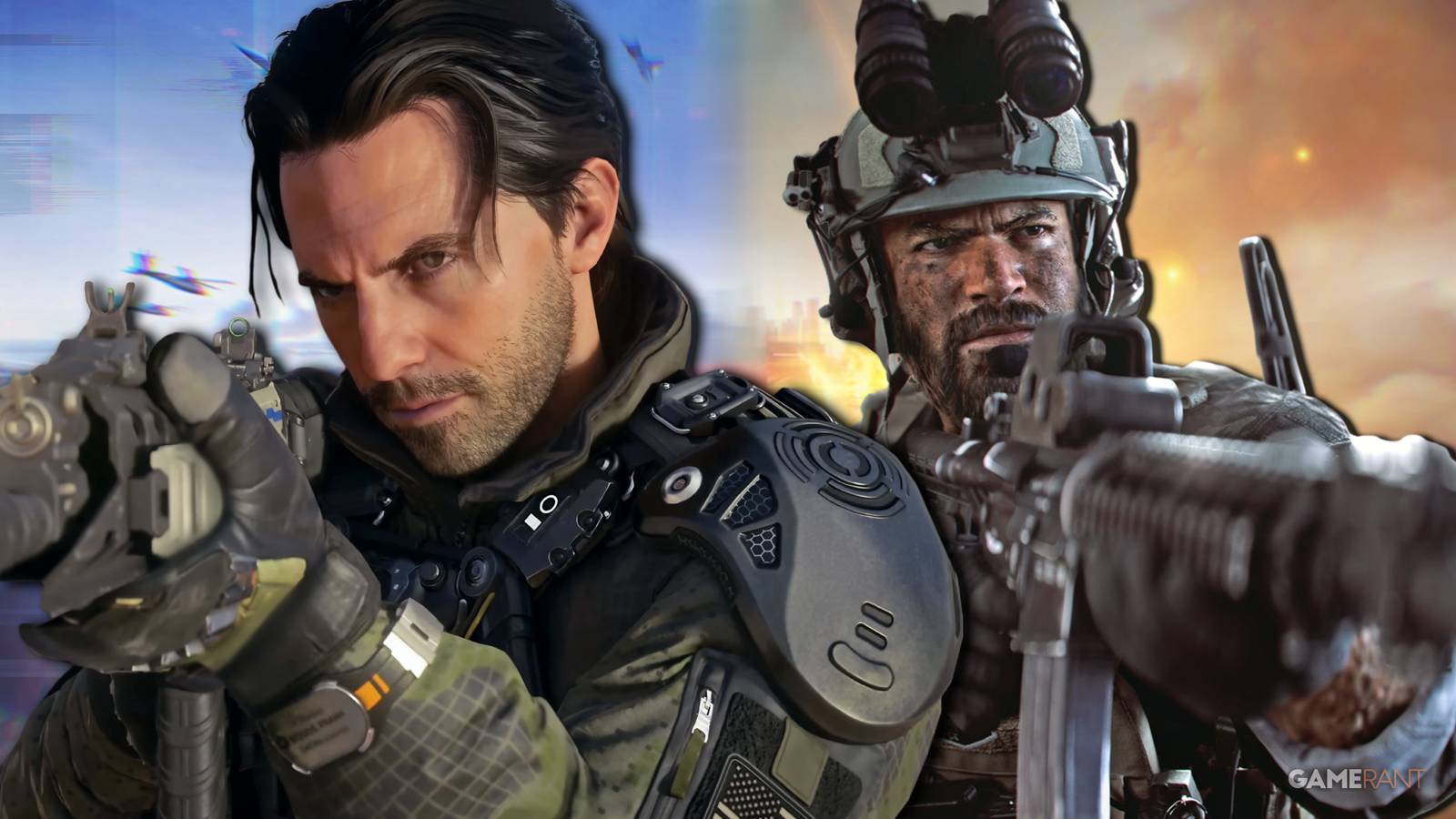
For more than a decade, the rivalry between Battlefield and Call of Duty has been running like clockwork, with each franchise anchored to a specific part of the fall release calendar, each launch coming with the expectation that players already know which side they're on. That rhythm created something almost ritualistic: the pre-release arguments, the embargo lifts, the first-week sales comparisons. That stable competition – the one the industry could set its clock on – doesn't work the same way Battlefield 6 and Call of Duty: Black Ops 7, and it feels strange.
Battlefield 6 was a triumph for a franchise in genuine need of rehabilitation, and Black Ops 7 came right on the heels of a better entry and launched into a market that wasn't quite ready to move on. With one trying to restore its identity and the other struggling to develop its own, both games simultaneously broke the usual rhythm of their franchises. In doing so, they inadvertently became the weirdest pair of issues either series has produced in years.

'Not Them Flexing' Call of Duty fans think Black Ops 7 is mocking Battlefield 6
Call of Duty fans believe Black Ops 7 is mocking its biggest competitor, Battlefield 6, after the EA-published shooter revealed its roadmap for Season 2.
Battlefield 6 feels strange because it's a “return to normal” that needs to be treated like a reinvention
After the receipt of Battlefield 2042, Battlefield 6 couldn't just be another sequel – it had to work as a soft reboot, and the gap in releases made it feel even more drastic. The game deliberately evokes the tone, structure, and class design of Battlefield 3 and 4with an emphasis on grounded warfare and familiar class roles. That makes it unusual because Battlefield have historically tried to drive scale or experimentation, and BF6The biggest selling point is that it doesn't feel weird. The spectacle is now primarily the destructibility – better than it's ever been, but not exactly new.
In addition, Battlefield 6 reportedly had a budget in excess of $400 million and faced unusually high internal expectations for a series trying to regain trust. It created a strange perception where the success felt like a course correction rather than a decisive win. After launch, controversy over AI-generated cosmetics complicated the “back to basics” messaging and introduced a note of inauthenticity that clashed with the entire premise.
To maintain a state of success

While a conservative approach helped create an explosively successful launch, it did little to support long-term engagement. The game hit Black Ops 7 in sales and peaked at roughly 747,000 concurrent players on Steam near release, but Battlefield 6 has since bled players with slow updates and a lack of content. Concurrent players have dropped around 90% and stabilized in the 40,000-60,000 range – dramatic, but much better than Battlefield 2042collapse after launch.
This creates an unusual dynamic: Battlefield 6s current position doesn't resemble a decisive victory lap, but it doesn't resemble a failed revival either. The game occupies an ambiguous middle ground – clearly successful enough to sustain ongoing development, but no longer garnering the overwhelming attention it captured at launch. That middle ground defines these releases and their place in the industry; both franchises look like they're still trying to decide what their next stable will be, and neither feels dominant enough to dictate the genre's direction.
Black Ops 7 feels weird because it was too much, too soon
For all its flash, Black Ops 7 exists in the shadow of an unusually successful predecessor, and while the franchise usually sets the pace in the FPS market, this one feels like it responds to it iteratively and self-consciously. Black Ops 6 had the longest development cycle in the series' history, a stronger critical reception, and major innovations such as omnidirectional motion. Black Ops 7 was developed in parallel with its predecessor, and the compressed timeline shows in its subdued launch, with critics describing the game as ambitious but inconsistent, particularly in its campaign structure.
Call of Duty franchise fatigue is already a tiresome topic, but the diminishing returns on this historically reliable annual formula were significant. Even Activision acknowledged concerns about releasing subseries Cod posts back to back. That recognition is remarkable for a franchise built on the reliability of its annual cadence, and it could be what finally forces a real change in its release strategy.
Identity and structural confusion

The problems are compounded when you zoom into the game itself, which Black Ops 7 seems caught at several crossroads. For example, on the multiplayer side, Treyarch tweaked the SBMM and playlist structure in response to community criticism, and while they received a lot of praise, BO7 changes backfired and generally represented an intensely out-of-character move for the franchise. It signals a reactive design approach that further reinforces the lack of trust in Black Ops 7 from their own developers.
Two transitional titles in an evolving industry
What makes these games an odd pair is that neither feels like a “final form” entry, and both feature underserved communities that need meaningful attention. Battlefield 6 feels like a foundation: a first step focused on restoring trust and re-establishing a live service pipeline that can actually justify its budget. Black Ops 7 feels like a bridge: repair work expressed through match adjustments and tonal recalibration, reaching something more durable to connect to.
That framing still involves the old zero-sum reciprocity, and that structure has become less decisive over time. Players move between games more fluidly now, expectations of the live service are blurring the impact of launch beyond any single moment, and Game Pass availability is meaningfully changing how players engage with and spend time with Call of Duty. The rivalry is still real culturally, but it's more porous than ever.
Two editions set to feel competitive
While this iconic rivalry loses its usual clarity when both franchises are in transition at the same time, they still compete heavily, both culturally and financially. The betas and launchers created a strong sense of collision, although the impact was blurrier than usual. Black Ops 7s beta closely overlapped with Battlefield 6s launch window, but unlike previous cycles, Battlefield had speed, and Call of Duty had questions about quality and repeatability.
The rare reversal stung for the latter. Battlefield 6 reportedly sold over 7 million copies in three days, becoming the biggest launch in the series' history. It marked Call of Dutyworst performance since 2008, and the first time it was outsold in the US by another shooter since Gears of War year 2006.
An odd contest, strangely unsolved

In the end, the strangeness of this cycle of Cod against. Battlefield is less about who won, and more about the fact that neither franchise is done reconfiguring what it is to what it should be. Battlefield 6 has the foundation but must prove it can sustain a live service, and Black Ops 7 pressured, perhaps for the first time in years, to genuinely reckon with how to deliver what the players actually want. The fact that they're navigating these muddy waters at the same time makes this one of the more genuinely uncertain moments in FPS history, which is at least interesting to watch.
-

Battlefield 6

9/10
- Released
-
10 October 2025
- ESRB
-
Mature 17+ / Blood and Gore, Intense Violence, Strong Language, In-App Purchases, User Interaction
- Developer
-
Battlefield Studios
-
Call of Duty: Black Ops 7
- Released
-
November 14, 2025
- ESRB
-
Mature 17+ / Blood and Gore, Intense Violence, Strong Language, Suggestive Themes, Use of Drugs