Video game narratives have evolved significantly from their humble beginnings. The early days of RPGs, adventure games, and visual novels opened the door to the more complex offerings of today, with narrative often weighing on people’s minds just as heavily as the mechanics.

The 12 Greatest Open-World Adventure Games Of All Time, Ranked
There are so many ways to approach adventure in the open-world genre, and these titles do it differently, but equally great.
But the worlds that these games take place within are more than just the dialogue or exposition you read and hear; every element tells a story. Whether it’s the wear and tear on a person’s armor or in-universe history books that detail ancient conflicts, the worlds that modern games inhabit are rich and textured in ways that we could only have dreamed of in the past. Many franchises strive to create immersive settings, and these eight series represent the gold standard of the craft.
Trails
The Ultimate Long-Form Epic
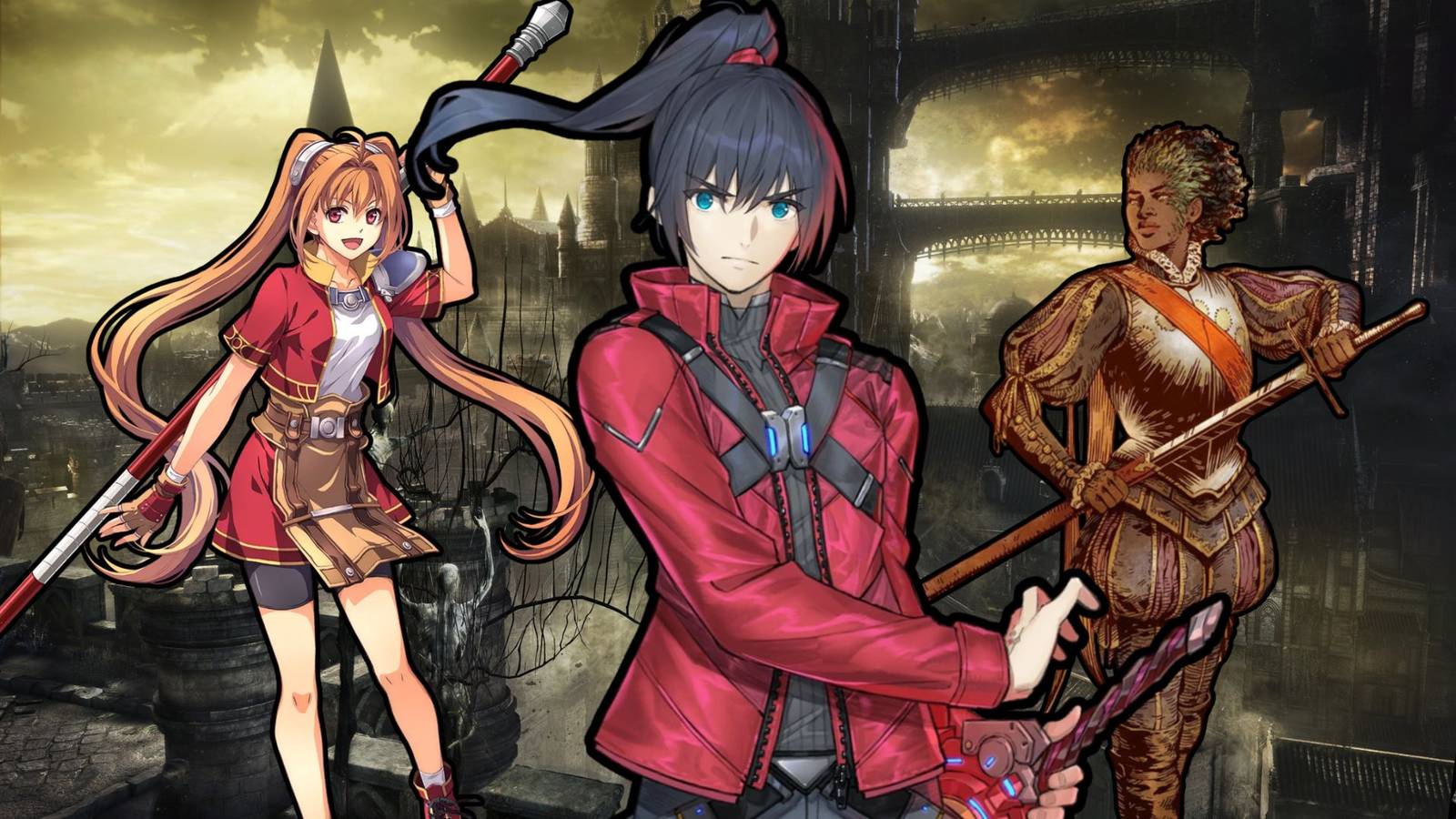
The narrative interconnectedness of the Trails series is frankly astonishing. With 13 games and counting, Trails is a sprawling JRPG epic that treats its setting, Zemuria, as a living civilization. To get the most out of the worldbuilding, Trails demands a long-term investment, weaving a single, continuous timeline where political maneuvers in one nation ripple across borders to influence the next. The recently released Trails in the Sky 1st Chapter is a great place to start, too, as it marks the beginning of the linear narrative and does an excellent job of setting the stakes for the series.
The series thrives on its attention to detail, updating each NPC’s dialogue after nearly every story beat. This creates a tapestry of personal stories amongst the geopolitical strife occurring in the broader narrative. Those same NPCs can often be seen moving or traveling from place to place, providing glimpses into the lives of everyday people as your party seeks to handle the more pressing aims of the story.
Whether acting as Bracers, police officers, or military students, players navigate the friction between nations, professions, and ways of life. The interconnected nature of these games does make it a bit daunting to jump into any given entry, but don’t let that stop you from enjoying one of the most impressive narrative achievements in the medium.
The Witcher
A Dark Reimagining of World Mythologies
Few games have a similar depth of worldbuilding to draw from as The Witcher series does, and we have the long-running book series to thank for that. The books blend dark fantasy with a realistic, war-torn atmosphere, and while the stories draw from the folklore and fantasy of Europe (and beyond), they largely avoid many high-fantasy tropes—a focus that the games follow, as well.
Showcasing political complexity and morally gray narratives, the setting of the games feels lived-in, with believable towns, landscapes, structures, and technology for a world built around magic and monsters. The events of the books are heavily referenced within the games, as well, with dialogues and journal entries that shed light on the various relationships and histories between the people and places of the world.

Great Games Where Your Decisions Truly Matter
The following games stand out for forcing players to make tough decisions that can drastically change the story.
Much like many other games on this list, the games (particularly The Witcher 3) come with a detailed journal that can be used for reference. These journals not only detail the events of the game but also contain individual character entries from the books and hold monster breakdowns for players to learn more.
There’s just so much love put into the games, and it really shines through. As continuations of the Sapkowski novels, they carry the spirit of the world they are derived from, even if the events and characters they depict are not a 1-to-1 match with the books.
Mass Effect
A Space Opera That Doesn’t Shy Away From Politics
BioWare’s Mass Effect series is another masterclass in worldbuilding. Throughout the multiple games, books, comics, and TV shows, the Mass Effect universe has had an opportunity to flesh out the different species that call the Milky Way and Andromeda galaxies home, focusing not just on their technological differences but also highlighting the cultural customs that each holds on to, even in space.
These differences in culture and status have created an interesting mix of relationships between the species, and the political tension between individual worlds and the collective governance of the Citadel Council shines through. Though much of the worldbuilding happens organically through conversation and exploration, there is also ample opportunity to learn more in the codices provided in-game.
The codex acts as a comprehensive account of the histories of the wars, cultures, and technology of the universe for player reference, with updated entries appearing as the player learns more throughout the game. Combined with the optional nature of much of the dialogue, just how much information the player receives is ultimately up to their own curiosity.
The way the events of the past shape the current day and future events is not only reflected by things like the First Contact war creating tensions between humans and turians, but also by the events of the games themselves. The universe evolves based on player decisions, from deciding the fate of entire species to shaping the lives of crew members, resulting in a unique, personal experience of the world.
Dark Souls
A Dying, Decaying World Full of Mystery
Among some of the most opaque gaming stories out there, the Dark Souls series trades traditional exposition for visual storytelling through its architecture and item descriptions. Lacking a literary foundation, it instead draws from the dark fantasy of Berserk and Hidetaka Miyazaki’s childhood habit of filling in the gaps of novels beyond his understanding. This creates a setting defined by decay, despair, and dread—though it is rarely without hope.
Instead of a journal or conventional dialogue, the series hides its history in the aforementioned item descriptions, forcing players to piece together the legacies of fallen gods and kingdoms on their own. This unguided storytelling rewards curiosity, with so much of the “why” behind events and actions being buried behind innocuous objects. Even the stellar bosses are left largely unexplained without some digging.
Given how light the games are on exposition and how little objective truth is provided in the descriptions and environments, the world of Dark Souls is perhaps less concretely fleshed out than many of the other games on the list, but the atmosphere and sense of discovery certainly place it among the best.
Video Game Valentine’s

Easy (20s)Medium (15s)Hard (10s)
Dragon Age
The Blight Seeps Into Every Corner
BioWare’s Dragon Age series is also spread throughout different multimedia properties, though the games are the deepest and most complete reflection of Thedas. The world of Thedas has had an opportunity to flesh out the different cultures and races that call the continent home, focusing not just on their physical differences but also highlighting the religious and social customs that each holds on to.
These differences in faith and status have created a divide between the races, with non-humans counted as lesser by the human kings and queens of the realm. The Chantry is an overbearing religious force that works to conform all within its borders to its practices, and the Qunari aim to conquer all in their path.
Similar to its Mass Effect cousin, much of the world is fleshed out in optional dialogue and through the codex. It is here that players can learn more about the Blights, elven gods, and national history in-depth in a way that is not provided by the conversations in-game. Origins is a delight, in particular, with a world that feels so open to being loved, even if it’s not perfect.
There is a staggering amount of history and depth to the world of the Dragon Age franchise, and few games can match the breadth of lore the games have to offer.
Pillars of Eternity (Eora)
The Wheel No Longer Turns
There are not many games as lore-dense as the Pillars of Eternity series, which eschews brevity for a literary, prose-heavy approach. Rooted firmly in the tradition of Infinity Engine classics, it builds upon the legacy of Baldur’s Gate and Planescape: Torment to construct a world where understanding the mechanics of the soul is as scientifically rigorous as it is spiritually terrifying. This creates a setting defined by theological crisis, colonial tension, and the cyclical weight of history.
The games leverage the protagonist’s role as a Watcher—one who can peer directly into the souls of others—to peel back the layers of Eora. This mechanic allows players to experience fragmented memories and past lives, turning even the most incidental NPC into a window to centuries of conflict.
Given the sheer volume of dialogue and the detail of its worldbuilding, Pillars of Eternity is perhaps more demanding of the player’s attention than many of the other games on the list, but its commitment to philosophical inquiry and complex character motivation establishes it as a modern CRPG standout.
This same world has been further expanded upon in 2025’s Avowed, which saw players transported to a new landmass known as the Living Lands. Also taking place on Eora, Avowed deepens the history of this shared world, providing insight into the relationships between the gods and even providing a clearer picture of the political structure of its nations.

The 10 Greatest CRPG Masterpieces Of All Time, Ranked
CRPGs aren’t fading away, as proven by these incredible masterpieces from Daggerfall to Baldur’s Gate 3.
Xenoblade Chronicles
The Colossal Titans Are Simultaneously Shelter and an Existential Threat
The story of the Xenoblade Chronicles (series) games take place on separate worlds, with Xenoblade Chronicles set on the backs of giant Titans, Bionis and Mechonis, which serve as the homes for the organic races and their Mechon enemies, respectively; while Xenoblade Chronicles 2 is set on Alrest, a sea topped with clouds called the Cloud Sea, which is inhabited by massive Titans, which humanity lives upon.
In Xenoblade Chronicles, these massive titans have been locked in an endless struggle since the beginning of history, only stopping when the gods controlling them ran out of energy. Eventually, the story of Xenoblade Chronicles 3 makes the connection between all of these separate settings clear.
What makes the worldbuilding in these games great isn’t just the premise behind the Titans and their place in carrying civilization forward, but also how the games incorporate the worlds and their oddities into both the story and the gameplay. Many of the events and twists of the story, such as the player being able to help rebuild destroyed colonies or taking the trek from the bottom of Bionis all the way to the top, are worked in mechanically.
There is very little dissonance when it comes to the mechanical capabilities of the player and the cutscenes, as well, making the characters feel more grounded in the context of the world. For example, the Monado in Xenoblade Chronicles works in cutscenes just as it does in battle, allowing the user and their allies to damage the Mechon.
Throughout the entire series, the games deliver worlds with fleshed-out characters and NPCs who live in a defined space and act in accordance with its realities. All the cultures and lifestyles reflected in the game are believable and are treated with an appropriate seriousness and appreciation, which is why it ends up working so well.
Remedy Connected Universe
Objects of Power and Supernatural Phenomena Shape the World
The Remedy Connected Universe is the combined world of the Alan Wake series, CONTROL, and FBC Firebreak. The Alan Wake series, in particular, is centered on the idea that fiction and human thought can physically reshape reality. The first Alan Wake title was mostly self-contained, but the additional games have fleshed the world out with shared organizations and history.
With CONTROL, we were introduced to The Oldest House, a featureless skyscraper with an interior comprised of a space-defying, constantly shifting labyrinth connected to various alternate dimensions, and the FBC, a Government agency tasked with maintaining control of supernatural phenomena. There aren’t many universes connected across multiple series in the same way that the RCU is, which makes the fusion of the disparate games all the more compelling.
Perhaps most interesting is the way in which the two series have been brought together, with Alan Wake making an appearance in the CONTROL DLC AWE, which helped contextualize the events of the first Alan Wake game through CONTROL’s setting and associated terminology. The series has only gotten more complicated and conjoined from there.
With CONTROL Resonant on the horizon, the RCU will likely see new revelations and shake-ups, building up one of gaming’s most interesting worlds to even greater heights.

2026 Video Game Release Date Calendar
From remakes to new titles, 2026 is shaping up to be a blockbuster year in gaming.
