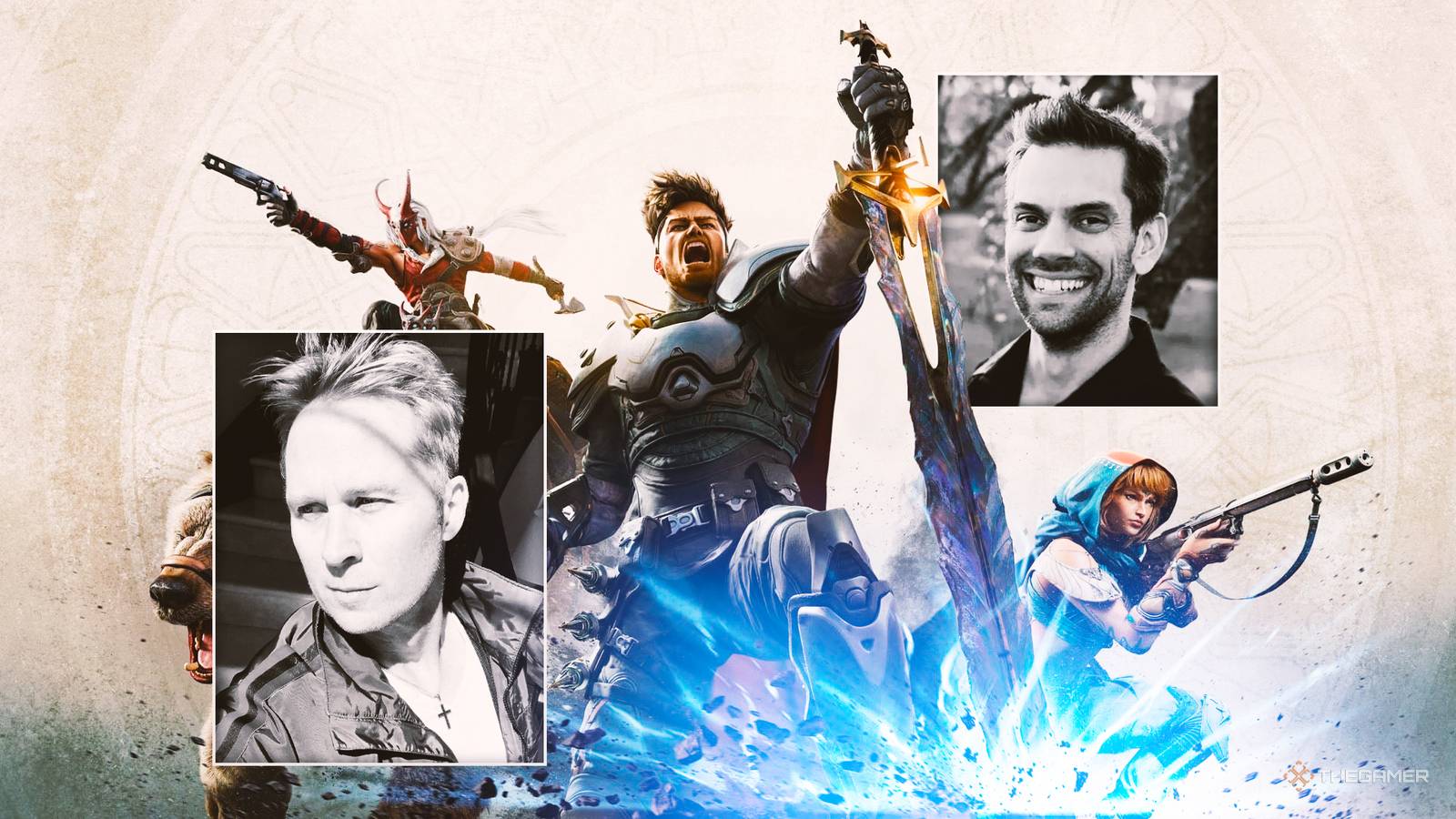
As The Game Awards last December built toward its climax, all eyes were on the final reveal — the spot reserved for the biggest, most anticipated announcement of the entire show. But when said trailer hit, it wasn't a sequel to a beloved franchise, nor a new reveal from a major studio. It was Highguard, a free-to-play shooter from Wildlight Entertainment, a small independent studio that almost no one had heard of.
The reaction was immediate and chaotic. Social media lit up with confusion: was this even a real game? How did an unknown indie land the marquee at one of gaming's most prestigious events? Disbelief flooded the internet, leaving the developer in a strange position: with more attention than they could have dreamed of, but under intense scrutiny for which there was no correct answer.
At a preview event ahead of the game's launch this week, I spoke with Wildlight co-founders Dusty Welch and Chad Grenier about that whirlwind moment and the game itself, along with the bold gamble of building a bold, independent team from scratch in the shadow of industry giants.
The decision to go quietly

In retrospect, Welch and Grenier admitted that the Game Awards reveal may have been too ambitious. The high-profile spotlight didn't give the game room to speak for itself and left the studio reeling from the unexpected backlash.
“We [originally] had talked about the launch on [January] 26th – it was always going to be there,” Welch says. But Geoff [Keighley] came in, played the game and really loved it. He said: “Perhaps risky, but why not put your game, a PvP indie studio, free to play, on The Game Awards?” And honestly, it felt like an honor to be asked and chosen to do it. It still does.”
However, that attention came with a price. “Obviously, the reception was not what any of us expected,” says Welch. “So we went back to our plan, which was always to shadow drop. Be quiet, shadow drop.”
With this deliberate decision to go back to its plan, most players still have no idea what Highguard actually is despite its high-profile reveal. It therefore offers a rare opportunity for today's launch: for players to experience the game unmediated, to understand its systems and world from within rather than through the interpretive lens of marketing.
So what is even Highguard?

That question of what Highguard is is not easy to answer because Highguard is deliberately unclassifiable. At its core, it's a shooter, but it's also a raid simulator, a fantasy battle epic, and an open-world skirmisher all rolled into one.
Teams of three “Wardens” choose a base, fortify it, then ride across vast maps to loot resources and clash with rival crews. The central mechanic, a giant sword known as the Shieldbreaker, triggers full-scale raids when carried to an enemy base. But battles rarely end cleanly: loot escalates, battles restart, and only the last base standing determines victory.
At its heart, Highguard is built around an amalgamation of genres. “We have a little reverse capture of the flag,” Grenier says. “We have a little bit of bombing, planning, attacking, defending, but we didn't do it round-based. It's kind of both at the same time. There's elements of Team Deathmatch when you're in the base, and it's just crazy, and it's a tight gun battle. We have open-world looting. […] There are all these different elements, and they just take inspiration from games that we've loved playing.”
All that experimentation gives elements of what it feels like to live in the world of Highguard. “I just love shooters because of the immersion,” says Grenier. “I'm playing a character from my point of view, and my hands are on the screen, and I'm going through the map and things like that. That's what I like to do. That's what I understand. That's where my experience is. And I feel like we're pretty good at doing them.”
From industry veterans to independent studio

The story of Wildlight itself is inseparable from the story of the game. Welch is credited with founding and launching Call of Duty at Activision and later served as COO at Respawn Entertainment where he worked on Titanfall 2, Star Wars: Jedi Fallen Order and the runaway success that is Apex Legends. Grenier spent nearly two decades at Activision and Respawn, rising from designer to game director before striking out to do his own thing.
Still, experience was not enough for both. They wanted autonomy, creative freedom and a chance to build something on their own terms without having to go up the chain of command. So they broke up, bringing with them many former Respawn Entertainment colleagues to chase a new dream of their own making.
The pair describe Wildlight as a lab for experimentation. “It's incredibly rewarding to put smart, creative people together, give them free space and see what they come up with,” says Welch. “My job is to get out of the way, give them resources and remove roadblocks so they can be hyper-successful.”
That philosophy carries over into the way the studio is structured. “Chad and I own the company, but every single employee has equity. It's important to build the right environment where everyone is invested. And of course the rewards come with that, but everyone is invested in the success of the company.”
Why a hybrid raid shooter?

When it came time to make their first game, that freedom to create meant they weren't constrained by expectations. So why make another shooter? “Games are an escape for me,” says Grenier. “They take me out of the real world and put me somewhere else. And for me, when I'm playing shooters, that connection happens the most and it has the most value to me.”
It also meant that they were not limited by genres. So why the hybrid genre concept? They say the “Raid Shooter” aspect was born from iteration, not market research. “We just went along with the fun, tested a lot as a company, found what people liked and didn't like,” says Grenier. “And now, when we start talking about it publicly, we needed a term. Raid Shooter makes sense.”
Grenier is already thinking about where Highguard could develop several years from now. “I hope we have the ability to continue to tell a story in the game, continue to add new ways to play the game, expand modes and mechanics and all the things that are there. And, you know, selfishly, we long for a single-player experience one day.”
The Game Awards trailer may have fumbled, but it set the stage for a story of independence and ambition. In an industry dominated by mega-studios and billion-dollar franchises, Wildlight is a reminder that a small, experienced team can still swing for the fences with the right kind of support. The lesson is not about this one reveal, but about trusting your craft, handling criticism, and ultimately letting the game speak for itself.
“It's free to play, so you can make up your own mind,” Welch says. “You don't like it, that's okay. Not for you, right? But I think people will enjoy what we love about it.”
For this scrappy veteran team, that hope is enough. Highguard is their David, taking on the Goliath of expectation, armed with nothing but experience and the audacity to dream big.

- Released
-
January 26, 2026
- Developer
-
Wildlight entertainment
- Publisher
-
Wildlight entertainment
- Multiplayer
-
Online Multiplayer
- Cross-platform play
-
Full