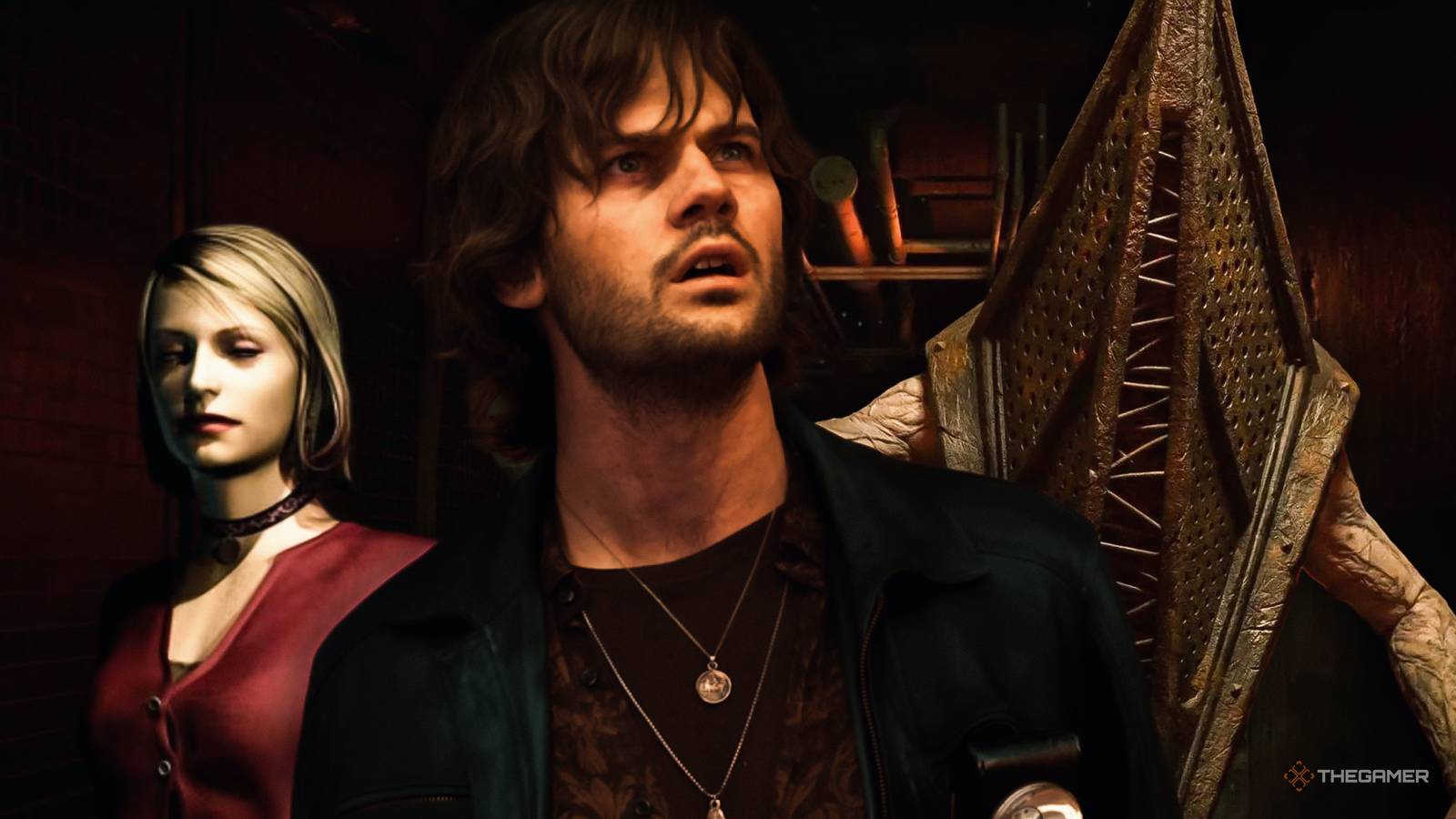
Minor spoilers for Silent Hill 2 and Return to Silent Hill follow.
The original Silent Hill 2 is considered one of the best survival horror games ever made – if not the best. It combines stunning art direction, iconic characters, an unforgettable soundtrack and fascinating scenarios with a mature and rich story never before seen in the medium.
But those who haven't played the game may find SH2's story impenetrably complex, layered and difficult to understand. While the story has smart writing, engages in conceptual storytelling, and leaves many things open to interpretation, the basics of the story are really simple.
James Sunderland receives a letter from his wife Mary, telling him to meet her at their special place in Silent Hill. The problem is, she's been dead for years, so James is confused. He goes to Silent Hill, a place we're never sure really exists. It's in his mind, or something else. Here he goes through several strange and painful things until he learns the truth.

Adaptations don't have to copy and paste the source material to be good. I actually find them more exciting when they add new elements or change some details regarding the story or characters. Sometimes I don't even care if they change the essence of the original work, because it can lead to new and exciting interpretations of the story we love so much. When I see a change, I ask myself: is this doing something interesting?
In the case of Christophe Gan's film Return to Silent Hill, I unfortunately cannot say that it is. The new additions add nothing of value, and the changes unnecessarily overcomplicate the story to boot.
Essentially, the story of Return to Silent Hill mimics SH2. James (Jeremy Irvine) still receives a letter from his late wife Mary (Hannah Emily Anderson), and he still goes back to Silent Hill to find out what's really going on. Is he imagining things? Is Mary really alive?

From the very beginning, we already see new things, like how James and Mary meet for the first time. It's a scene that pays a small homage to the start of the first Silent Hill, and it works to set up the relationship more fully. This is further explored throughout the film, with flashback scenes showing us how they fell in love with each other and the various problems they had to overcome.
At first I found this interesting. SH2 rarely shows us moments where James and Mary are together before her presumed death, and we learn more about her through James' memories, dialogue, and things we find than by actually seeing them first hand. The movie is a good opportunity to dive into this and make us care about their relationship in a more compelling way.
But my initial excitement quickly wore off as more and more of these flashbacks took place. Return to Silent Hill also adds its version of the cult that has become a staple of the series, but is missing from the original game. And for some reason, Mary has something to do with it. This starts a new plot line that becomes more and more complex until its final conclusion, which left me scratching my head – what was all that for?

I understand the reasons for these changes: knowing more about Mary and what happened to James, theoretically, will make us care more about them and the end of the relationship. But when Silent Hill 2's big reveal comes around, I found myself caring a lot less. It just doesn't work in a more complicated narrative that tries to make sense of what was once left open to our imaginations.
In the original game, it was the simplicity of the relationship that made it work. We didn't need to know much about James and Mary to feel sorry for them. Going through James' trauma and memories was enough to feel devastated when the truth was revealed. In the film, the whole thing feels complicated for the simple reason that it is complicated. Plus, forget the nuances – almost all of its plot points are explained to you in the most explicit and goofy ways imaginable.
This is even worse when we meet the secondary characters, such as Laura, Eddie, Angela and of course Maria. Most of them are fine representations on their own, although Angela received some key changes that made her a completely different character. Again, just to make things more complicated. In the original, she is a victim of sexual abuse, and the character's convincing writing is more than enough to make us feel for her. It did not need to be changed or linked to a larger system.

Return to Silent Hill is not a bad movie. There are still some entertaining moments and scenes of high tension waiting for you. But this sort of overcomplicating things for the sake of it and the lack of nuance left me with a bittersweet taste in my mouth: this should have been a great return for the series to the big screen, and it ended up feeling lukewarm.

Silent Hill composer Akira Yamaoka on how survival horror is about more than just fear
Legendary composer Akira Yamaoka talks about his new work on the film Return to Silent Hill, Silent Hill f and video game music.
