
Grand Theft Auto 5 is easily one of the most impressive open-world games ever made, with a vast, realistic cityscape for players to explore both alone or with a group of friends. Aside from multiplayer and free-roaming mayhem, the game has a great story built around three protagonists whose paths cross on a series of missions across the map. What makes the story so beloved is how the characters are written to behave and react like real people, with grounded motivations and their roles in the game reflecting their personalities.
Although the story of GTA 5 praised even today, a lot of open world games have better stories for players to explore. There are games within the same series that manage to capture an even more human aspect to their stories, dystopian adventures that draw players in with compelling worlds and mission designs, and some occasional greats that have stood the test of time, showing that with a strong enough plot, any open-world game can become timeless.
Grand Theft Auto 4
The true American dream
Grand Theft Auto 4 follows Niko Bellic, an Eastern European war survivor who arrives in Liberty City expecting opportunity and instead finds a network of criminals, debt and a world of broken promises. The story is framed around Niko's attempts to escape his past while being drawn into new cycles of violence that question his loyalties. Although the game explores some darker themes within the criminal world, it always presents them as negative rather than desirable.
What makes the story stronger than GTA 5's is how choices and relationships develop over the course of a playthrough. Characters that start out as access points to jobs become utility points later on, allowing players to feel like they have complete control over how certain arcs play out. At its core, GTA 4 always reminding players that progress often comes with compromises, and just like in the real world, there are no easy paths to success.
Red Dead Redemption 2
Rockstar's second Premier Open-World IP
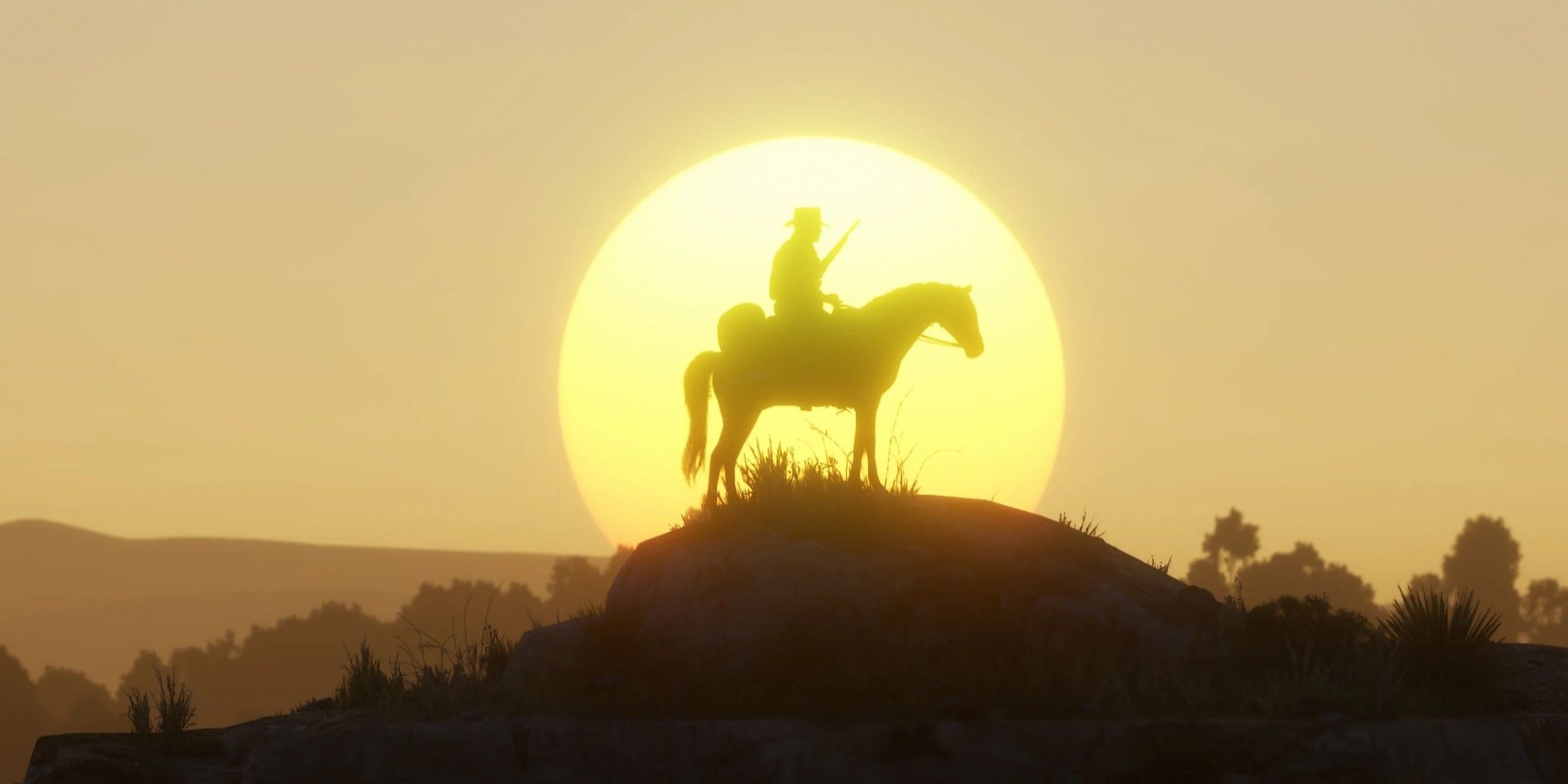
Red Dead Redemption 2 follows Rockstar's trend of delivering a breathtaking open world held together by a truly unforgettable story. The game follows Arthur Morgan, a senior member of the Van der Linde gang whose loyalty is strained as the group deteriorates under pressure both from the law and from within. Arthur's arc is written around the slow loss of faith in the gang's ideology and the enormous costs that come with maintaining loyalty to those of diminishing ability.
Its narrative strength comes from the way specific developments are staged as the consequences of past collective decisions rather than moments that appear out of nowhere late in the plot. Dutch's changes in strategy can be traced to identifiable events in the story, and Arthur's change in attitude is rooted in a medical diagnosis that forces him to evaluate the meaning of his life on a deeper level before his time runs out. The writing in Red Dead Redemption 2 is quite a step up from everything else in the genre, and few games manage to capture what it means to be human quite like it.
Sleeping dogs
Takes down the triad from the inside
Sleeping dogs takes players on a journey with Wei Shen at the helm. Wei is an undercover police officer who infiltrates the Sun On Yee triad in Hong Kong. The story positions him as a man caught between two sides, one for the law and the other for the underworld that he slowly becomes more attached to over time. The story keeps things straight and to the point, with things burning slowly over time, and it matches the gradual personal growth that Wei undergoes.
Its story is remembered for several memorable moments that fit perfectly into the wider world, without feeling overwritten or forced into the story. Major betrayals, reprisals, and deaths change how Wei is perceived, and with each major plot point, his options become narrower and narrower. The closing chapters force the character to absorb the cost of dual loyalties, showing players up close the consequences of choosing between two sides that couldn't be further apart.
LA Noire
Investigating a criminal underworld
LA Noire is a game that Rockstar holds close to its heart. It is a standalone story that has received more praise for its story than most other games in the genre. The game follows Cole Phelps and his role as an LAPD detective who rises through the ranks while investigating various cases in an expansive post-war Los Angeles. The story is based on professional progression rather than a single villain hunt, with each police counter revealing a different layer of corruption in a city that boasts grandeur. The script treats every action, from gathering evidence to conducting interviews, as part of the narrative effort rather than an afterthought, allowing players to feel fully immersed in the world of crime.
The key comes from how major truths are revealed through ordinary work instead of dramatic events, allowing the game to stand as a piece of grounded fiction rather than something extraordinary. Individual cases that seem disconnected accumulate into a pattern, with a grand plot unfolding before the player's eyes, and over time, Phelps' personal history comes back to bite him, questioning the lengths people will go to hide the truth in any way.
Cyberpunk 2077
Explore a neon-drenched future
Cyberpunk 2077 taking everything CD Projekt Red learned from The Witcher franchise, swapping medieval castles for a glowing city full to the brim with schemes and criminal organizations. Players playing as V begin by committing petty crimes in order to survive, but are quickly faced with much more complex moral questions regarding human life and the advancement of technology. The story shifts further towards politics, corporate power and personal loyalty as V searches for a cure for his unusual while resisting Johnny Silverhand's grip that continues to grow stronger in their mind.
The story of Cyberpunk 2077 stands out because the central conflict is both physical and existential. The outcome of many stories is never black and white, and there is almost always an opportunity cost that must be weighed in order to make the big decisions. Even supporting characters like Panam and Judy become instrumental to the wider plot, feeding directly into the core question of whether liberation is possible in a world that monetizes all forms of freedom.
