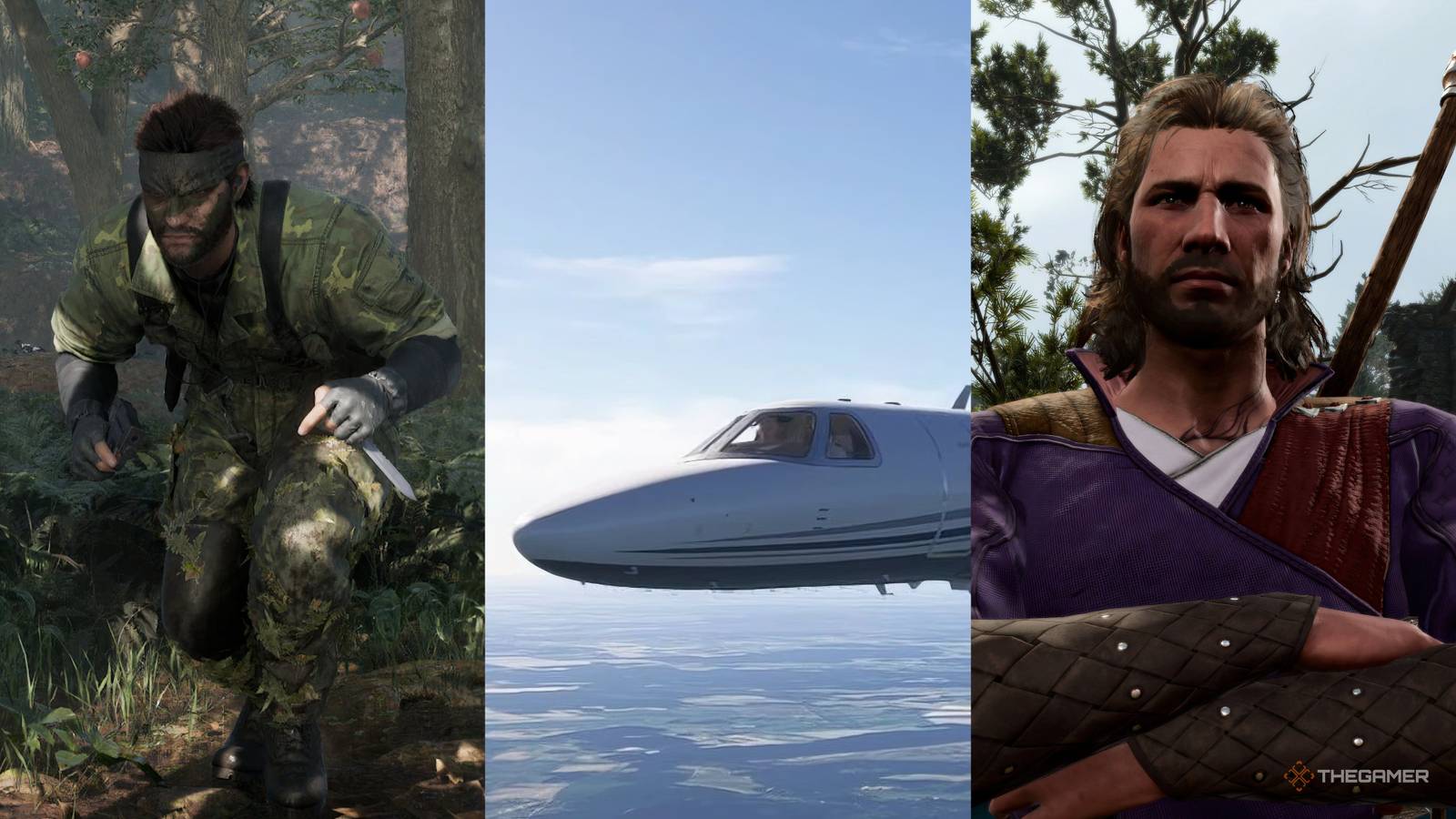
Realism in video games is a double-edged sword. It can draw you deeper into a world, making every action feel heavy and significant. It can also turn a fun experience into a boring one that makes you question why you play games in the first place.
Some developers are so involved in simulating reality that they forget a crucial detail: reality is not always fun. When you have to worry about broken bones, speed limits and empty stomachs in a video game, something has gone sideways. These are great games, but they came dangerously close to destroying themselves with their dedication to the real thing.
8
Kingdom Come: Deliverance – Fall Damage

Kingdom Come: Deliverance wants you to feel like a medieval peasant, and it maybe succeeds a little for well. The game's fall damage system is so punishing that jumping off a small ledge can leave Henry jumping around with broken legs. In a game that already demands patience with its historically grounded combat and survival systems, the prospect of crippling yourself by misjudging a weak slope adds a layer of anxiety no one asked for.

The 10 best games that offer realistic exploration
Want to escape reality with more reality? Here are our favorite games that offer realistic exploration.
Exploration, which should be one of the game's greatest joys, becomes a nerve-wracking exercise in scanning every hill for a safe way down. Most games let you jump off a roof and roll away unscathed. Kingdom Come lets you step off a porch and book a trip to the bathhouse.
7
Red Dead Redemption 2 – Looting and skinning animations

Red Dead Redemption 2 is a masterpiece of world-building, but Rockstar's insistence on showing every single animation in its entirety can test anyone's patience. Looting a body means watching Arthur methodically search every pocket. Skinning an animal means watching the whole grim process unfold in loving detail.
Individually, these animations are impressive feats of motion capture. After the fiftieth time, they become a slow-motion barrier between you and actually playing the game. It extends to everything – picking up objects, opening drawers, flipping through a catalog. The realism is undeniable, but so is the sense of being held hostage by Arthur's refusal to hurry.
6
Mafia 2 – Speed Limits

Mafia 2 gives you a wonderful open-world rendering of a 1940s American city and then politely asks you not to enjoy it too quickly. The police will pull you over for speeding, which means you'll spend a surprisingly large amount of your time as a hardened criminal dutifully obeying traffic laws.
There's a speed limiter button to help you stay legal, but the fact that it's there at all tells you something about the design philosophy at work. Cruising at a historically accurate pace through Empire Bay is atmospheric for about five minutes before it starts to feel like a driving test. It turns what should be exciting outings into leisurely Sunday rides.
5
The Long Dark – Calorie Management
.jpg?q=49&fit=crop&w=500&dpr=2)
The Long Dark is a gorgeous and harrowing survival experience set in the frozen Canadian wilderness, and it's completely obsessed with making sure you know how many calories you're burning. Everything costs energy – walking, climbing, carrying equipment, even sleeping burns through your reserves. The game tracks your calorie intake with almost clinical precision, and if you fall into a deficit, your condition deteriorates rapidly.
It creates a compellingly grim loop of purging and rationing, but it also means you can starve to death remarkably quickly even though you've just eaten a full meal of venison. You survived a wolf attack and a blizzard, but it's the math of thermodynamics that finally does you in. For a game about the romance of wilderness survival, it can feel uncomfortably like counting macros in a diet app.

Metal Gear Solid 3 brought survival mechanics to the stealth genre, requiring players to hunt for food and manually treat each wound Snake receives. Get shot? Pause the game, open the menu, dig out the bullet, disinfect the wound, apply a bandage and sew it closed.
It's an incredibly detailed system that makes you appreciate the physical strain of espionage, but it also means that intense firefights are regularly interrupted by what amounts to a paper first aid simulator.
The stamina system exacerbates this, with Snake's grumbling stomach becoming a more persistent antagonist than any Metal Gear. You can eat almost anything you find in the jungle, which is a nice touch until you accidentally poison yourself with a bad mushroom.
3
The Sims – Need Management

The Sims has always been about managing virtual lives, but the constant demand to keep your Sims fed, rested, entertained, and hygienic can feel less like playing God and more like working a shift at a daycare center.
Want your Sim to pursue a career in art? Too bad – they have to use the bathroom, eat breakfast and take a shower first, and then it's time for work. The need decay system is true to real human biology, and that is exactly the problem.
No one starts up a life simulation to watch someone eat cereal for twenty minutes. You came here to build a dream house and start a drama-filled neighborhood, not to babysit an adult who can't remember to make a living.
2
Baldur's Gate 3 – Encumbrance

Baldur's Gate 3 is one of the finest RPGs ever made, which makes it all the more baffling that it wants you to spend so much time managing the weight of your backpack. Larian faithfully adapted Dungeons & Dragons' capacity rules, meaning that every sword, potion, and piece of camp paraphernalia has weight that counts toward your limit.
Exceed it and your character slows to a miserable crawl, unable to jump or move effectively in combat. In a game overflowing with loot and discoverable items, this turns every dungeon move into an excruciating round of inventory. You've just slain a dragon and claimed its treasure, but now you have to stand there and decide which pile of gold is too heavy to carry. The system is faithful to the tabletop, but at a real table you have a DM hand waving stuff like this. No such luck in Faerun.
1
Microsoft Flight Simulator – Everything

Microsoft Flight Simulator is perhaps the purest expression of realism in gaming, and it earns the top spot because, design-wise, it is completely unwilling to compromise. Every switch in the cockpit does something. Startup checklists can run into dozens of steps. Navigation requires an understanding of real flight instruments and procedures.
The game simulates the entire planet using satellite data, real-time weather and real-time air traffic, and it expects you to treat it with the same seriousness as a real pilot would. It's breathtaking, technologically miraculous, and for anyone expecting to just hop into a plane and fly around, it's about as accessible as an actual flight school. There are of course auxiliary modes, but even they assume a basic familiarity with aviation that most people simply don't have. The realism isn't a fault – it's the gameplay – but it sure has thousands of players running back to Ace Combat.

18 Best Medieval RPGs
These RPGs take you back to the Middle Ages.
